How does climate change affect not only how much food we produce, but also the nutritional quality of the food we consume?
Climate change is already affecting Indonesia through rising temperatures, changing rainfall patterns, sea level rise, droughts, floods, and increasingly frequent hydrometeorological disasters.
What if a traditional Indonesian food could simultaneously improve soil health, increase farmer incomes, reduce dependence on imported commodities, and provide nutritious meals for schoolchildren?
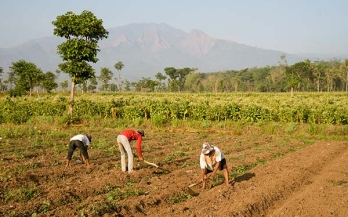
In Aceh, the GAIN Jack Bean Tempeh Initiative is demonstrating exactly that. The project is pioneering a model that connects regenerative agriculture, local food processing, and school meal procurement into a single value chain that benefits farmers, enterprises, students, and the environment.
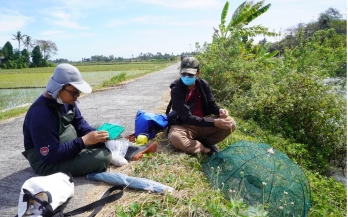
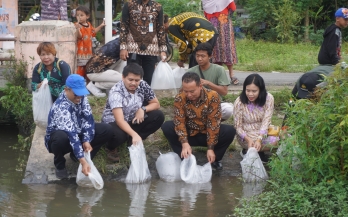
GAIN and Indonesia’s Ministry of Fisheries have launched National Small Fish Restocking Guidelines to support sustainable fisheries, improved nutrition, and stronger local livelihoods. Based on scientific research and field evidence, the guidelines promote ecosystem-based approaches that can significantly increase small fish populations and support long-term restoration of Indonesia’s inland fisheries.
There is something quietly powerful about institutions that have spent centuries mastering the art of storytelling. Long before food systems became a policy agenda, religious communities were already doing something that nutrition programmes have long struggled to achieve: making people feel something about what they consume, share, and value.
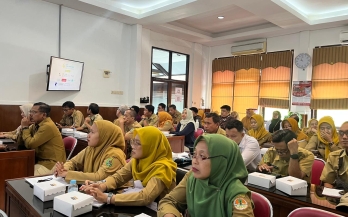
The Global Alliance for Improved Nutrition (GAIN), in collaboration with the Food and Land Use Coalition Indonesia (KSPL), officially launched its support for the development of the Regional Action Plan for Food and Nutrition Based on Local Resources (RAD-PG BPSDL) in Trenggalek Regency. The two-day inception meeting marked a critical step toward building a more resilient, nutritious, and sustainable local food system
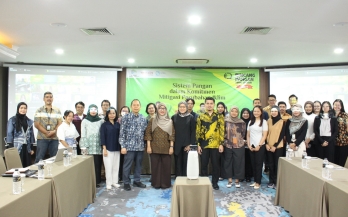
Amidst the rising urgency of climate mitigation, strategies remain heavily dominated by the energy, forestry, and transport sectors as the primary sources of greenhouse gas (GHG) emissions. However, food systems—which account for more than a quarter of Indonesia's emissions—remain on the periphery of climate policy. This critical gap was the focus of the 6th Bincang Pangan Sehat Lestari (BPSL) series held on 11 December 2025. The event brought together experts, policymakers, and practitioners from both government and NGOs to bridge this divide.
Indonesia has made impressive strides in improving nutrition since 2013, with reduction in stunting, undernourishment, and wasting, reflecting strong commitment from the government, development partners, and civil society. Yet progress remains uneven. Anaemia among pregnant women has declined far more slowly, leaving Indonesia nearly 17 percentage points short of the global target.
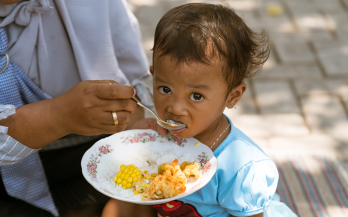
Data from the recent Micronutrient Gap Analysis (MGA) conducted by GAIN reveal that while wealthier households achieve adequate micronutrient intake, the poorest quintile still falls below recommended levels for nearly all essential nutrients. This means millions of Indonesians—especially women and children—are still not receiving the nutrients they need to thrive.
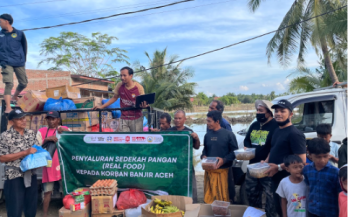
By the end of 2025, The Meteorology, Climatology, and Geophysics Agency (BMKG) of Indonesia recorded extreme rainfall, with intensities reaching 300–500 mm per month, occurring in 3 provinces in Sumatra. Indonesia is facing a combination of relatively complex atmospheric dynamics, including the active Asian Monsoon, the Madden–Julian Oscillation (MJO), atmospheric waves, the formation of tropical cyclone seeds and tropical cyclones, as well as the influence of a weak La Niña and a negative Indian Ocean Dipole (IOD). These conditions increased rainfall intensity, particularly from mid-December 2025 to early January 2026.
As an archipelagic nation, Indonesia ranks third globally in fisheries and aquaculture production. Despite these abundant, nutrient-rich aquatic resources, the country still faces significant malnutrition challenges stemming from insufficient intake of protein, micronutrients, and essential fatty acids. In 2021, the average per capita fish consumption in Indonesia reached 25.33 kg, notably lower than Malaysia (52.7 kg), a nation with fewer resources (KKP, World Population Review). This disparity highlights the gap between resources availability and dietary outcomes.
Jakarta moves fast. So do its appetites. Over the past five years, Indonesia’s food landscape has shifted further towards convenience and high-risk options, moving away from diets that are nourishing and environmentally grounded. Indonesia Health Survey 2023 tells the story in numbers: high-fat foods consumption rose from 58.5% in 2018 to 60.7% in 2023; salty foods jumped from 40.3% to 52.2%; and instant noodles climbed from 45% to 51.7%. Meanwhile, adequate vegetable intake (five portions per day) fell from 4.6% to 3.3%.