Climate Change Mitigation Commitment from Our Food Systems
BLOG | 2nd April 2026
BLOG | 2nd April 2026
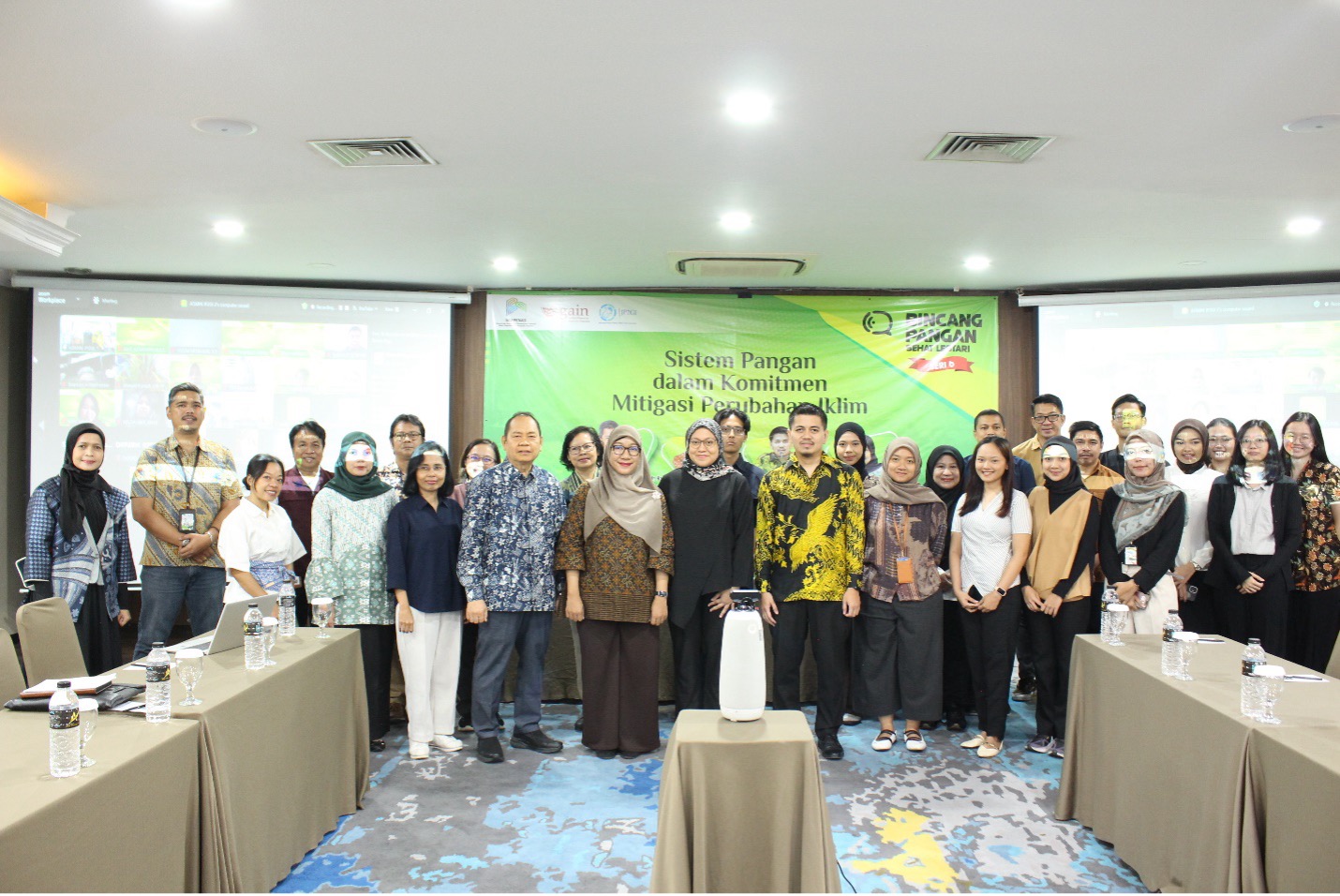
Amidst the rising urgency of climate mitigation, strategies remain heavily dominated by the energy, forestry, and transport sectors as the primary sources of greenhouse gas (GHG) emissions. However, food systems—which account for more than a quarter of Indonesia's emissions—remain on the periphery of climate policy. This critical gap was the focus of the 6th Bincang Pangan Sehat Lestari (BPSL) series held on 11 December 2025. The event brought together experts, policymakers, and practitioners from both government and NGOs to bridge this divide.
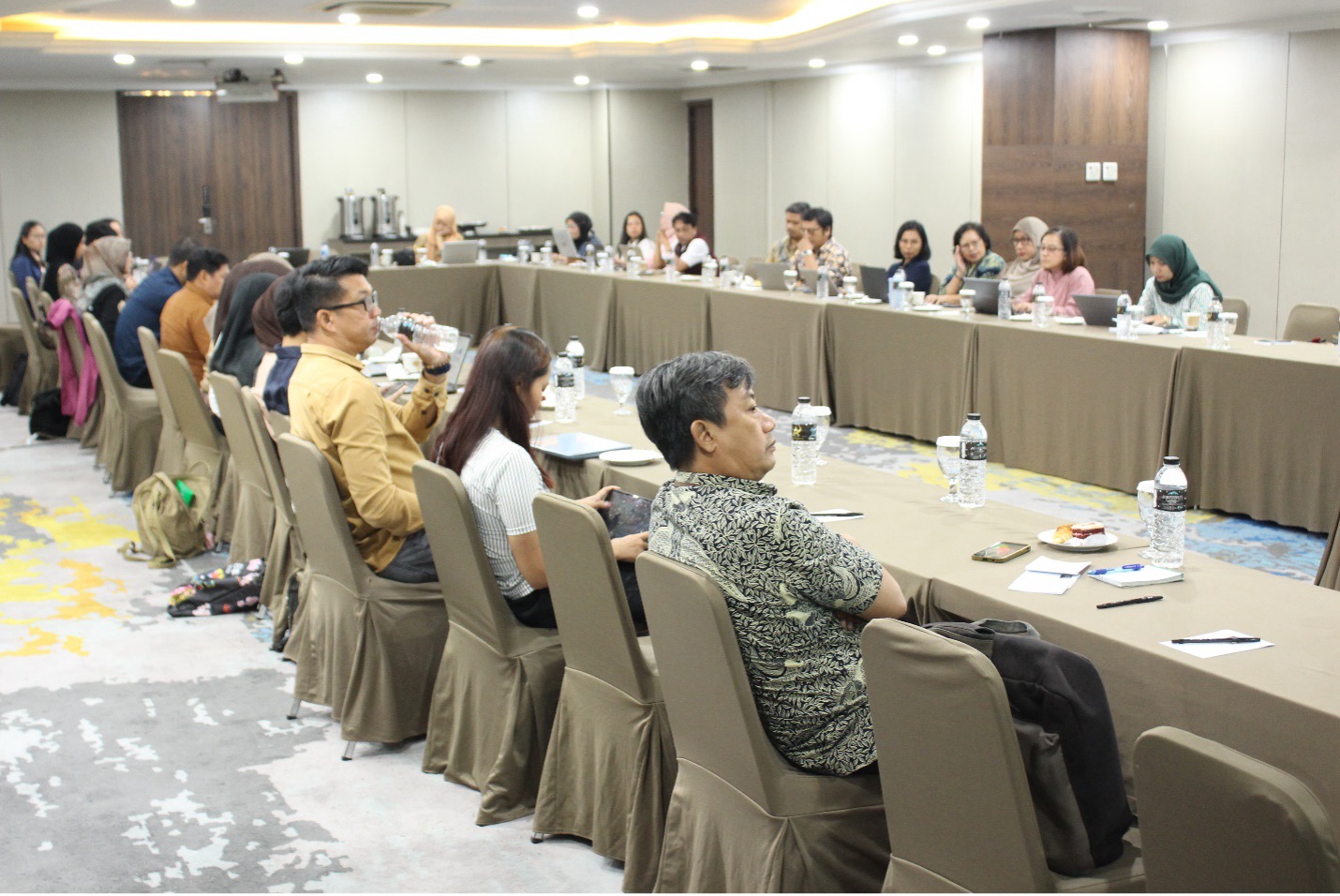
The 6th Bincang Pangan Sehat Lestari session was attended by over 100 participants, both in person and virtually via Zoom
Without mitigation, the financial burden of climate adaptation is growing significantly
The frequency and intensity of extreme weathers are increasing in Indonesia. Data from the National Disaster Management Agency (BNPB) shows that disasters between 2022 and 2024 were dominated by floods (4,206 incidents) and extreme weather (3,062 incidents), with hydrometeorological events accounting for 99.34% of the total. This escalation is driven by rising GHG emissions. Indonesia contributes approximately 2.3% of global emissions, totalling 1.24 Gt CO2e. This affected the formation of Tropical Cyclone Senyar and the influence of La Niña which triggered floods exceeding 300 mm of daily rainfall, demonstrating a lethal impact of record-high sea surface temperatures. Together with deforestation, this resulted in recent disasters in Sumatra with over 1000 death and over 68 trillion IDR Economic Losses.
Ifan Martino, Food Coordinator at the Directorate of Food and Agriculture, stated: ”The National Development Planning Agency (Bappenas) projects potential losses due to climate impacts are IDR 544 trillion, without policy intervention.” With recent disasters, the cost of adapting to the impacts of climate change will only grow and our policy intervention is insufficient. Therefore, Indonesia needs stronger climate mitigation measures.
GAIN Indonesia highlighted that food systems are one of major sources of GHGs emissions. The EAT-Lancet Commission estimates that they contribute nearly 30% of global greenhouse gas (GHG) emissions. In Indonesia, more than 26% of GHG emissions come from the food systems, which include emissions from agriculture production (13%), food system-related land use (6%), food loss and waste/FLW (7%), and energy consumption across food industries.
Haruki Agustina, Director of Climate Change Mitigation at the Ministry of Environment, highlighted that in the Second Nationally Determined Contribution (SNDC) submitted ahead of the COP30 Summit, emissions reduction targets for food systems are confined to the agricultural sector. These targets remain meager, at just 0.3–0.4% by 2030, and focus almost exclusively on agricultural production. Consequently, critical areas such as consumption patterns, dietary choices, and FLW receive far less attention.
In contrast, Ifan Martino added that the 2025-2029 National Medium-Term Development Plan (RPJMN) sets an emissions intensity reduction target of 62.37% and aims to reduce food loss and waste by 15-25% in 2029. Bappenas (Ministry of Planning) has also established the National Strategic Pathway on Indonesia’s Food Systems Transformation. This vision aims to build a food system that is healthy and nutritious, inclusive, fair, resilient, and sustainable through the regionalization of local biodiversity and aquatic foods. However, these commitments are not yet reflected in the SNDC.
Considering existing national strategic plans or priority programmes, GHGs emission from food systems may be increased in 2030. This is projected from land use change, agriculture intensification, and potential food loss from the “Food Estate” programs; 1.4 to 5 million tonnes of potential food waste from the Free Nutritious Meal (MBG) programme (Bappenas, 2025); and emissions from 2 million newly imported dairy cows. If left unaddressed, these factors will add significantly to Indonesia’s emissions profile.
During the seminar, speakers and participants discussed essential solutions to these challenges. Existing mitigation in agriculture sector focuses on measures such as the use of low-emission varieties in rice fields, the application of intermittent irrigation systems, the use of organic fertilizers, the utilization of livestock waste, and improvements in livestock feed supplements. These steps are necessary, but they must be implemented in the national priority programs such as food estate and imported dairy cows. In addition, food loss and waste must also be addressed in the food estate programmes and the MBG programme.
Indonesia needs to correct this blind spot; the NDC should be revised to clearly include food systems. Mitigation actions must be reflected in national strategic plans and government priority programs. Food estate can still be pursued, but it should be based on low-carbon local crops, climate-smart agriculture practices, intermitted irrigation, and serious efforts to reduce food loss from production to post-harvest and storage.
The MBG programme also needs practical adjustments. Shifting from food boxes to a “buffet approach” is a game changer for reducing food waste, as it allows students to take portions they can actually finish. Schools could be encouraged to compete to reduce food waste, not only on distribution targets.
Furthermore, local foods should also play a bigger role in MBG menus. GAIN is currently identifying 30 sustainable and healthy local foods in 8 provinces to support the implementation of National and Provincial Food and Nutrition Action Plan 2025-2029. This would reduce emissions linked to production and transport while introducing students to local diets that are often more climate friendly. MBG should be an opportunity as well for climate action.
Indonesia’s climate commitments will be difficult to meet if food systems remain outside the mitigation agenda.
Bincang Pangan Sehat Lestari (BPSL) is a series of talk shows created by GAIN, in collaboration with the Indonesia Post-Harvest Loss Alliance for Nutrition (JP2GI). This program is part of policy advocacy for environment, climate, and nutrition integration in three targeted policies on food-based dietary guidelines, food procurement, and climate action.
In this series, attendees gained insightful perspectives from several key experts: Ifan Martino, S.Si., M.S. (Ministry of National Development Planning/Bappenas), who discussed the integration of climate change mitigation into Indonesia’s National Action Plan for Food and Nutrition (RAN-PG). Dr. Ir. Haruki Agustina, M.Sc. (Ministry of Environment) presented on climate mitigation policies and the implementation of the Second NDC, focusing on integration opportunities for the food sector. Additionally, GAIN Indonesia shared insights on healthy and sustainable food for climate action and food security, with the session moderated by Yusmanetti Sari, M.Sc. (FAO).
RUU Pangan Jadi Sorotan, JP2GI dan GAIN Dorong Transformasi Sistem Pangan Indonesia
Menu Ikan dalam MBG dan Lestarikan Lingkungan

Environment Team Intern

Environment Manager