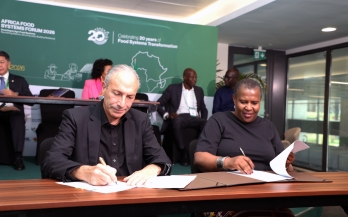
Across Africa, agricultural production has grown steadily over the past few decades. Much of the continent’s yields from its food systems is strong. However, this growth has not converged on the plates of Africans into healthy diets. Millions of households still cannot access safe, affordable and nutritious food. There is a significant gap in what Africa grows and how Africa eats. With a renewed agenda to close this gap, the Global Alliance for Improved Nutrition (GAIN) and the AGRA, on the sidelines of The Africa Food Systems Forum (AFSF), signed an LoI to make healthier diets more accessible, affordable, desirable and from more sustainable sources for all Africans.
GAIN’s membership in the Better Than Cash Alliance reflects the critical role of inclusive, equitable economic growth as a driver of food systems transformation.
The 2026 Food Systems Countdown Report reveals that progress is too slow and insufficient to meet 2030 goals, but 2050 could still be achievable, provided actions are consistent and accelerated.
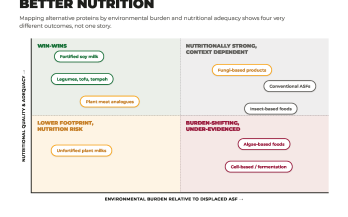
Over the past few years, alternative proteins have moved from sustainability narratives to real-world food products on plates. While the argument of alternative proteins helping reduce climate change sounds revolutionary, there are shortfalls.
In a recent article published in the journal One Earth, researchers from the Global Alliance for Improved Nutrition (GAIN) argue that the case for alternative proteins is often made on narrow evidence—oversimplifying it to just mitigating climate change could have an unintended effect of worsening micronutrient deficiencies in the regions where nutrition is already most precarious.
Large-scale food fortification—adding essential vitamins and minerals to staple foods like flour, rice, oil, and salt—currently prevents approximately 7 billion nutrient gaps* worldwide each year at a cost of just 18 cents per person, according to a new study published in The Lancet Global Health. The landmark study provides the first-ever comprehensive global analysis of both the cost and impact of food fortification and provides a roadmap to triple current impact globally.
GAIN is pleased to announce its membership in the Global Alliance Against Hunger and Poverty (GAAHP) bringing on board a nutrition and food systems lens for global efforts
Latest Review Series reveals USD 11 Trillion Bill in Food System’s Hidden Costs, a Significant Underestimation
• A partial USD 11 trillion bill: According to FAO’s latest estimates, food systems cost the world over USD 11 trillion per year in hidden health, socioeconomic, and environmental burdens – an amount larger than the GDP of most major economies. However, this figure likely represents a substantial underestimation of true costs and benefits as it does not capture all relevant negative and positive impacts.
• Health costs are the largest contributor, but micronutrient malnutrition remains invisible: Diet-related diseases, premature mortality, and productivity losses from illness are the biggest drivers of these costs, yet we are still failing to measure the true price of micronutrient malnutrition.
• The equity crisis: Existing research and data are heavily skewed toward high-income countries, leaving the severe burdens in low- and middle-income nations largely hidden.
The Zero Hunger Private Sector Pledge today released its latest Biennial Accountability Report – “From Pledge to Action”. Between 2021 and 2024, private sector companies deployed USD 440 million in 40 priority countries, to achieve Sustainable Development Goal 2: Zero Hunger. Despite multiple crises around the world and volatility across sectors, companies are demonstrating tangible actions to end global hunger and malnutrition.
For Immediate Release
Urgent Call for Accelerated Action on Climate-Nutrition Integration – Latest Assessment
Sub-Saharan Africa, Latin America and the Caribbean are leading the way
Strongest integration is at the nexus of gender, nutrition and climate change, with 69% ccGAPs showing a clear intention to address climate and nutrition in tandem.
Very low levels of integration in the private sector – 79% of the 350 companies assessed had zero integration.
London/Geneva, November 07, 2025: The Initiative on Climate Action and Nutrition (I-CAN) released its latest worldwide assessment of the integration of nutrition and climate action. The report analyses 16 key indicators across 198 countries, revealing that some policy areas have made progress – particularly national nutrition and adaptation plans.
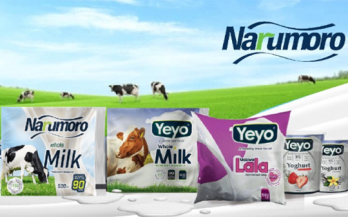
Incofin Investment Management and the Global Alliance for Improved Nutrition (GAIN), through the fund ‘Nutritious Foods Financing Facility (N3F)’, announce two new investments in East Africa’s dairy sector: Mujuni Ventures Limited in Uganda and Narumoro Dairy in Kenya.
These investments will improve access to nutritious foods for underserved populations, while strengthening local food systems and supporting smallholder farmers. With these additions, the Fund now counts ten active investments across Sub-Saharan Africa.