

GAIN Briefing Paper Series 2 - Animal-source foods for human and planetary health
- 28/02/2020
Animal-source foods (ASF) have long been important components of human diets, providing essential macro- and micronutrients. However, ASF production has increasingly been scrutinised as a driver of negative global environmental change, including climate change.
Empowering women throughout the food supply chain
Today marks International Women’s Day – an occasion to reflect on the contributions of women worldwide and, for GAIN, to reflect on how we are working to engage and empower women through our work. Over the past decade, there has been growing focus on empowering women in agriculture - and with good reason. Women’s participation in agriculture varies by region, but in many African countries, women make up close to half of the agricultural labour force.
Postponement of the Micronutrient Forum 5th Global Conference and Second Global Summit on Food Fortification
Due to guidance from the Government of Thailand, in response to the threat of the novel coronavirus (COVID-19) in Southeast Asia, we are postponing the Micronutrient Forum 5th Global Conference and the Second Global Summit on Food Fortification to a later, as-yet-unspecified date.
Five things we need from the Japan N4G Summit in December 2020
The clock is ticking. We are just 10 short months from the Nutrition for Growth Summit (N4G) in Japan in mid-December. Many people are working hard with the Government of Japan and partners, allies and colleagues to energise the nutrition base - and beyond - about the Summit and to develop commitments that will accelerate improvements in nutrition.
The unfinished agenda for food fortification in low- and middle-income countries: quantifying progress, gaps and potential opportunities
- 29/01/2020
Large-scale food fortification (LSFF) is a cost-effective intervention that is widely implemented, but there is scope to further increase its potential. To identify gaps and opportunities, we first accessed the Global Fortification Data Exchange (GFDx) to identify countries that could benefit from new fortification programs.
Simplifying dietary assessment: can pictures of food work?
We use dietary intake surveys of what people eat a lot. They are needed to support the design, monitoring, and evaluation of food-based nutrition programmes that aim to improve dietary adequacy in populations. In a world where over one third of people have unhealthy diets, getting this right matters.
Achieving urban food and nutrition security with the new urban agenda
- 16/10/2016
The position paper "Achieving Urban Food and Nutrition Security with the New Urban Agenda", makes recommendations to the Draft New Urban Agenda, emphasising the importance of creating good urban food policies and the key role cities play in this.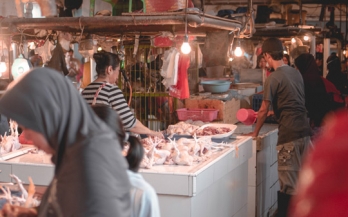
Improving #UrbanNutrition: a global priority
More than half the world’s population currently lives in urban areas, and this is expected to increase to 70% by 2050. Growing urban populations demand more from our planet in terms of natural resources and the need for greater innovation in health, nutrition, quality and energy has become a priority.