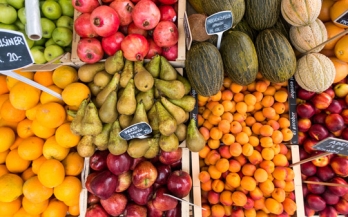
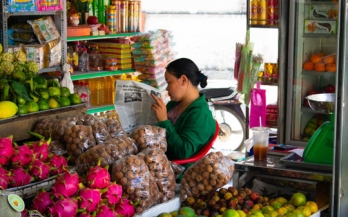
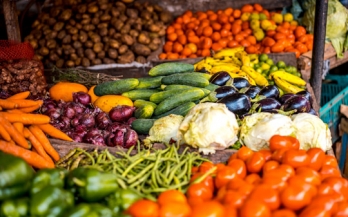
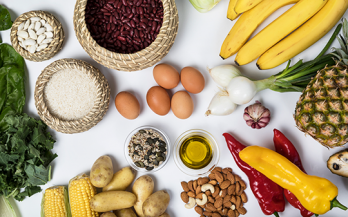
This paper posits the urban food environment as an extremely useful policy-making framework for developing actions to improve nutrition, as it is the point at which people and food interact. It describes the nutritional challenges of urban areas and how urban food environments influence nutrition through the affordability, physical access to, convenience and desirability of healthy foods.
"Biblical". That was the word that the world’s press needed to (finally) run stories about the impacts of the COVID-19 crisis on food and nutrition. Thank you to the Executive Director of the World Food Programme, David Beasley, for the turn of phrase.
The world is urbanising rapidly, and malnutrition in urban areas (including both undernutrition and overweight/obesity) is an increasing problem. City policymakers in all countries are well placed to address urban malnutrition by virtue of their access to a wide variety of policy-level entry-points to food access and physical activity.
We are pleased to announce 8 through 13 November, 2020 as the new dates for the Micronutrient Forum 5th Global Conference , 8 and 9 November 2020 as the new dates for the Second Global Summit on Food Fortification in Bangkok, Thailand.
Food supply chains are challenged to deliver affordable, safe and nutritious food. GAIN has developed a tool for analysing specific supply chains identify weaknesses or bottlenecks and suggesting potential interventions to improve nutrition along the supply chain, i.e. Supply Chain Analysis for Nutrition (SCAN). Supply chains structure how goods and services move from producers to consumers and are key components of the food system.
Following the postponement of the Olympics to 2021 due to COVID-19, many people have asked whether the Nutrition for Growth Summit (N4G) is still scheduled to be held in Tokyo in December 2020. The N4G Summit has a symbolic link to the Games, having been initiated alongside the London Olympics, and is being hosted by Japan with a focus on nutrition and universal health coverage.
Devising strategies to support consumer food choices is a high priority for the food systems and health agenda. Front-of-package labels (FOPL) provide visible nutrition information on packaged foods and have been introduced in 55 countries.
Most front-of-pack labelling (FOPL) systems operate in high-income countries (HICs) on packaged foods purchased in a supermarket setting. To explore the role that FOPL and other types of visual cues could play in supporting consumers’ ability to choose nutritious foods in LMICs, GAIN convened three workshops in 2018-2019.
With the spread of COVID-19 we find ourselves plunged into a global health crisis. By most accounts we are only at the early stages of the pandemic so it is going to reshape economy, society and politics, probably permanently.
The Food Systems Dialogues are a global series of facilitated round-table discussions that encourage collective action for transforming food systems. The dialogue aims to bring together diverse actors in food systems to share perspectives, examine opportunities, and understand trade-offs for change.