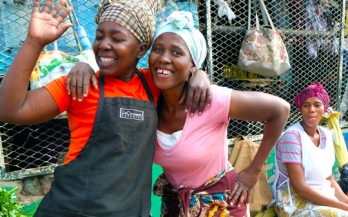
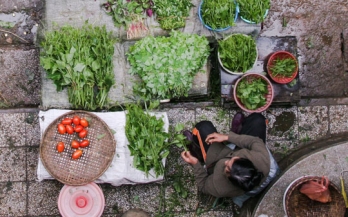
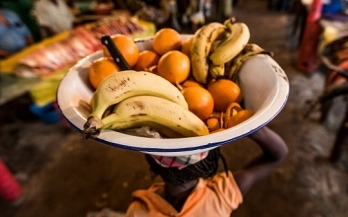
This webinar will discuss the findings of a total of 533 Informal Urban Markets Vendor 'snapshot' surveys, as well as of the 35 interviews and 21 focus groups with a range of urban food systems stakeholders from vendors to local and national government policy makers, and SMEs. These findings are part of a wider rapid assessment, conducted between late 2020 and early 2021, in the aforementioned 6 cities, and which also comprised activities, such as, desktop research and satellite imagery.
Join us for USAID Feed the Future’s EatSafe Interview Cruncher hosted by GAIN examining the important questions of how to close the knowledge gap between food safety and nutrition and how to elevate food safety in global development conversations.
PRESS RELEASE: Today the World Wide Fund for Nature, one of the world’s largest conservation organisations, and the Global Alliance for Improved Nutrition (GAIN), a foundation that tackles human suffering caused by malnutrition, announce a formal MOU to deliver food systems which benefit both people and nature.
BLOG: The Worldwide Fund for Nature (WWF) and the Global Alliance for Nutrition (GAIN) have just signed up to a new partnership. WWF aims to stop the degradation of the earth’s natural environment and to build a future in which humans live in harmony, and GAIN to deliver more nutritious food for all people. At face value fundamentally different jobs. Why would they be joining forces? The answer is simple: food systems are failing nature and are leaving billions of people without safe and nutritious food.
The number of people who go to bed hungry was rising steadily prior to the COVID-19 pandemic due to stresses related to climate, inequality and conflict, and now stands at 690 million. The pandemic has supercharged these trends. The latest UN estimates are sobering, with an additional 130 million projected to be suffering from hunger, even before the devastating pandemic numbers we are currently seeing from India and Brazil.
As a global community we urgently need to reimagine how our food systems work to ensure both human and planetary health. To this end, the Global Alliance for Improved Nutrition (GAIN), the Alliance of Bioversity-CIAT, EAT, CSIRO’s Food Systems and Global Change group, and the Cornell Atkinson Center for Sustainability are excited to announce the launch of the Innovative Food System Solution (IFSS) portal on NutritionConnect.org on May 19, 2021.
Almost a year ago, the Food Systems Dashboard, the first dashboard that collects country-level data across all components of the food system, was launched. Today, the Dashboard contains over 200 indicators that measure components, drivers, and outcomes of food systems at the country level.
The triple impact of COVID-19-related disruptions in food, health, and social protection systems have already reversed recent progress made with severe consequences on human capital. If we do not act to protect infants during the critical first 1000 days from conception to 24 months of age, their growth and development will be permanently affected by consequent nutritional deficiencies.
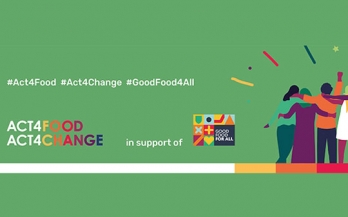
Today, a global youth-led food movement was launched, promising to ignite a campaign action to combat hunger, improve health and heal the planet. The #Act4Food and #Act4Change campaign takes the form of a simple pledge and list of actions.
Act4Food Act4Change is a global youth-led movement promising to ignite a campaign action to combat hunger, improve health and heal the planet. The #Act4Food and #Act4Change campaign takes the form of a simple pledge and list of actions. The pledge brings together young people from around the world to focus on personal action and advocacy as a contribution to systemic change.