
Reflections on UN Food Systems Summit progress to date
Dubbed a "Peoples Summit", it is open to unprecedented engagement in every country, from every sector, and every constituency. It is also dubbed a "Solutions Summit" with a focus on action. I lead one of the five thematic areas or "Action Tracks" (ATs) on "Ensuring access to safe and nutritious foods for all". There are four other ATs, a Science Group, a Champions Group, 4 cross-cutting Levers and the over 100 Summit Dialogues to date.
What are food systems?
Our food systems profoundly impact our ability to achieve universal goals of human and planetary wellbeing, with food directly or indirectly linked to several of the United Nations (UN) Sustainable Development Goals. With the UN Food Systems Summit scheduled to convene a wide group of stakeholders from all walks of life in September 2021, food systems are rising up the agenda.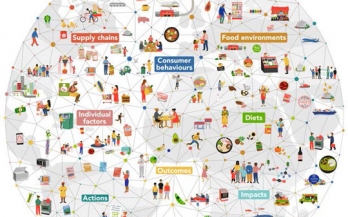
What are food systems?
- 21/04/2021
Food Systems are the people, places, and activities that bring us food. They make food available in diverse ways that influence and shape the choices we make about what to eat, when, and how. They are complicated and constantly changing – comprising a host of moving and interconnected pieces. They support many people’s livelihoods.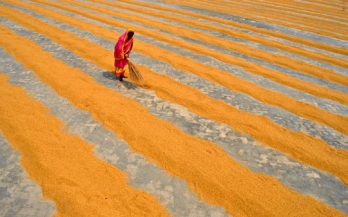
GAIN Working Paper Series 20 - Gender equity and reduction of post-harvest losses in agricultural value chains
- 20/04/2021
High levels of food loss help drive low availability and affordability of nutrient-dense foods such as fresh fruit and vegetables - which, in turn, contribute to poor-quality diets and poor nutrition outcomes in many low- and middle-income countries. Much of this loss occurs at the post-harvest stage, in which women often play a large role, and gender relations shape decisions along agricultural value chains
High level panel on the road towards the 2021 Food Systems Summit
Online Webinar, Global
Following opening remarks by the moderator, panelists will be invited to address the guiding questions (see below). Following these interventions, Member States, observers and civil society are encouraged to ask questions or raise issues in response to the interventions made.
2021 UN Food Systems Summit - Action Track 1 Public Forum
Online Webinar, Global
The ambition of the 2021 UN Food Systems Summit is to launch a collective journey of transforming our food systems to give us the best possible chance of delivering on the 2030 agenda. Everyone has a role to play in this. Only by coming together and challenging one another we can spark new ideas and create meaningful impact.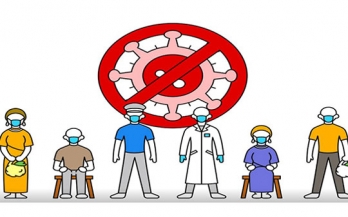
Simple guidelines to face the COVID waves
Here comes the third wave. Like the first COVID-19 wave and the second wave, we cannot know in advance its peak, scale, or duration. I often think that things could have been different if we could have predicted the pandemic’s impact, but we were found to be ill-prepared. If we had relevant information and better disaster preparedness, we might all be living differently by now, I guess.
GAIN one year later: navigating the consequences of the COVID-19 crisis
In the nine countries where GAIN works, lockdowns and border closures to mitigate the spread of the virus and the concurrent economic impact could greatly increase hunger. In some places, restrictions in movements and lay-offs would mean reduced accessibility to fresh produce and nutrient-rich animal-sourced foods, resulting in millions of people having to resort to less nutritious foods.