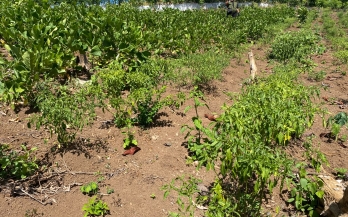
Jack bean offers Indonesia a practical, climate-resilient crop option at a time when El Niño, drought and rising climate variability are putting farmers, food security and agricultural systems under increasing pressure. Drawing on experiences from drought-prone regions across Indonesia, the blog highlights how jack bean continues to grow, flower and produce when crops such as maize, chili and soybean struggle or fail. Its deep roots, nitrogen-fixing ability, tolerance of poor soils and potential use in foods such as tempeh make it valuable for smallholder resilience, soil health, food diversification and reducing dependence on imported soybeans. The blog argues that Indonesia should give jack bean stronger policy, research, extension and market support as part of its climate adaptation and food security strategies.
A new tool helps decision makers do just that. The Priority List uses a holistic food rating system called the Nutritional Value Score to identify the most nutritious foods for programmes and policies.
In low- and middle-income countries where GAIN and partners work, every bite counts towards tackling persistent undernutrition and rising rates of diet-related chronic disease.
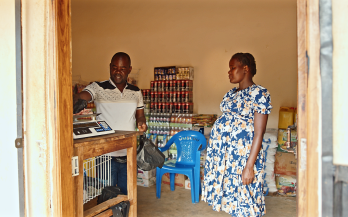
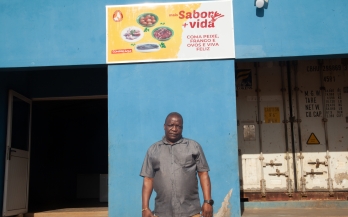
In Tehene, a remote community near Gurué in central Mozambique, high costs and difficult market access mean families rarely eat animal-source foods such as frozen fish or chicken. To help close this gap, entrepreneur Inocêncio Calado founded Alto Licungo, a cold chain distribution business supported by GAIN’s Improving the Consumption of Animal Source Foods project. Inspired by his late father, Inocêncio is helping transport perishable foods safely across long distances so rural communities can access nutritious foods more regularly.
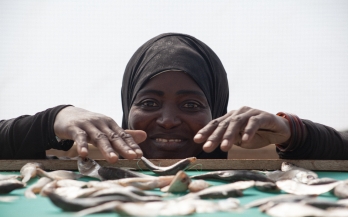
Moma, Mozambique – When Islova Alberto Aly decided to venture into fish drying, her primary aim was to generate an income to support her children's education. Little did she know that her traditional fish drying methods—spreading fish on the ground by the Mucoroge beach, exposed to sand, dust, sun, and bacteria—would harm her community.
Chimoio, Mozambique – A white Hino truck rattles under its own weight on the bumpy road, while its tires throwing particles of dust from the asphalt in the air from the district of Cantandica, Manica province, central Mozambique.
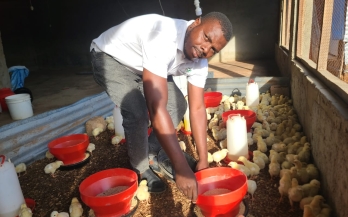
Pemba, Mozambique – From the window of his house in Quissanga district, Cabo Delgado, Andrade Vitorino watched helplessly as his poultry farm collapsed due to strong winds and rains caused by cyclone Kenneth in 2019.
But since the 2017, it is the armed conflict in Cabo Delgado province that affected his business and various economic activities, as well as the functioning of food systems in the province.
“One day, a neighbour shouted that we were under attack, and we all ran away, leaving everything behind. A few days later I heard that everything had been burned down. Houses and everything, including my poultry,” said Andrade.
Seated on a plastic chair and turning his back to his house made of clay, in one of Pemba's neighbourhoods, where he is starting new life he says, “I didn't have time to take anything. Just my documents. My house, my aviary and my dreams were left behind.”
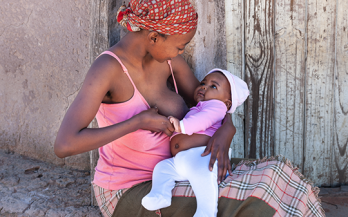
Breastfeeding not only contributes to positive nutrition and health outcomes, but also to environmental sustainability by significantly reducing the environmental footprint associated with the production, packaging, distribution and consumption of infant formula. The environmental benefits of breastfeeding are multi-faceted.
Previously, we showed how NutriBaik is changing lives through this story. Today, we talk to Ancha Monequete on why she “finds hope in NutriBaik”. Here we see how, through women the NutriBaik, women are playing their part in the functioning of food systems.
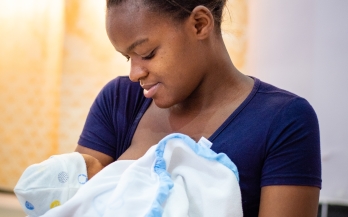
Through an innovative intervention called Emo Demos, about 12,680 women learned about the importance of breastfeeding. Meet Madalena, one of these women who learned to care for herself and her children during pregnancy and breastfeeding.
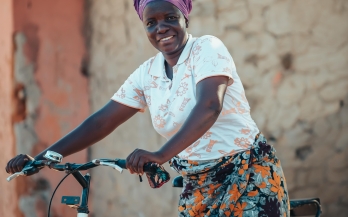
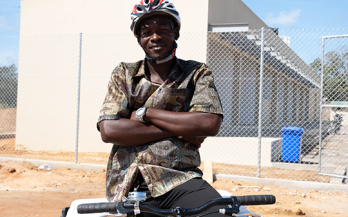
One of the biggest challenges street vendors face in Pemba and other parts of Mozambique, is having to travel long distances by foot, reaching more customers. NutriBike is an intervention to solve the storage challenges faced by street vendors. It provides street vendors suitable equipment for preserving and transporting their products maintaining quality, as well as enabling them to cover longer distances and faster.