Off the sand: how cleaner dried fish changed Isabel’s business
For years, sand and sudden rain could reduce the value of Isabel Alfândega’s dried fish. A solar drying tent now keeps her fish off the ground, shortens the drying process and helps her secure a better price.
Sambazoe, Sofala, Mozambique – Inside a solar drying tent, Isabel Alfândega places fish one by one across a raised green mesh. She leaves a small space between them, just as she did when she dried her fish on the beach. The difference is that they are no longer touching the ground.
“We used to dry fish directly on the sand,” she says. “It took three days to dry.”
In the tent, the process takes one and a half to two days.
For Isabel, the change matters at the point of sale. She says cleaner fish can command a better price. She estimates that her monthly profit has risen from around 3,000 meticais before she used the tent to between 5,000 and 6,000 meticais now.
Isabel has been doing this work since 2011, when she left the Nhamatanda district with her late husband in search of a new beginning. They had been farmers but wanted to try something different.
“We were looking for a new opportunity away from the village,” she says. “We wanted to build a life around drying and selling fish.”
Today, Isabel is responsible for eight children: two of her own and six who were left in her care after her sister died.
The problem buyers could see
Isabel still goes to Sambazoe Beach to buy her fish. As fishers pull a large net ashore, Isabel and other women traders wait nearby, ready to buy part of the day’s catch for drying and resale.
Buying the fish was the easier part. Drying it without losing quality was not. Once spread on the ground, each batch was exposed until it was ready to sell. Wind blew sand over the fish. Rain interrupted the process and could damage it.
“These fish have sand in them,” buyers would tell her.
Their complaints affected what they were prepared to pay.
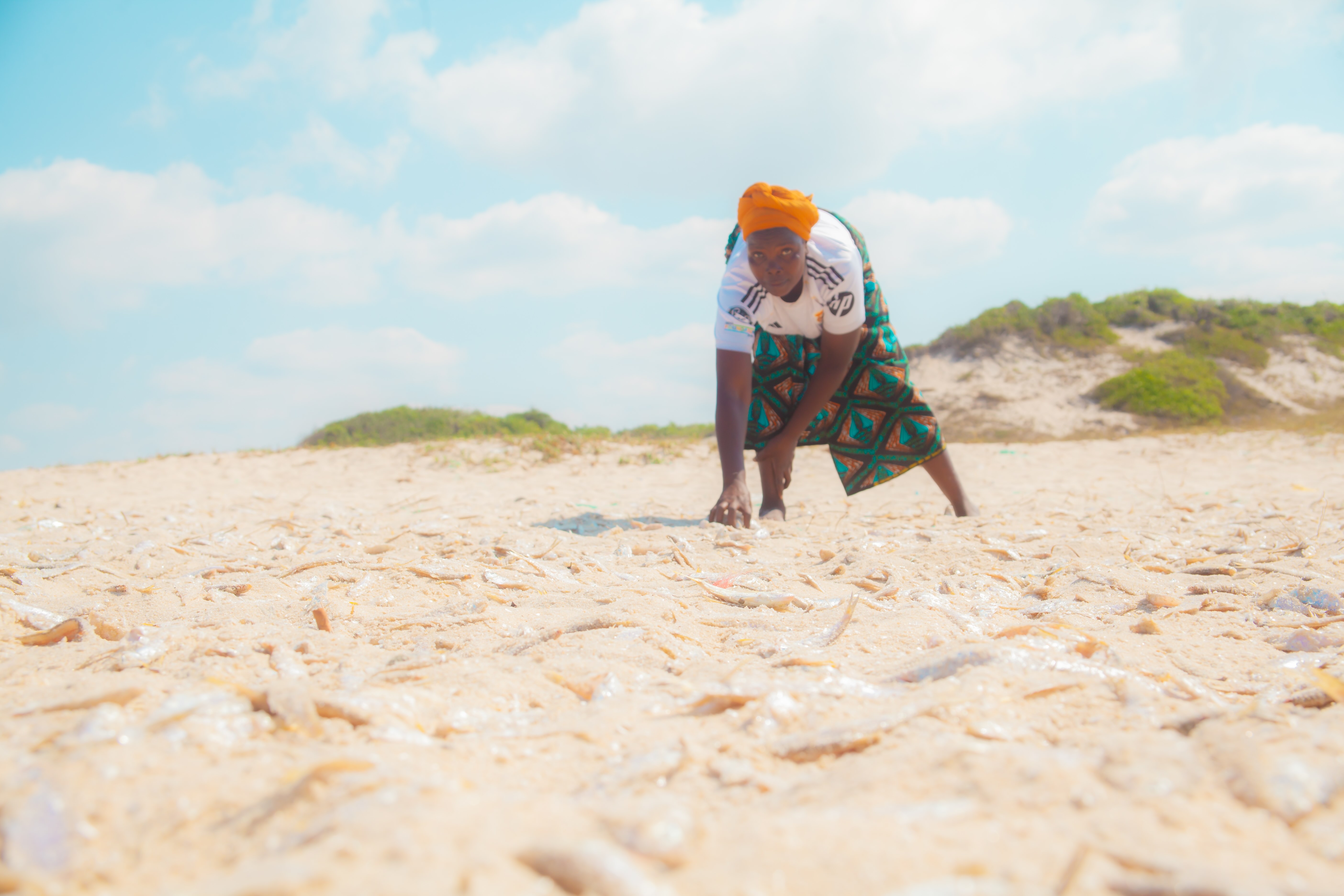
Before the solar drying tents were introduced, Isabel dried her fish directly on the sand, where it was exposed to sand, sudden rain, insects and animals. Photo: GAIN Mozambique
Isabel’s experience reflects a wider problem in Mozambique’s fish trade, where losses can occur during handling and processing.
GAIN Mozambique’s 2022 fish value chain assessment estimated that the lack of suitable facilities at many landing and storage sites contributed to pre-market losses of between 30% and 60% of the catch.
Adapting a familiar practice
The Global Alliance for Improved Nutrition (GAIN) in Mozambique has since constructed two solar drying tents in Isabel’s community. The tents use the sun’s energy to dry fish while keeping it off the ground. Their covering reduces the fish’s exposure to sand, rain, insects and animals.
The innovation builds on the work Isabel already knows. Drying fish in the sun remains central to her business; raised mesh and a covering change the conditions in which she can do it.
The tents were provided through GAIN’s Improving the Consumption of Animal-Sourced Foods project, funded by the Ministry of Foreign Affairs of the Kingdom of the Netherlands. The project works with businesses and communities to improve the availability, affordability and desirability of nutritious animal-source foods. To date, it has constructed 10 solar drying tents across its project areas in Mozambique, with five more under construction.
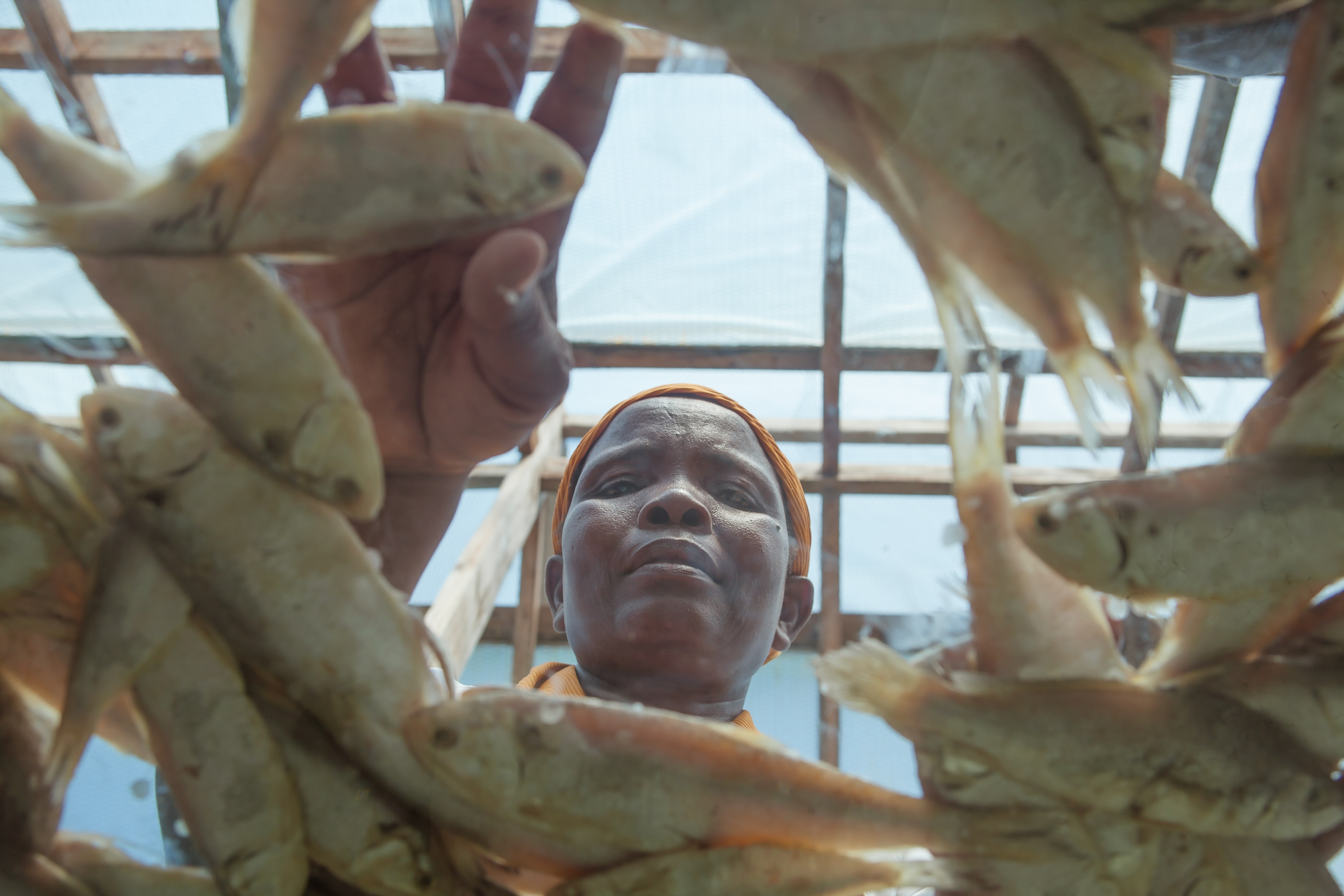
Isabel checks fish inside one of the solar drying tents constructed in Sambazoe. The structure shortens the drying process and keeps the fish away from the sand. Photo: GAIN Mozambique
The tent gives Isabel more control over a process that used to depend heavily on the weather.
“It’s completely different now,” she says. “I used to dry the fish on the seashore, on the ground, and that was harmful. On rainy days, I couldn’t dry the fish.”
“This is how I support the eight children in my care,” she says.
The change is also beginning to influence how other people in the community dry their fish. Isabel says some neighbours are building raised racks at home instead of placing their fish directly on the ground.
“People are now doing the same at home,” she says.
Isabel’s business still begins on the beach. She waits for the catch, buys what she can and prepares it for sale. What has changed is where and how her fish is dried.
Her account points to a lesson for partners supporting small food businesses: begin with the difficulty traders face in their daily work and make the improved practice practical for them to use. Here, that starts with keeping fish off the sand.
“Now I can dry the fish in this tent,” she says. “Without sand from the ground, I can sell my fish for a higher price.”
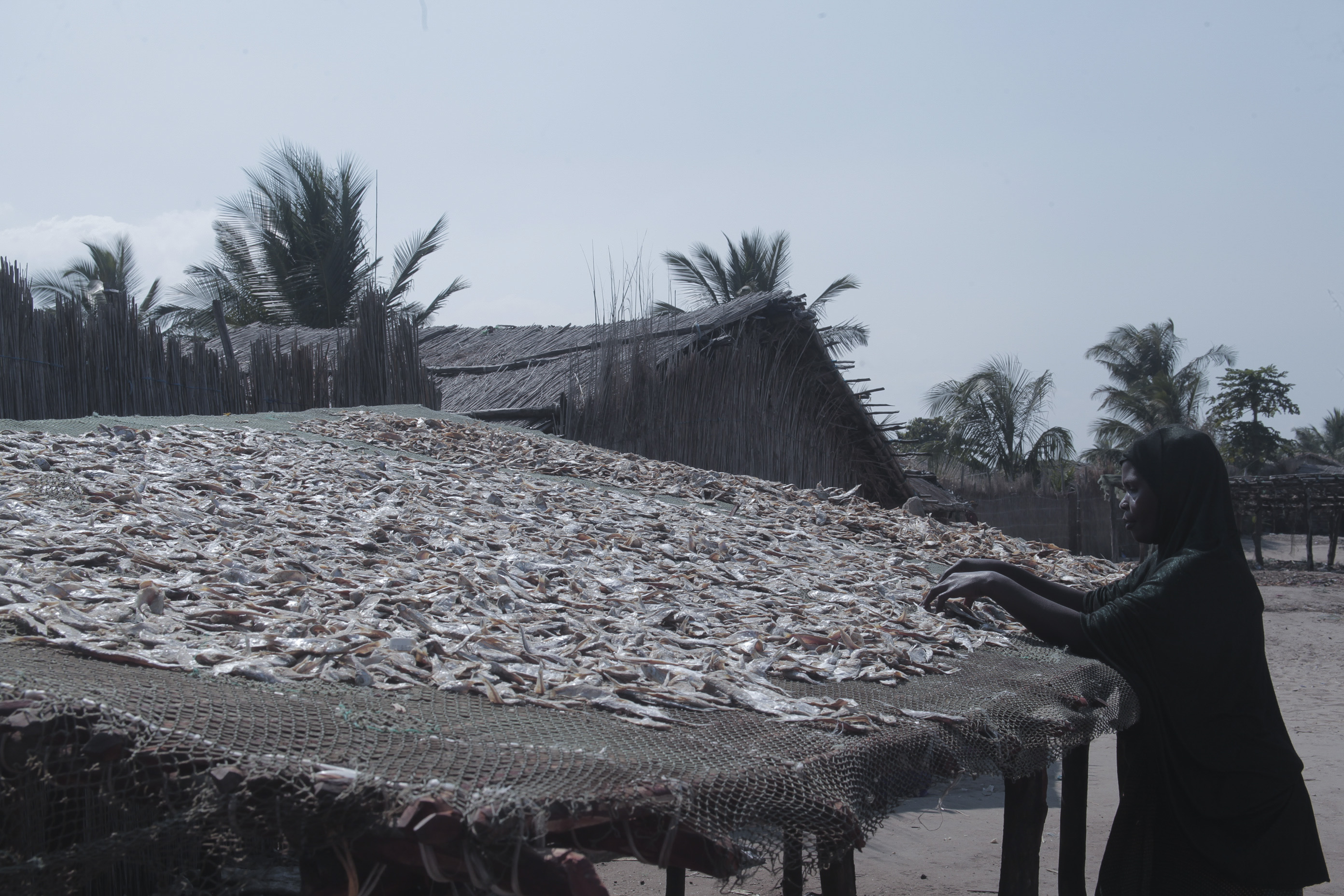
Fish dries on a raised rack in Sambazoe. Some community members have begun building similar racks at home to keep their fish off the sand. Photo: GAIN Mozambique