
Nazia Ahmed
Senior Programme Assistant, Policy and Food Systems
A nourished individual is indispensable for the prosperity of a country. Bangladesh has made significant progress toward tackling malnutrition, eradicating poverty, and reducing social vulnerability, yet major nutrition challenges persist. In 2023-2025, 8.2% of the population remained undernourished (SOFI 2026), nearly 38.6% could not afford a healthy diet (SOFI 2026), and 30.5% experienced moderate or severe food insecurity in 2021-2023 (SOFI 2023) amid climate shocks and economic pressures. Strengthening nutrition-sensitive social protection is therefore essential.
Layering nutrition social and behaviour change communication (SBCC) is an important pathway for improving the nutrition-sensitivity of social protection programmes. A systematic review commissioned by the Global Alliance for Improved Nutrition (GAIN) further revealed that integrating SBCC into social protection programmes can have a positive effect on nutrition outcomes.1 In Bangladesh, The Transfer Modality Research Initiative found that cash combined with nutrition behaviour change communication significantly improved child nutritional status and reduced stunting by 7.8 percentage points, while other transfer modalities did not significantly improve anthropometric outcomes (Ahmed et.al., 2024)2. Vulnerable households due to their low affordability often depend heavily on rice and consume fewer vegetables, fruits, pulses, meat and eggs, contributing to macro and micronutrient deficiencies and non-communicable diseases3.
In Bangladesh, the Food Friendly Programme (FFP), or “Khaddo Bandhob Karmasuchi,” is a critical food assistance programme of the Directorate General of Food, Ministry of Food, which provides subsidised rice to 5.5 million vulnerable households during the 6 months of lean period for agricultural wage income4. Through the Strengthening SBCC Delivery System in Nutrition-Sensitive Social Protection project, GAIN Bangladesh is collaborating with the Cabinet Division of the Government of Bangladesh to design and implement a nutrition SBCC delivery system, supplementing FFP rice benefits with targeted nutrition messaging for participating households. This initiative is currently being piloted in Gouripur Upazila, Mymensingh District, with an anticipated reach of 22,500 eligible low-income households. This project is part of GAIN’s Nourishing Food Pathways programme, which aims to support coherent, inclusive food systems transformation in ten countries.
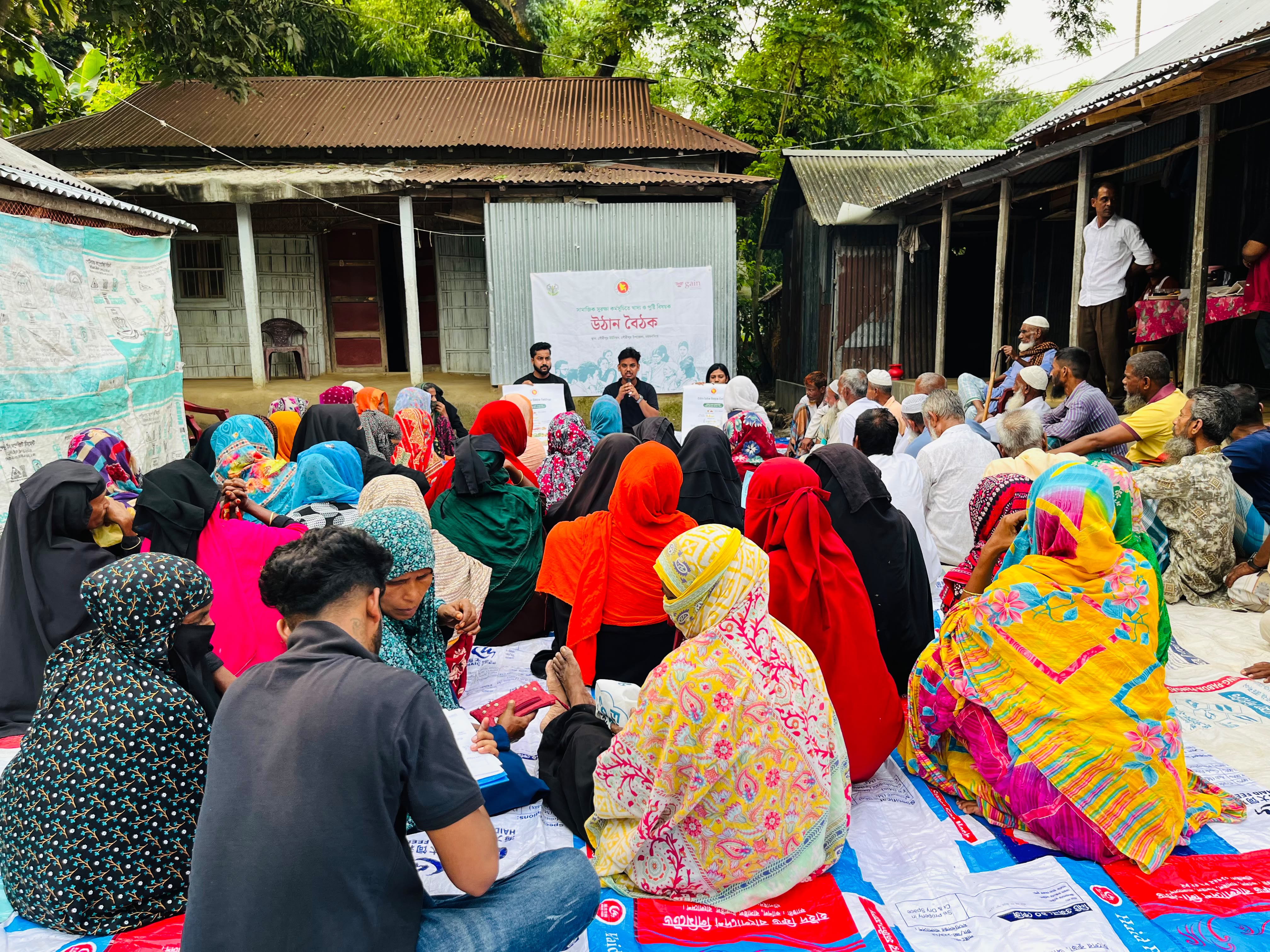
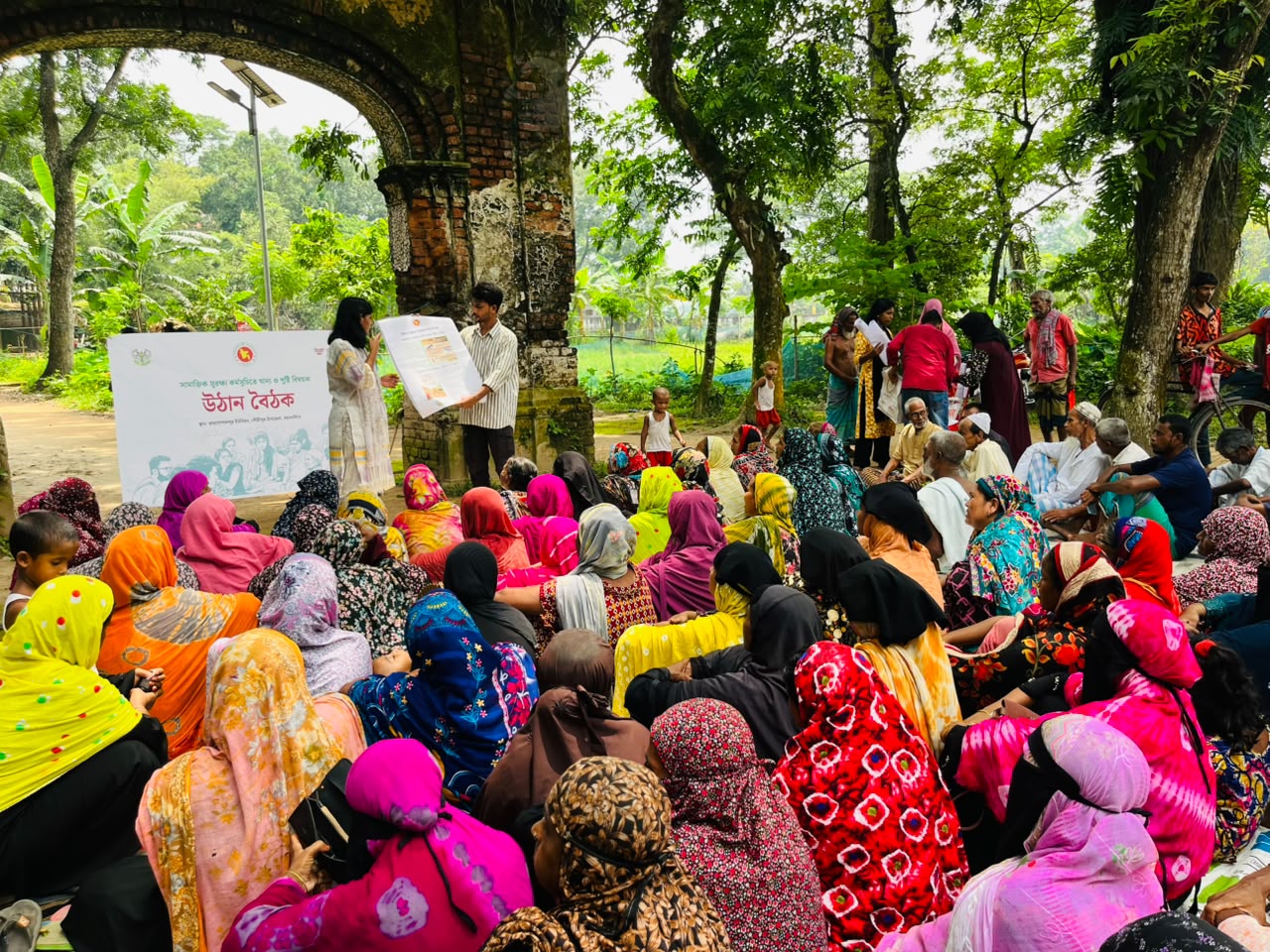
The SBCC intervention consists of two complementary components: 1) pre-recorded audio programmes broadcasted by FFP dealers during rice distribution, and 2) interactive courtyard sessions organized between distribution periods to encourage continued exposure to and engagement with nutrition messaging. The audio programmes, broadcast by 36 FFP dealers and reaching around 22,500 FFP beneficiaries in Gouripur Upazila, present key messages on nutrition and healthy diets through entertaining and informative skits and plays. The courtyard sessions, which aim to reach around 10,000 beneficiaries, each last 90 minutes and are facilitated by government officials and youth facilitators.
During these sessions, participating households engage in dialogue on key nutrition concepts, including micronutrients, dietary diversity, and food safety, as well as the barriers they face and strategies for improvement. Visual aids, including illustrations of different foods, food plates, and the food pyramid presented through flip charts, help families understand what a balanced diet can look like.
GAIN's experience in youth and adolescent nutrition has informed the engagement of young facilitators in the FFP behaviour change delivery system, who help bridge the gap between nutrition messages and meaningful community conversation. They do not replace nutrition professionals but serve as accessible facilitators who explain information in simple language, encourage questions, listen to concerns and use familiar examples from daily food diets. In each session, they turn nutrition information into stories drawn from real life. A case study in Bangladesh found that structured leadership development training combined with hands-on community action helped young people build confidence, food-systems awareness and capacity to engage communities and stakeholders. Those lessons are reflected in Gouripur, where GAIN organized training and their trained youth facilitators use nutrition knowledge and participatory techniques to guide discussions5. Local public administration and several representatives of the government at Gouripur are sensitized regarding the SBCC delivery and provided their assistance and supervision throughout the process.
“I wanted to work with my community because I believe young people should not only talk about change but also be part of creating it. Every session gives me an opportunity to share what I know, but also to learn from the people around me.”
- Jannatul Firdose Mili, 20 years old, female youth facilitator
At the core of the project is Human-Centered Design (HCD), an interactive approach that aligns solutions with people’s needs and constraints. The FFP SBCC model was co-designed by GAIN, the Cabinet Division and local partners through a participatory process, guided by GAIN’s HCD Toolkit6. In the FFP pilot, GAIN’s iterative HCD approach has enabled the establishment of feedback loops and two-way learning among the beneficiaries and facilitators. Each courtyard session provides an opportunity to strengthen the skills supporting the future role of youth facilitators as community leaders, communicators and advocates for healthier diets and better nutrition.
Prior to this collaborative effort between GAIN and the Cabinet Division, the FFP program lacked a meaningful delivery system for nutrition SBCC. This project has transformed the nutrition-sensitivity of the programme by layering in two SBCC components, supporting positive behaviour change for participating households both during rice distribution seasons through audio broadcasts, and throughout the calendar year through interactive courtyard sessions. Our vision is to continue collaborating with the Cabinet Division and local stakeholders to sustain and scale this SBCC intervention across the FFP program. By layering food assistance with practical, adaptable delivery systems for nutrition SBCC, the FFP can be an important lever for nutrition-sensitive social protection in the communities it serves.
Senior Programme Assistant, Policy and Food Systems

Communications and Youth Engagement GAIN

Asia Project Coordinator for Social Protection

Lead, Social Protection

Head of Policy, Global Alliance for Improved Nutrition (GAIN) Bangladesh