
Ty Beal
Senior Technical Specialist
GAIN’s Priority List helps decision makers identify the most nutritious locally available foods to prioritise in programmes and policies, making it easier to target investments where they can have the greatest impact on diets and nutrition.
This is a question programme managers and policymakers working in food systems face almost daily. With limited resources, there is a pressing need to target interventions and policies at the foods most likely to deliver the greatest impact if people ate more of them.
A new tool helps decision makers do just that. The Priority List uses a holistic food rating system called the Nutritional Value Score to identify the most nutritious foods for programmes and policies. In low- and middle-income countries where GAIN and partners work, every bite counts towards tackling persistent undernutrition and rising rates of diet-related chronic disease.
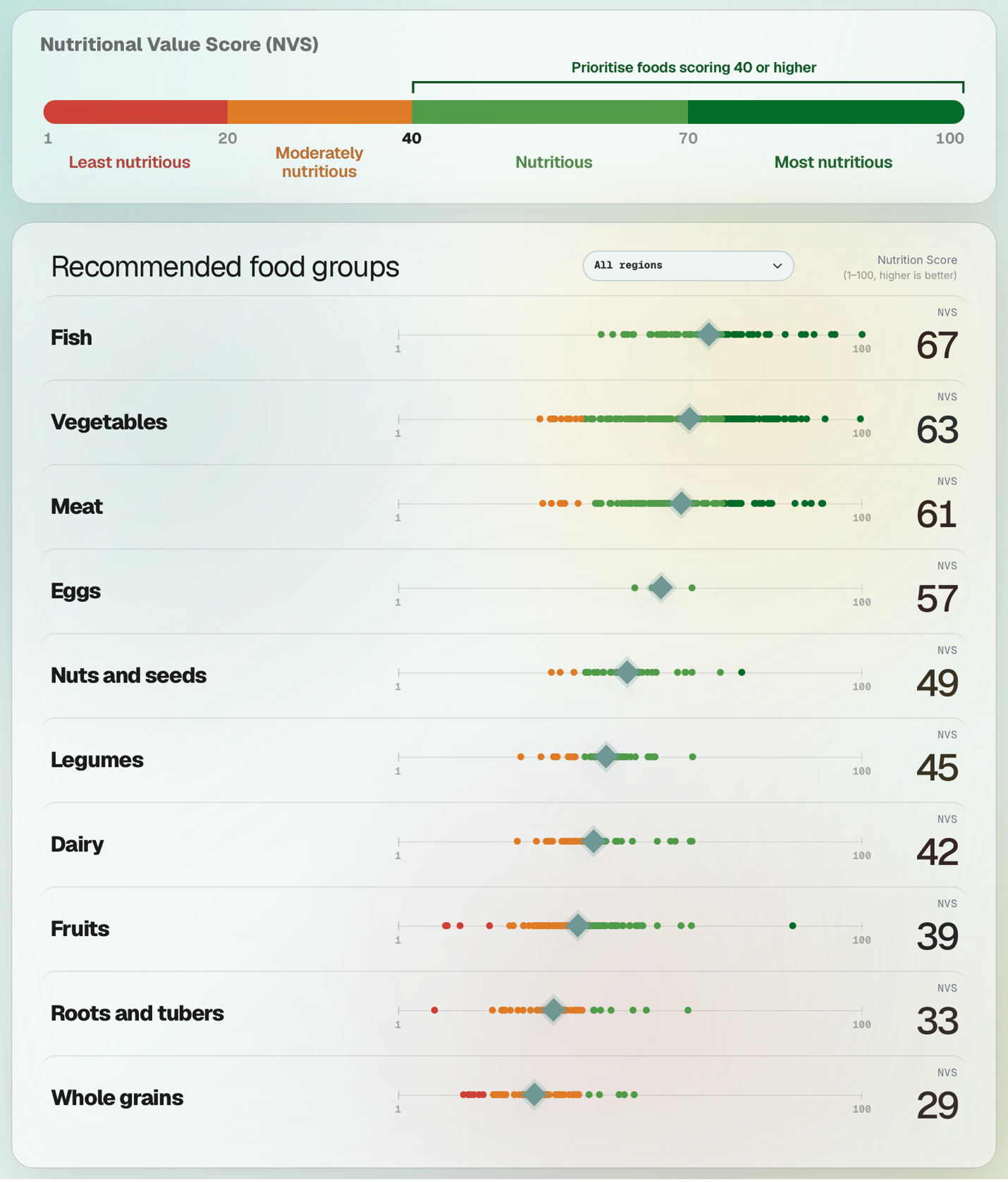
The tool includes ratings for 778 unique locally available foods across sub-Saharan Africa, South and Southeast Asia, and Latin America. The score runs from 1, least nutritious, to 100, most nutritious, and combines the density of essential nutrients with dietary attributes linked to a lower risk of diet-related chronic diseases. Many of the top scorers are traditional foods with particularly high nutrient density, such as African star apple and amaranth leaves, both scoring 85.
Scores are grouped into four categories: 1–19 least nutritious; 20–39 moderately nutritious; 40–69 nutritious; and 70–100 most nutritious.
Foods scoring 40 or higher are generally the ones to promote and invest in. These foods contain a high concentration of essential nutrients and protect against chronic disease, so increasing consumption within a balanced diet gives the best chance to improve nutrition where it matters most.
Explore the tool
When you visit the Priority List, you see 10 recommended food groups and their average nutrition scores. Click on a food group to see a list of foods sorted by nutritional value or use the search box to find a specific food of interest.
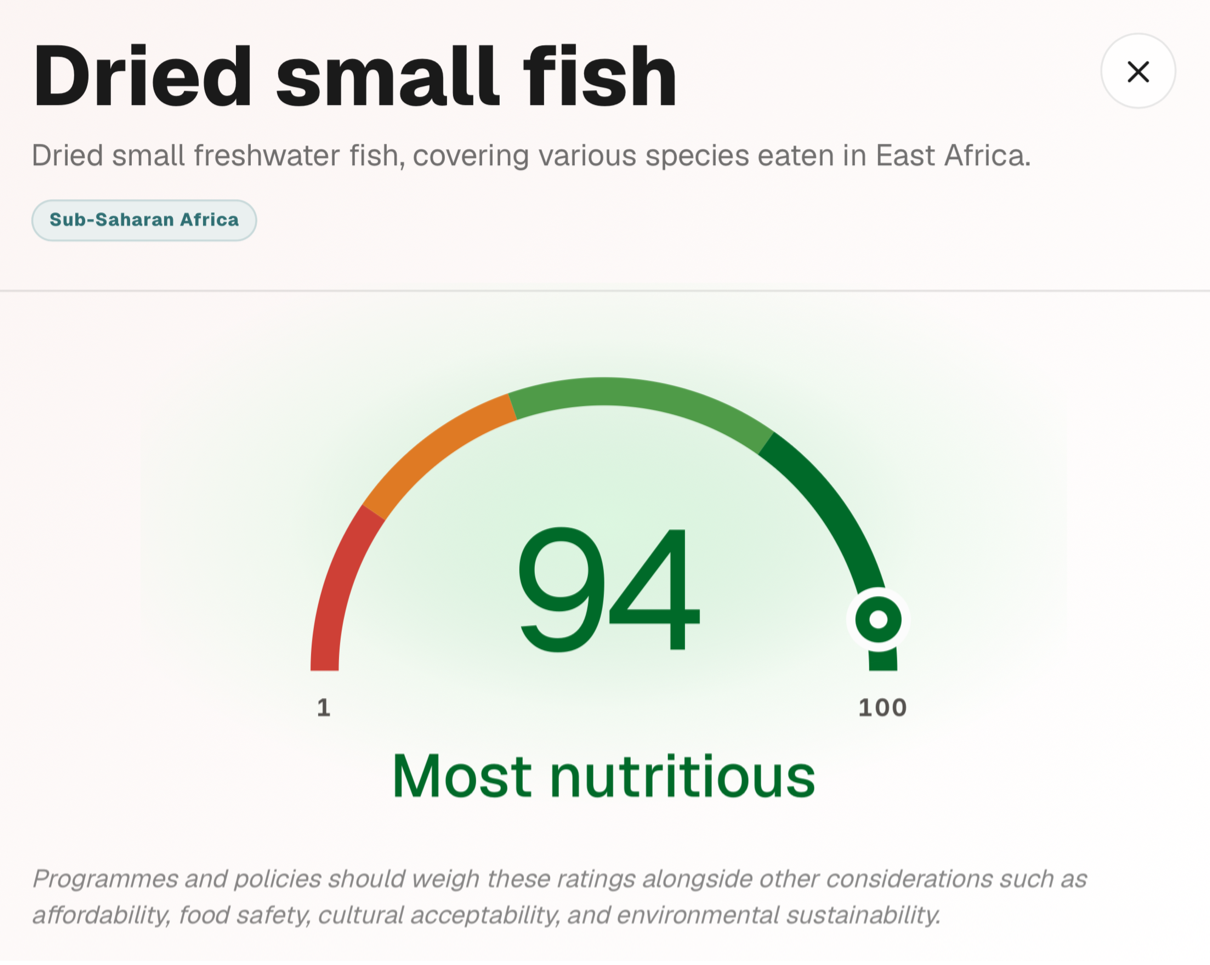
From there you can read a brief description of the food and where it ranks on the scale. Importantly, the guidance is clear that these ratings should be weighed alongside other factors such as affordability, food safety, cultural acceptability and environmental sustainability.
Nutritional Value Score
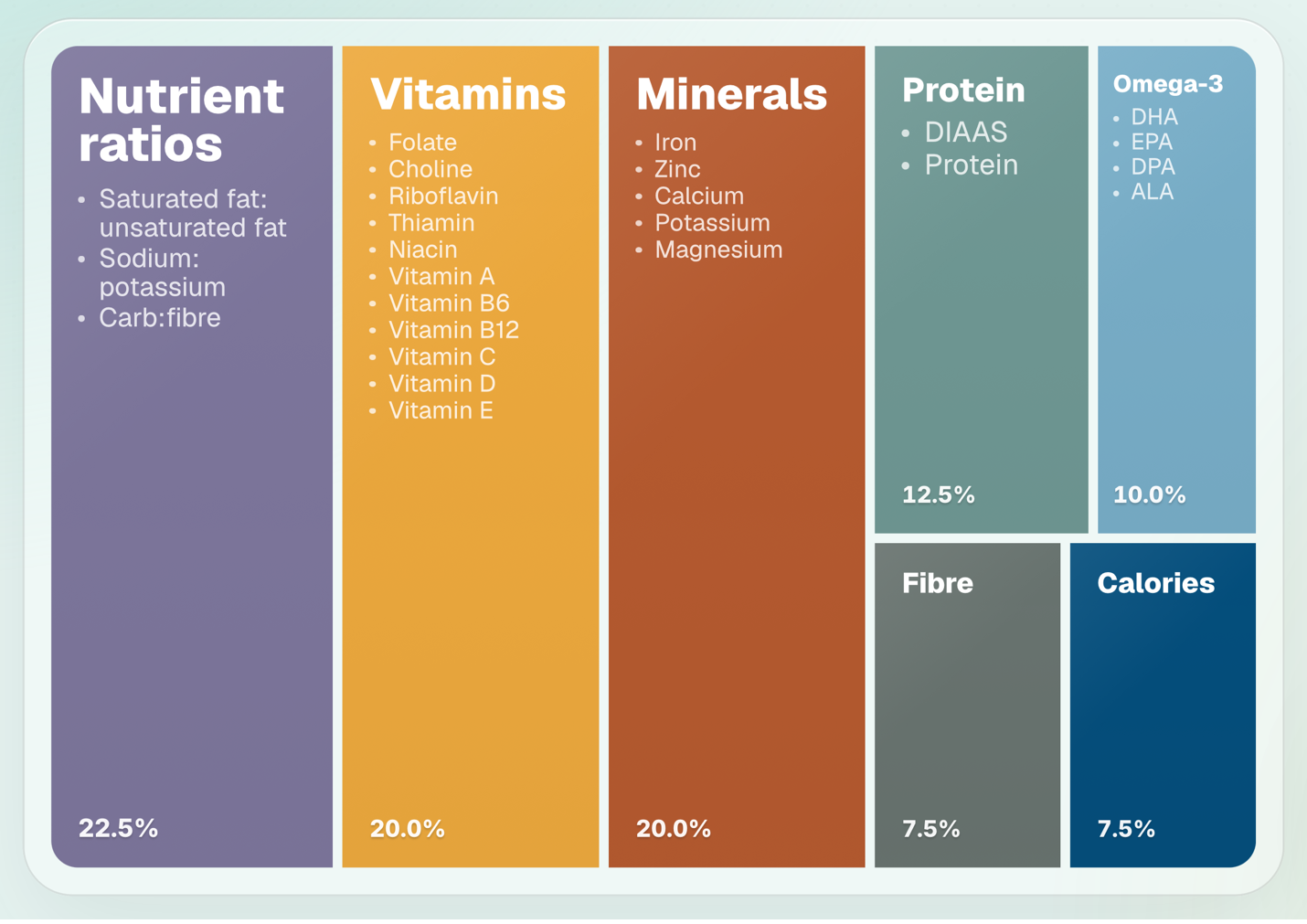
The tool also provides a detailed breakdown of the components that make up the Nutritional Value Score: nutrient ratios, vitamins, minerals, protein, omega-3 fatty acids, fibre and calories.
These attributes were chosen because together they capture what makes a food nutritious. The essential nutrients help fill critical dietary gaps, while nutrient ratios, fibre and calories indicate how well a food protects against chronic disease.
Read the full scientific paper in The Journal of Nutrition.
Advanced tools
The Priority List doesn’t stop there. Two accompanying tools provide deep dives into the nitty-gritty of nutrition and environmental impact for more technically minded users.
The Nutritional Value Score Explorer lets you compare foods within and across more granular food groups and adjust the component weights to match a particular programme or policy goal. The Nutrition-Environment Explorer compares nutritional value with environmental footprints in Indonesia, Kenya and Rwanda.
Senior Technical Specialist