Reducing Food Loss and Waste: Making Nutritious Foods More Available for Vulnerable Communities
Food loss and waste (FLW) undermines the availability and affordability of nutritious foods, and accounts for 8–10% of global GHG emissions.1 Every tonne of food saved avoids emissions linked to production, transportation, and storage, as well as methane released during decomposition. FLW is about more than just increasing food system efficiency. When nutritious foods are lost or wasted before they reach consumers, the resources used to grow, process, transport, and sell that food are lost along with it. FLW also means fewer safe, affordable, and healthy food options available to communities, while farmers, fishers, traders, and other food system actors lose income.
Reducing FLW is central to GAIN’s efforts to improve the availability, affordability, desirability, and sustainability of nutritious and safe foods for the most vulnerable. Across different contexts, GAIN implements practical solutions to prevent loss, extend shelf life, improve food safety, recover surplus, and strengthen the systems that deliver nutritious food to consumers. By reducing FLW, these efforts make better use of the land, water, energy, and labour invested in producing food while helping ensure nutritious foods such as fish, fruits and vegetables are available – contributing to healthier diets.
Solar Drying in Mozambique: Preventing Loss at the Source
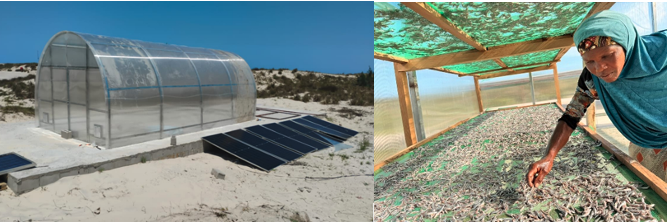
In Mozambique, fish is an important source of nutritious food for coastal communities and low-income consumers, while fish processing also provides a vital source of income for small-scale fishers and vendors. This makes reducing post-harvest fish losses particularly important in a country where malnutrition remains a significant challenge. Yet for generations, fish has been dried on open ground, exposed to dust, animals, and unpredictable weather, contributing to losses, food safety risks, deterioration in quality, and reduced consumer trust.
Through the Animal Source Foods (ASF) programme, funded by Dutch Ministry of Foreign Affairs, Department of Inclusive Green Growth (IGG), GAIN promotes the availability and access to fish among lower-income consumers. The programme has introduced solar drying tents, a low-cost, climate-smart technology that improves food safety, product quality and shelf life while strengthening livelihoods. The solar dryers function like greenhouses, with shelves where fish can dry in a protected environment, avoiding exposure to contaminants such as sand and birds while supporting better preservation. GAIN has supported the construction of 10 tents across five fishing centres, with communities involved in building them, while fishers and vendors have received training to use the technology effectively.
In total, 529 fisherfolk have been trained in improved fish drying, food handling and safety, and financial literacy. These efforts are improving fish quality, reducing post-harvest losses, and strengthening the availability, access, and desirability of nutritious foods. Around 2,000 fish processors, most of them young people, now have access to safer, more efficient drying methods.
It is expected that regular use of the tents can cut loss by around 20%, help keep more fish in the food system while improving safety and quality. This means more fish preserved and brought to market rather than lost, and more value retained by the people who produce and process it.
The initiative brought together government, community, and private-sector partners, including hotels and retailers that could supply surplus food to schools. The pilot tested how this food could be safely collected, sorted, processed, and redistributed through a local system. It also strengthened local partnerships and integrated food sorting and redistribution with diverse menu planning to help ensure that available surplus could contribute to the nutritional needs of schoolchildren. The experience offered lessons for strengthening local food rescue and redistribution systems and supporting access to nutritious food in schools.
Building on these efforts, GAIN Indonesia collaborated with the National Food Agency to strengthen the policy and regulatory framework for food rescue. This included supporting a comprehensive policy study and the development of an urgency paper and draft Presidential Regulation on food rescue. The urgency paper provided the basis for developing the proposed regulation, which aims to establish clearer roles, implementation mechanisms, and coordination for food rescue across governments and other stakeholders. The draft regulation was subsequently refined and submitted through Indonesia’s regulatory programme, with the process of adoption currently ongoing.
Looking Ahead: Scaling Solutions to Reduce Food Loss and Waste
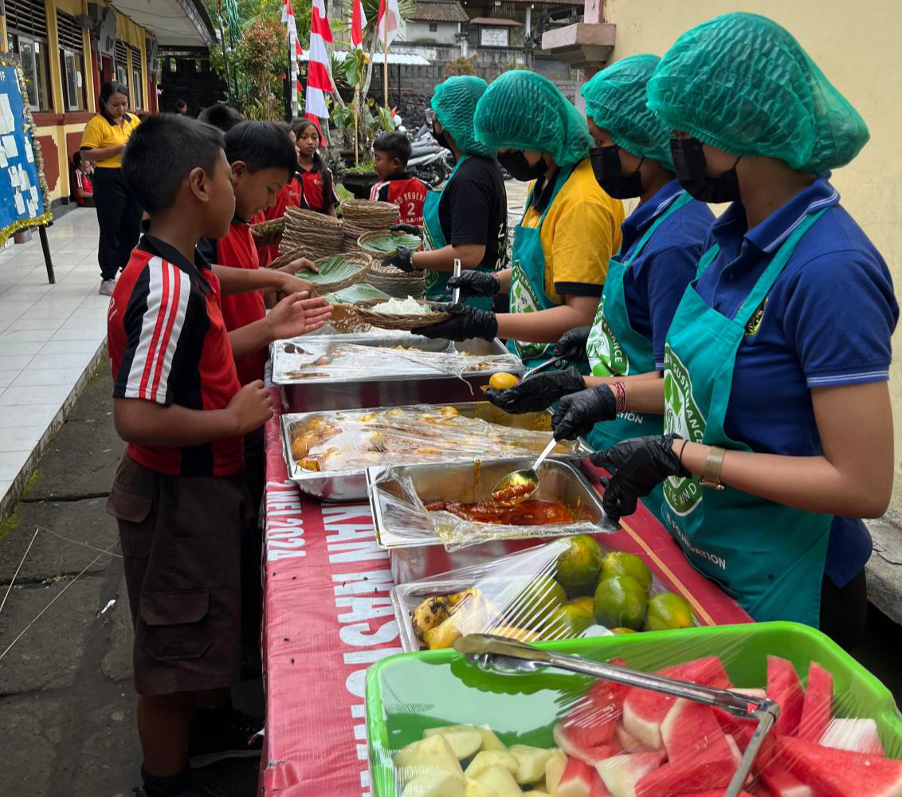
School children receiving nutritious meals through the food rescue and redistribution pilot in Bali, Indonesia.
Implementing Indonesia’s Road Map to Reduce Food Loss and Waste
Between 2000 and 2019, Indonesia generated an estimated 23–48 million tonnes of food loss and waste annually. This is enough, if consumed, to have met nutritional needs for 29–47% of the country’s population. Loss was especially acute in the fish value chain: 20–35% of fish, or roughly 75,000–125,000 metric tonnes, was lost each year. GAIN estimated that this represented protein equivalent to the daily needs of 2.7–4.4 million children.
In 2024, GAIN supported Indonesia’s Ministry of National Development Planning (Bappenas) in developing the National Roadmap for Reducing Food Loss and Waste. The roadmap sets a target to reduce food loss and waste by 75% by 2045 and identifies measures across policy and regulation, coordination, infrastructure and technology, incentives, and information systems.
As part of efforts to advance this roadmap, GAIN has supported practical approaches to reduce FLW and improve access to nutritious food. Food rescue for redistribution offers one such approach by recovering safe surplus food and directing it to people who need it. In Bali, where the tourism sector generates significant food surplus, GAIN supported a pilot to explore how this food could be safely rescued, prepared, and provided as nutritious school meals. Implemented through a rescue kitchen at Besakih State Elementary School, the initiative pursued two objectives: reducing food waste and improving children's access to safe, nutritious meals. It also mapped critical points across the collection, processing, and distribution of surplus food, while incorporating nutrition education, monitoring, and evaluation.