
Ibnu Budiman
Environment Manager
Jack bean may be one of Indonesia’s overlooked answers to El Niño: a drought-tolerant legume that can support farmers, strengthen food security and reduce reliance on imported soybeans.
As Indonesia braces for more frequent and severe El Niño events, the conversation around food security remains heavily focused on rice, maize, and imported soybeans. Yet, in many drought-prone landscapes, a more resilient solution may already be growing quietly in farmers' fields: jack bean (Canavalia ensiformis).
Recent field observations in Aceh offer a powerful reminder of what climate adaptation looks like in practice. During a prolonged dry spell of more than one month without rainfall, farmers observed a striking contrast between jack bean and other common crops. While maize leaves dried out, chili plants became stunted and curled, lemongrass turned yellow as if scorched by fire, and cucumbers succumbed to heat stress, jack bean plants remained green, productive, flowering, and heavily podded, in our farms’ partners.
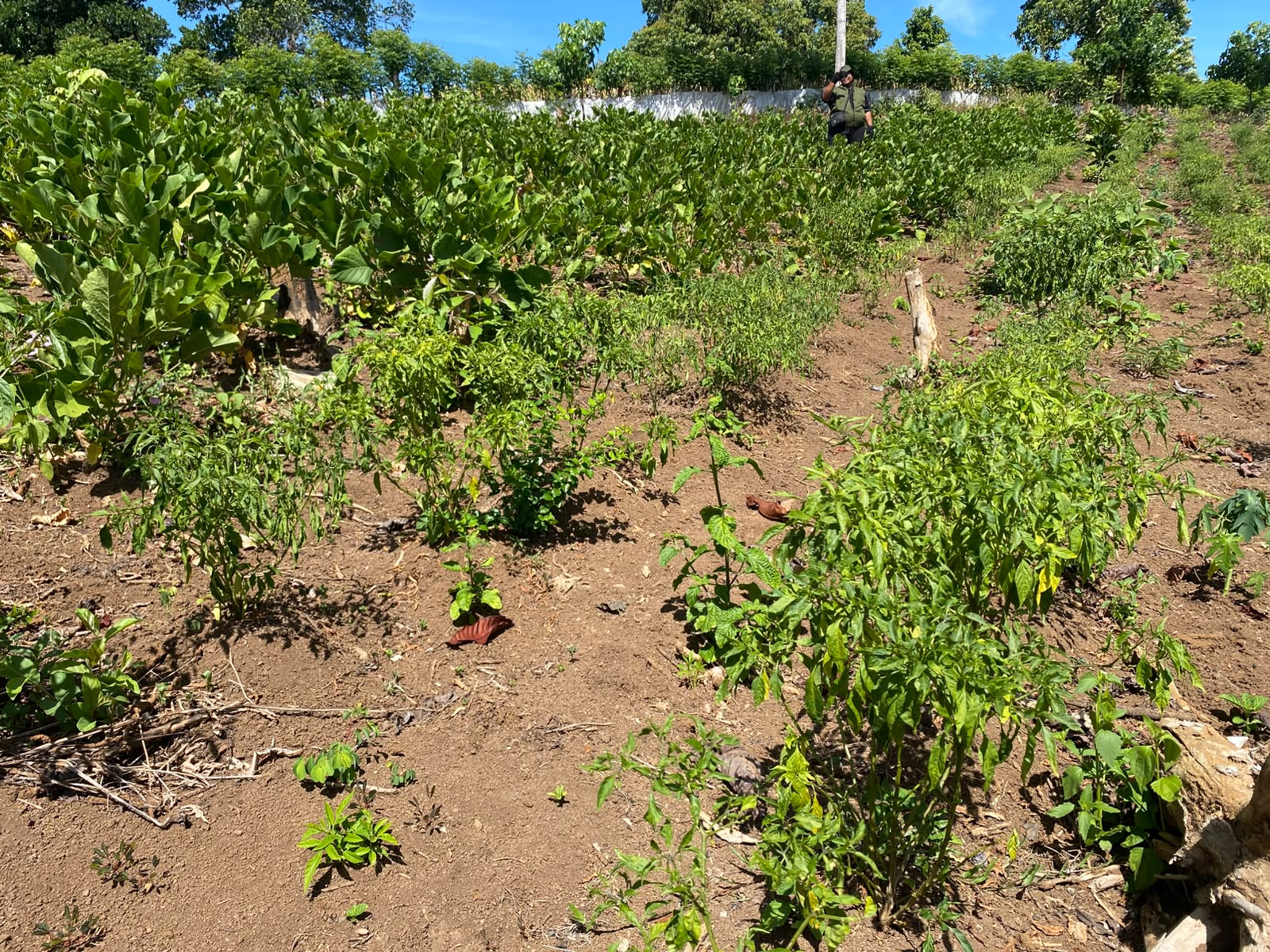
This was not an isolated anomaly. The observations mirror experiences reported by farmers in other drought-prone regions across Indonesia. Evidence compiled from dryland farming areas such as Gunungkidul, Wonogiri, Probolinggo, West Java, and parts of Nusa Tenggara suggests that jack bean continues to perform under conditions where many conventional crops struggle or fail.
Despite its remarkable drought tolerance and (potential) yields of 2-5 tons per hectare, jack bean remains a neglected crop in Indonesia, with no dedicated national production statistics and only limited cultivation scattered across Aceh, West Java, Yogyakarta, Central Java, East Java, Lampung, Sulawesi, West Nusa Tenggara and East Nusa Tenggara.
The implications are significant. El Niño is no longer an exceptional event. Climate scientists have repeatedly warned that higher temperatures and increasing climate variability will intensify drought risks across Southeast Asia. For smallholder farmers, prolonged dry periods translate directly into crop losses, falling incomes, and food insecurity.
The 2023-2024 El Niño exposed the vulnerability of Indonesian agriculture, contributing to reduced crop yields, rising food prices and concerns over national food security. Current and future El Niño events are expected to become more disruptive as climate change intensifies rainfall variability.
Indonesia's current agricultural system remains vulnerable because it depends heavily on a relatively narrow range of crops. Maize, rice, and soybean each face productivity challenges during prolonged moisture stress. When drought arrives, entire farming systems become exposed. Indonesia imports around 2–3 million tons of soybeans annually to meet domestic demand, making the country highly vulnerable to global price volatility and supply disruptions. More than 90 percent of these imports are absorbed by the tempeh and tofu industry.
Its resilience is rooted in biology. The crop develops a deep taproot system capable of accessing moisture from deeper soil layers when surface water disappears. It forms symbiotic relationships with nitrogen-fixing bacteria, allowing it to thrive with minimal nitrogen fertilizer inputs. Its dense canopy helps reduce soil evaporation, while its physiological mechanisms regulate water loss during periods of heat stress. It also tolerates acidic soils that limit the productivity of many other crops. As a legume, jack bean also enriches soils through biological nitrogen fixation, reducing dependence on synthetic fertilizers and improving soil health over time.
These characteristics make jack bean particularly attractive for Indonesia's vast areas of marginal land. Rather than competing directly with rice production, it can be integrated into dryland systems, intercropping arrangements, and degraded landscapes where conventional crops perform poorly. In Aceh and West Java, jack bean has been successfully intercropped with more than 15 different crop species.
For smallholders, resilience matters as much as productivity. A crop producing moderate yields under drought may be more valuable than a higher-yielding crop that fails completely. In Aceh, farmers and Rumoh Pangan Aceh reported that jack bean became an economic lifeline when other commercial crops could not be harvested. Such risk reduction is increasingly important in an era of climate uncertainty.
Beyond adaptation, jack bean also offers opportunities for food diversification. Its seeds contain substantial protein and can be processed into tempeh, flour, plant-based beverages, and other food products. At a time when Indonesia continues to rely heavily on imported soybeans, alternative protein crops deserve greater attention.
Yet jack bean remains largely absent from mainstream agricultural policy. Research, extension support, seed systems, and market development continue to prioritize a limited set of commodities. As a result, many farmers remain unaware of the crop's potential. Without stronger institutional support, promising climate-resilient crops risk remaining confined to scattered local initiatives. This must change.
Indonesia should begin incorporating climate-resilient legumes such as jack bean into its broader climate adaptation and food security strategies. Agricultural extension programs should establish demonstration plots in drought-prone districts. Universities and research institutions should conduct further agronomic and economic studies. Food industries should be encouraged to explore jack bean-based products. Most importantly, farmers should be supported in testing and adapting the crop within their own production systems.
Climate adaptation is often discussed in terms of sophisticated technologies and massive infrastructure investments. But sometimes resilience begins with something far simpler: choosing crops that can survive when the rains fail.
Indonesia’s National Strategic Programs should actively promote jack bean cultivation as a climate-resilient crop that can help farmers withstand El Niño-induced droughts while reducing dependence on imported soybean. This could include integrating jack bean into food estate initiatives, dryland agriculture programs, climate adaptation strategies, public seed systems and government-supported farmer field schools.
The experience from across regions sends a clear message. While maize dries, chili wilts, and other crops succumb to extreme heat, jack bean continues to flower and produce. In the age of El Niño and climate uncertainty, that is a trait Indonesia can no longer afford to ignore.
Environment Manager