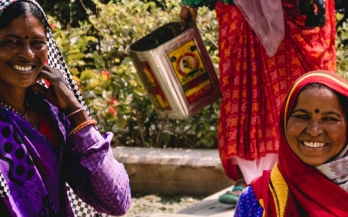
With food systems being disrupted, economies collapsing and work, particularly that in the informal sector, disappearing what role can women leaders play in this field? In this session, viewers will meet some women, movers and shakers in the field of malnutrition and food systems. Namely as active contributors to SMEs.
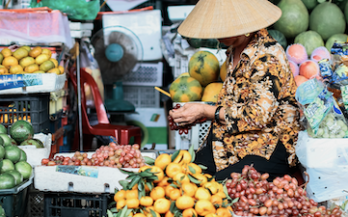
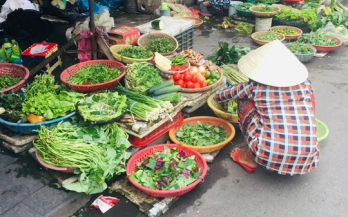
This review describes recent food safety interventions focused on traditional market settings and consumers who buy food there. Data was extracted from 19 and 23 articles from Asian and African countries, respectively.
When funds are needed to support your organisation - either as an MSME or NGO - a clear, structured and effective approach is necessary. The goal of this guide is to help actors involved in securing funding to understand the process and to access tools that can be used during the different stages to secure funding.
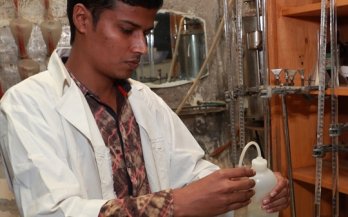
This Guidance Document describes the various elements of quality management (QM) and quality control (QC) required in a laboratory setting. Many qualitative elements are required to analyse the various chemical parameters in food samples, particularly for micronutrient testing and for testing food safety and food quality substances.
Nutrition for Growth (N4G) is a global pledging moment to drive greater action toward ending malnutrition and helping to ensure everyone, everywhere can reach their full potential. This webinar will aim to catalyse government, donor, private sector commitments toward the Summit.
2021 represents a pivotal year to invigorate interest, awareness and investment in Large-Scale Food Fortification (LSFF) and biofortification. UN Secretary-General António Guterres will convene a Food Systems Summit as part of the Decade of Action to achieve the Sustainable Development Goals (SDGs) by 2030.
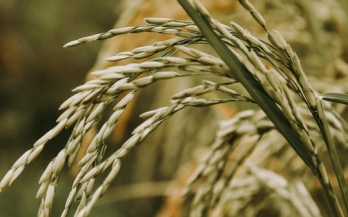
With the devastating social and economic impacts of COVID-19, it is more important than ever to protect the nutrition, health, and livelihoods of the world’s most vulnerable. We know that many of the two billion people who suffer from micronutrient deficiencies, or "hidden hunger", consume rice as their primary staple food.
Understanding and addressing these gaps along the fortification supply chain is critical to ensure the quality and safety of fortified products in the food system. This requires accessing and managing information/data along the fortification value chain to trace quality from production to consumption.
Ending hunger and malnutrition in all its forms (including undernutrition, micronutrient deficiencies, overweight and obesity) is about more than securing enough food to survive: what people eat - and especially what children eat – must also be nutritious. Yet a key obstacle is the high cost of nutritious foods and the low affordability of healthy diets for vast numbers of families.
Globally 86 countries have legislation to mandate fortification of at least one industrially milled cereal grain. Different fortification requirements between nations may create some practical difficulties for intercountry trade.