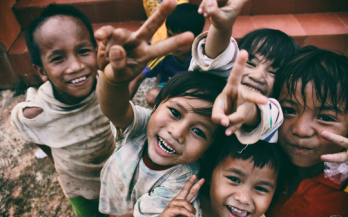
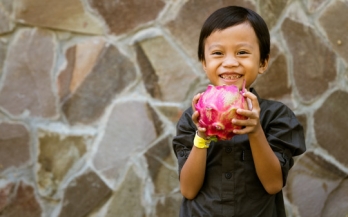
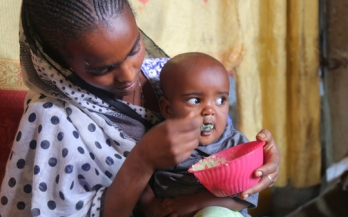
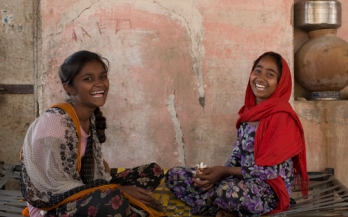
World Children’s Day was first established in 1954 as Universal Children's Day and is celebrated on 20 November each year to promote international togetherness, awareness among children worldwide, and improving children's welfare.
The Side Sessions will be organized as "deep dive" dialogues, consultations, webinars, etc. on specific topics within and across the five UN Food Systems Summit action tracks.
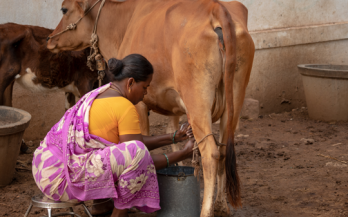
GAIN seeks to understand and tackle barriers faced by small enterprises working to boost availability, affordability, desirability, and convenience of nutritious foods like milk, especially for people on low-incomes and population sub-groups who stand to benefit from greater consumption of nutrient-dense foods, such as children.
Ethiopia is experiencing a growing demand for dairy products, which can make a major contribution to the intake of essential nutrients in the population. However, as a developing country, a large part of the residents do not have access
to dairy products, primarily due to both limited financial resources and availability.
As conveners of the Global Consultation on Food Systems for Children and Adolescents and this Special Issue, UNICEF and GAIN are confident that the evidence presented in this Special Issue will be useful for food system reorientations in support of improved diet quality among children and adolescents.
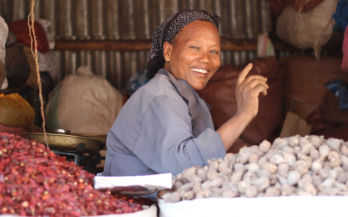
Small and medium-sized enterprises (SMEs) shoulder responsibility for around 50% of the food production and 70-100% of food sales in sub-Saharan Africa for key foods such as fruits and vegetables, animal-source foods, and cereals and legumes. As Ethiopia’s population is swiftly shifting to more urban environments, so are food habits, with 83% of foods and beverages purchased in markets, as opposed to 47% in rural areas.
The United Nations Children’s Fund (UNICEF) and the Global Alliance for Improved Nutrition (GAIN) launched today "Food Systems for Children and Adolescents", a special issue of the international journal Global Food Security. This special collection of 11 articles calls for an urgent transformation of food systems that work for and with children.
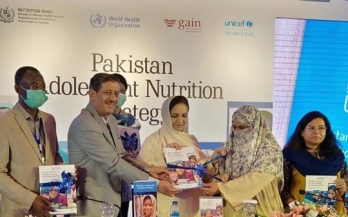
A joint undertaking by the Global Alliance for Improved Nutrition (GAIN), the Government of Pakistan, UNICEF and The World Health Organization (WHO), the Pakistan Adolescent Nutrition Strategy and Operational Strategy (PANS) examines the nutritional status of a long-overlooked population and charts out a bold road map for action.
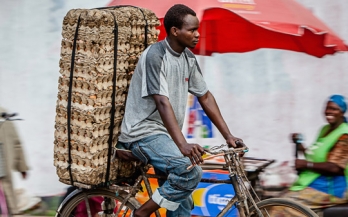
Eggs are packed with essential fatty acids, vitamins and minerals, but too few enjoy access to this critical source of protein. This week, GAIN is celebrating this "super food" and honouring the contributions of "food heroes" - individuals who throughout the COVID-19 pandemic have continued to bring eggs to market and onto the table, especially for young children.
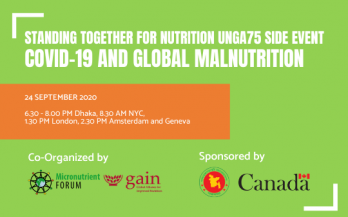
As the birthplace of the decade of action on nutrition 2016-2025, UNGA is the natural platform to bring leaders together to highlight the impact of COVID-19 on malnutrition and how we move forward to mitigate the damage.