Global Alliance for Improved Nutrition (GAIN)
  • About

    About

    About

    The Global Alliance for Improved Nutrition (GAIN) is a Swiss-based foundation launched at the United Nations in 2002 to tackle the human suffering caused by malnutrition.

    Learn more about GAIN

    • Who we are
      • Vision and mission
      • Strategy
      • Core values
      • Policies
    • Malnutrition
      • Definition
      • Quick facts
    • Partnerships
      • All Partners
      • GAIN Nordic Partnership
      • Global Fortification Data Exchange (GFDx)
      • Act4Food Act4Change
      • Zero Hunger Private Sector Pledge
    • Leadership
      • Strategic Management Team and Country Directors
      • Board of Directors
      • Partnership Council
      • Get to know our Executive Director
    • Sustainable Development Goals
    • Donors
      • Support us
      • See current donors
  • Programmes

    Programmes

    • All programmes

      All programmes

      Our programmatic work directly impacts over a billion people worldwide and drives the policy changes we advocate with partners. These programmes aim to transform food systems, ensuring sustainable, healthier diets for everyone especially those most at risk of malnutrition and vulnerability.

      All programmes

      • Food Fortification
        • Large-Scale Food Fortification
        • Nutrient Enriched Crops
      • Thriving Nutrition Enterprise
        • Nutrition Investing
        • Nutrition Impact at Scale
        • Nutrition Enterprise Development
        • SUN Business Network
      • Empowering Food Systems Actors
        • Food Systems Governance
        • Children and Young People
      • Social Protection
      • Workforce Nutrition
      • Enabling Coherent Food Systems Policies
        • Nourishing Food Pathways
        • CASCADE (CAtalyzing Strengthened policy aCtion for heAlthy Diets and resiliencE)
      • Enhancing Value Chains for Underconsumed Foods
        • Explore Enhancing Value Chains for Underconsumed Foods
        • DELIVER Nigeria
      • Shifting Demand
        • EatSafe
        • Consumer demand generation
        • Food Culture Alliance
        • Multiple Micronutrient Supplementation (MMS) Project
      • Enhancing Nutrition with Data & Evidence
        • Food Systems Countdown Initiative
        • Global Diet Quality Project
        • Food Systems Dashboard
        • Initiative on Climate Action and Nutrition (I-CAN)
    • Cross Cutting Themes

      Cross Cutting Themes

      Cross-cutting themes are co-benefits of work that we do with the primary aim of healthier diets for all.

      All Cross Cutting Themes

      • Environment
      • Food Safety
      • Gender
      • Youth
      • Food System Resilience
      • Reaching the Very Poor
  • Impact

    Impact

    Impact

    Explore how GAIN has reached over one billion people since 2001, transforming their lives with improved nutrition through concerted action and effective policy change.

    Read our Stories of Impact

    • Stories of Impact
    • Nourishing Food Pathways
    • Our response to COVID-19
    • Outcomes
  • Resources

    Resources

    • Publications

      Publications

      Explore a full range of publications and documents related to our work.

      Explore our Publications

      • Reports and Publications
      • Datasets
      • Annual reports
      • Nutrition Connect
    • Multimedia

      Multimedia

      Have a look at our photos, listen to our latest podcast and watch our videos.

      Explore our Multimedia

      • Videos
      • GAIN Interview Cruncher Series
      • Bite the Talk - GAIN Podcast Series
      • Glossary
      • Brand identity
    • Newsroom

      Newsroom

      Our dedicated newsroom that includes our latest news releases and statements, as well as curated blogs and interviews

      Explore our Newsroom

      • News releases
      • Blogs
      • Statements
      • Speeches
      • Programme and project updates
      • Interviews
      • GAIN in the news
      • Stories
  • Countries

    Countries

    Countries

    Headquartered in Geneva, Switzerland, GAIN has offices in countries with high levels of malnutrition: Bangladesh, Benin, Ethiopia, India, Indonesia, Kenya, Mozambique, Nigeria, Pakistan, Rwanda, Tanzania and Uganda. To support work in those countries, we have representative offices in the Netherlands, the United Kingdom, and the United States.

    Countries

    • Country Offices
      • Bangladesh
      • Benin
      • Ethiopia
      • India
      • Indonesia
      • Kenya
      • Mozambique
      • Nigeria
      • Pakistan
      • Tanzania
      • Uganda
    • Representative Offices
      • The Netherlands
      • United Kingdom
      • United States of America
    • Headquarter
      • Switzerland
  • Careers
    • Careers at GAIN
    • Open Vacancies
    • FAQ
  • Request for proposal
  • Financials
  • Events
    • All events
    • Campaigns
  • Contact us
  • Donate
African Day of School Feeding & International School Meals Day​ 2026

African Day of School Feeding & International School Meals Day​ 2026

28 February 2026- 01 March 2026Global

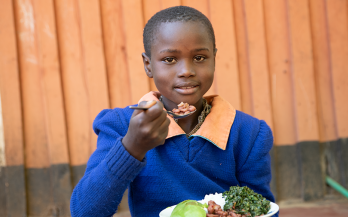
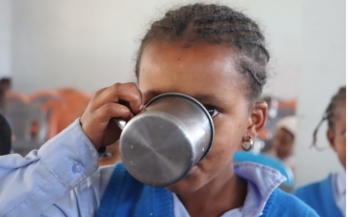
GAIN marks African Day of School Feeding and International School Meals Day, using these moments to highlight how school meals can improve nutrition, learning outcomes, and local food systems when designed with quality, equity, and sustainability in mind.
Social Protection School Feeding Case Study-Ethiopia

Social Protection School Feeding Case Study-Ethiopia

A child’s diet is central to their long-term development, health, and well-being. For children, access to healthy diets can be instrumental for doing well in school, and ultimately shapes a child’s ability to attain a dignified, productive livelihood and decent quality of life in the future.
Kenya’s Progress In Reducing Child Stunting

Kenya’s Progress In Reducing Child Stunting

- 08/09/2025

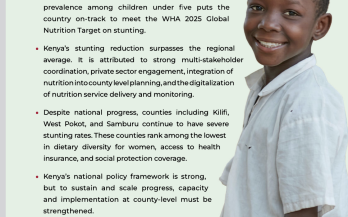
Stunting is a major concern in Eastern Africa, where nearly 1 in 3 children under 5, about 22.6 million, are affected (UNICEF, WHO, Worldbank, 2023). In Kenya, the prevalence has declined to approximately one in five children (18%), outperforming the regional average of 31.6%. However, this still represents more than 1.2 million children at risk (KNBS, Ministry of Health, ICF, 2023). The consequences are far-reaching; stunting contributes to child mortality, vulnerability, and lifelong impairments in physical growth and cognitive development, impacting both individual well-being and national productivity. In Kenya, child undernutrition, including stunting as a key component, is estimated to cost the economy KES 374 billion (approximately USD 4.2 billion) annually, equivalent to 6.9% of the GDP (Government of Kenya, 2019). Stunting, a persistent form of long-term nutritional deprivation, acts as a silent driver of inequality, limiting opportunities, lowering future earnings and reducing the potential to contribute equally to the economy. Yet the returns on investment in nutrition are high, with every dollar yielding up to $22 in economic benefit. (Eberwein, et al., 2016)
Bringing Affordable, Nutritious Dairy to Families in Tanzania

Bringing Affordable, Nutritious Dairy to Families in Tanzania

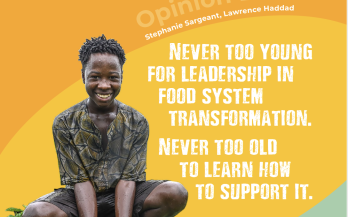
Opinion Brief: Never too young for leadership in food system transformation Never too old to learn how to support it

Never too young for leadership in food system transformation Never too old to learn how to support it

- 26/08/2025

We know in our bones that youth must be part of the solution to the key crises facing our planet – but why and how exactly? Here we provide government policymakers, business people, civil society members and development partners in the food systems space with some ways to advance meaningful youth engagement.
High Iron Beans and Hidden Hunger: An Interview with Prisca Kokutona Rwezahura, Country Director of GAIN Tanzania.

High Iron Beans and Hidden Hunger: An Interview with Prisca Kokutona Rwezahura, Country Director of GAIN Tanzania

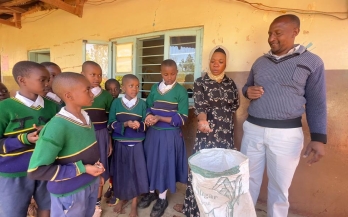
GAIN Tanzania is at the forefront of efforts to tackle micronutrient deficiencies through biofortification, an approach that enhances the nutritional content of staple crops. One of its most impactful initiatives has focused on high iron beans (HIB), a locally accepted, nutrient-rich variety introduced through partnerships with schools and farming communities. By connecting farmers to institutional markets and supporting local seed systems, GAIN is creating a sustainable, scalable model for improving diets and livelihoods. In this interview, Prisca Kokutona Rwezahura, Country Director -GAIN Tanzania, reflects on this journey- sharing insights into policy, partnerships, and what’s next for biofortification in the country.
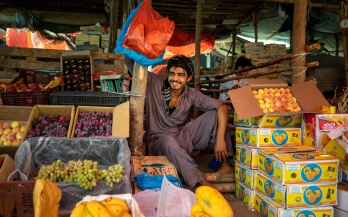
Promoting Breastfeeding for Healthy Planet

Promoting Breastfeeding for Healthy Planet

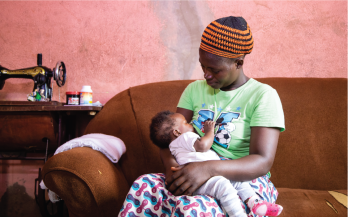
Breastfeeding not only contributes to positive nutrition and health outcomes, but also to environmental sustainability by significantly reducing the environmental footprint associated with the production, packaging, distribution and consumption of infant formula. The environmental benefits of breastfeeding are multi-faceted.
Child Stunting And Overweight: Insights And Policy Recommendations From 12 Country Analyses

Child Stunting And Overweight: Insights And Policy Recommendations From 12 Country Analyses

- 22/05/2025

This brief shares an analysis of trends in stunting and overweight among children under five – two of the six Global Nutrition Targets set by the World Health Assembly (WHA) for achievement by 2025 – in 12 focus countries.
Rwanda Fact Sheet-WHA Global Nutrition Target

Rwanda Fact Sheet-WHA Global Nutrition Target

- 16/05/2025

WHA Global Nutrition Stunting Target 2012-2025 Achieve a 40% reduction in the number of children under-5 who are stunted WHA Global Nutrition Overweight Target 2012-2025 Ensure that there is no increase in childhood overweight
Mozambique Fact Sheet-WHA Global Nutrition Target

Mozambique Fact Sheet-WHA Global Nutrition Target

- 16/05/2025

WHA Global Nutrition Stunting Target 2012-2025 Achieve a 40% reduction in the number of children under-5 who are stunted WHA Global Nutrition Overweight Target 2012-2025 Ensure that there is no increase in childhood overweight

Pagination

  • Page 1
  • Next page ››

© GAIN 2026

  • Sitemap
  • Terms and conditions
  • Privacy policy
  • Accessibility
  • Subscribe
  • RSS
  • Ethical Supply Chain Statement
  • Follow us

  • Twitter X
  • Facebook
  • Instagram
  • Linkedin
  • Youtube