- 04/12/2025
Orphaned crops refer to a diverse group of foods, including cereals, legumes, vegetables, and fruits, that have been largely overlooked by mainstream agricultural research, breeding programs, and markets.
Many orphan crops contain higher concentrations of vitamins, minerals, and protein than major cereals. In soci eties facing a double burden of undernutrition and rising diet-related diseases, orphaned crops provide a crucial bridge. They nourish without harming.
Nutrition education in schools and public health programs can normalize the consumption of traditional foods, while media and culinary initiatives can make them fashionable. Changing perception is just as critical as changing production.
- 28/11/2025
Global food systems face complex, multi-faceted challenges that greatly vary by context, and their environmental, health, and socio-economic impacts are equally diverse. A comprehensive understanding that integrates these disparate factors into unified, clear guidance is essential for decision-making, including policy measures and industry practices. True Cost Accounting (TCA) methodologies aim to meet this need by quantifying a wide spectrum of food systems-related benefits and costs in economic terms. We reviewed existing TCA frameworks, approaches, methods, and data sources used for measuring and monetising environmental externalities generated by food production and consumption. Our analysis of 85 recent publications (2018–2025) revealed several key patterns in current research. The literature shows a predominant focus on negative impacts, with greenhouse gas (GHG) emissions receiving primary attention. Studies mainly examined cereals, meat, and dairy, mostly in high-income and upper-middle-income country settings. TCA assessments employed three main methodological approaches: granular bottom-up, large-scale top-down, or comparative approaches, to capture environmental externalities.
Our results revealed a rapidly growing research area, characterised by a large variety of methods and data sources, while highlighting persistent technical challenges. The field faces several critical gaps, many of which reflect underlying methodological limitations in environmental impact assessments more broadly: little-to-no attention to lower-income countries; a predominant focus on high-value, commercially traded (often export-oriented) commodities; and limited consideration of systems dynamics and interconnections (e.g., product co-dependencies) in models. Addressing these challenges, combined with improved data availability, quality, and disaggregation, will be key for maximising TCA’s potential as an evidence-based policy and advocacy tool.
- 21/11/2025
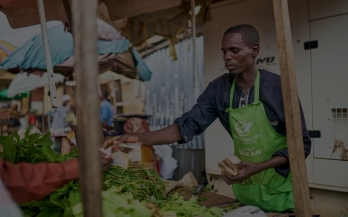
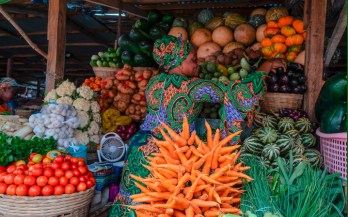
This White Paper makes the case for a territorial governance approach that reinforces urban–rural linkages by empowering local actors and enabling their collective agency. Local, traditional, and farmers markets serve as strategic hubs that offer multiple levers and diverse forms of capital for transforming food systems within cities, across urban–rural interfaces, and throughout wider territorial landscapes. Investing in both hard (physical) and soft (capacity-building) market infrastructure, supporting diverse knowledge systems, and advancing inclusive “whole-of-society” governance are essential steps toward unlocking resilient and sustainable food systems now and in the future. With these foundations in place, communities, governments, and sectors can routinely apply best practices and participate meaningfully in decision-making processes that foster a wide range of regenerative, biodiverse food value chains. Such systems create market and food environments characterized by vibrant public spaces; access to affordable, safe, culturally preferred, healthy diets; reduced and valorized food waste; and opportunities for dignified, prosperous livelihoods.
- 13/11/2025
GAIN’s contributions were made possible through the Nourishing Food Pathways programme, which is jointly funded by: German Federal Ministry for Economic Cooperation and Development; Ministry of Foreign Affairs of the Netherlands; European Union; government of Canada through Global Affairs Canada; Irish Aid through the Development Cooperation and Africa Division; and Swiss Agency for Development and Cooperation of the Federal Department of Foreign Affairs. The findings, ideas, and conclusions contained presented here are those of the authors and do not necessarily reflect positions or policies of any of GAIN’s funding partners.
The handbook is also supported by the Federal Ministry for Economic Cooperation and Development (BMZ) and Deutsche Gesellschaft für Internationale Zusammenarbeit (GIZ).
- 05/11/2025
The I-CAN Assessment 2025 aims to provide a snapshot into the current state of integration between climate and nutrition action across 16 indicators in policy and finance. Despite modest progress since 2023, the report makes clear that integration of climate and nutrition in key international and national policies and financing remains limited, slowing progress towards both reducing malnutrition and climate goals. However, the report also helps to highlight priority areas for action, spotlighting examples of best practice we can learn from as we progress into the second half of this critical decade for the SDGs and climate action.
- 22/10/2025
As Pakistan advances its URAAN Plan and National Food Systems Transformation Pathway, meaningful youth engagement will determine how inclusive that progress becomes. Despite strong national frameworks and growing youth-led innovation, young people remain largely outside formal decision-making. This policy brief sets out practical actions to institutionalise youth participation across governance structures—embedding the Scaling Up Nutrition Youth Network (SYN) within national and provincial coordination bodies, assigning youth advisory roles and quotas, and establishing a Youth in Food Systems Working Group to align mandates and financing. It further calls for building leadership pipelines through a Youth Food Policy Fellowship, integrating national programmes like Kamyab Jawan with food system priorities, and introducing digital accountability tools such as a Youth Engagement Scorecard. By embedding youth as architects of transformation, Pakistan can turn its demographic strength into a lasting engine for innovation, accountability, and resilient food systems.
- 21/10/2025
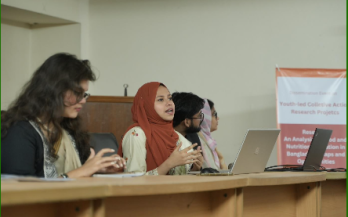
Bangladesh is redefining its path toward a more equitable, climate-resilient, and nutrition-secure future—and young people are at the centre of that journey. As the country advances major national strategies like the National Food and Nutrition Security Policy, this policy brief highlights how youth can move from community action to shaping national decision-making. It proposes creating formal youth roles in bodies such as the Bangladesh National Nutrition Council (BNNC) and District Nutrition Coordination Committees and strengthening cross-ministerial collaboration through a Youth in Food Systems Working Group. The brief also calls for expanding Department of Youth Development (DYD) programmes to include policy and governance, integrating food systems into university curricula, and building leadership pipelines through fellowships, mentorships, and digital participation tools. By positioning young people as active partners in governance, Bangladesh can cultivate a generation of leaders driving food systems transformation in line with the country’s long-term development agenda.
- 15/10/2025
Hear from a professional at the start of her career in food systems transformation, and one near the end with decades of experience
Key Messages
• We choose to work in food systems because food is, at its core, a way to drive a fairer and
safer future for the world. Food is not just fuel. It carries our culture, our traditions, our
dignity, and our sense of belonging. To fix food is to unlock society’s potential. Over 3 billion
people globally can’t afford to eat healthily right now. This widens inequities and keeps the
vulnerable trapped in cycles of poor health.
• Food systems transformation touches every aspect of our lives and cannot be achieved in
isolation. It spans agriculture, health, trade, finance, education, environment, and social
protection, and it relies on people all along the supply chain, from farmers and traders to
processors, retailers, policymakers, and consumers. Few other areas of work demand such
breadth. That is why transforming food systems requires collaboration across sectors
directly and indirectly linked to food, and why it offers opportunities for people with
different skills, perspectives, and passions to contribute.
• The 2025 World Food Day theme calls for greater collaboration across sectors and silos to
transform agrifood systems for people and planet. This is a huge part of the work that
must be done, and we remain hopeful that solidarity and compassion will win over more
selfish politics. At GAIN we work hard to bring disparate voices across the food system
together, for real transformation.
- 14/10/2025
Through the Nourishing Food Pathways programme, GAIN has collaborated with Hystra on a new study exploring how investments in nutritious food value chains can deliver both nutrition and environmental benefits in Latin America, Sub-Saharan Africa, and South Asia. The research highlights opportunities for impact-oriented investors, specifically Development Finance Institutions (DFIs), to direct capital towards businesses that improve diets while advancing sustainable food systems.
The study prioritises six nutritious food value chains; fruits, vegetables, legumes, milk, poultry, and aquaculture, selected for their inherent nutritional value, potential to reduce environmental pressures and high investment potential. In each region, case studies of investable enterprise illustrate how targeted investments can expand access to affordable and diverse nutritious foods, reduce post-harvest losses, promote climate-friendly practices such as regenerative agriculture and circular resource use, and enhance productivity.
The report provides practical insights for DFIs and other impact-oriented investors who are committed to advancing SDG2 (Zero Hunger) and SDG13 (Climate Action). By making strategic investments in businesses operating in these value chains, investors can simultaneously reduce environmental impacts and expand access to nutritious, affordable foods in local markets, creating a virtuous cycle of sustainable growth and resilience.