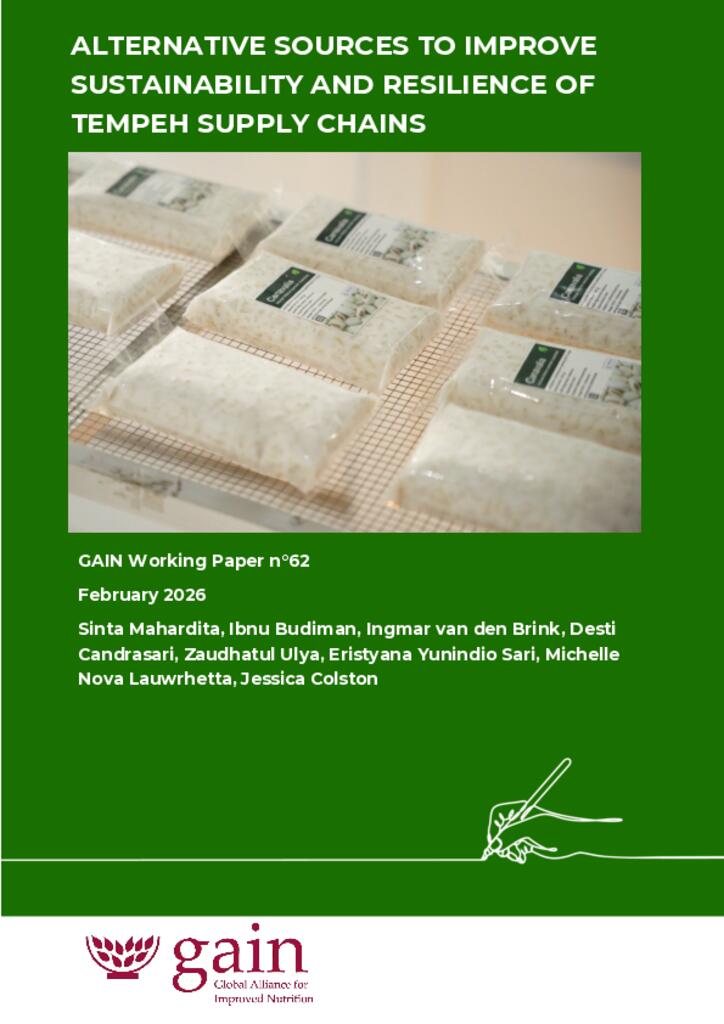
Tempeh is a popular traditional plant-based protein that plays a vital role in Indonesian diets. Indonesia’s reliance on imported soybeans (2.6 million tons/year) for tempeh production, however, creates market instability and food vulnerabilities, particularly regarding cost and supply fluctuations. This paper analyses the technical, economic, and market feasibility of alternative legumes—specifically, jack beans, mung beans, and peanuts—as sustainable substitutes for soybeans in tempeh production. The aim is to identify the most viable option for immediate scale-up to support local food systems and improve nutritional outcomes.
The analysis reveals that jack bean tempeh offers the most compelling opportunity for immediate scaling, primarily due to its low raw material cost, which translates into the highest potential profit margin for producers. Nutritionally, jack bean tempeh is the closest alternative to soybean, being rich in fibre and low in fat, making it attractive to consumers who prioritise nutrition. Mixed-bean tempeh, particularly a 60:40 soybean-jack bean mix, presents a lower-risk entry point for producers, leveraging existing soybean infrastructure while reducing cost dependency.