Fish offer a potentially sustainable solution to food security and nutrition challenges in Indonesia. Despite abundant aquatic resources, per capita fish consumption remains lower than in neighbouring countries. Factors such as overfishing, pollution, and unsustainable aquaculture practices limit growth, while climate change poses additional threats to fish stocks.
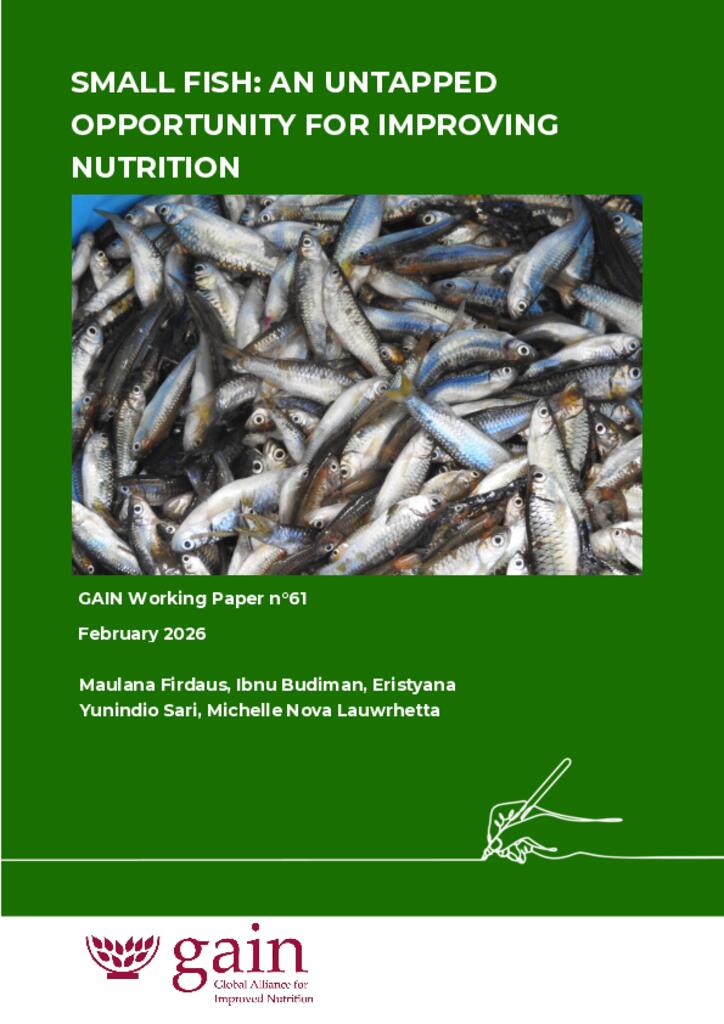
This paper emphasizes the importance of small fish species in addressing Indonesia’s nutritional and environmental challenges. Often overlooked in favor of larger species, small fish are highly nutritious, providing protein, omega-3 fatty acids, vitamins, and minerals. Consuming small fish whole also promotes zero-waste practices.
The paper assesses seven types of small fish and conducts a supply chain analysis of three, including small-scale aquaculture practices and the journey from sourcing to distribution. Findings provide actionable recommendations to boost small fish consumption and support local economies.