
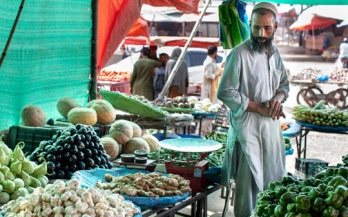
Reaching Lower-Income Consumers with Nutritious Foods - Cutting Costs by using Waste Products and Less-desired Parts
Food loss and waste is a major problem worldwide: it is estimated that 14% of all food produced globally is lost between harvest and retail, while 17% is wasted. For the most nutrient-dense foods, which tend to be highly perishable, levels are even higher, exceeding 20% for the category of fruits and vegetables.
GAIN Briefing Paper Series 10 - Business Models for reaching lower income consumers with nutritious foods
- 07/08/2023
Lower-income populations in low- and middle-income countries (LMICs) often face challenges accessing affordable, desirable, safe, and nutritious food, contributing to poor diet quality and malnutrition.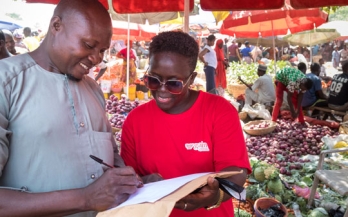
Taking stock on food systems transformation for people and planet: where do we stand two years on?
In this blog, Anouk de Vries looks at some of the work underway to deliver on the aspirations set out in the 2021 Food System Summit - making the way we grow, deliver and consume food more sustainable and healthier.
UNFSS Stocktaking Series - Wrap Up
EP 22
Welcome to this episode of Bite the Talk, we are Taking Stock! The 2023 United Nations Food System…
26 Minutes▶ Play this episode

GAIN Interview Cruncher - Nourishing Our Future: Addressing Malnutrition Through Breastfeeding
This Interview Cruncher aims to shed light on the critical role of maternal nutrition, in promoting successful breastfeeding and optimal infant nourishment. And to do so, we have three prominent speakers joining us today.
Business models for reaching lower income consumers with nutritious foods
- 20/07/2023
Lower-income populations in low- and middle-income countries (LMICs) often face challenges accessing affordable, desirable, safe, and nutritious food, contributing to poor diet quality and malnutrition. As the main source of food for the majority of this population, private-sector firms have the potential to play a key role in alleviating this – and if they can do profitably, could help their bottom line in the process.
Reaching Lower-Income Consumers with Nutritious Foods: Cutting Ingredient Costs by using Lower-cost Alternatives
Companies entering the lower-income consumer market often adapt existing products to meet lower-income consumers’ needs—in particular, redesigning the product to improve affordability. One way to do this is to simply replace more expensive ingredients with cheaper alternatives, or omit certain ingredients altogether.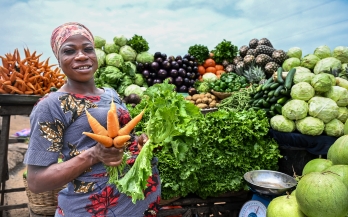
UNFSS Stocktaking Series - Introduction
EP 18
The 2023 United Nations Food Systems Stock Taking moment in Rome, follows the transformative 2021…
30 Minutes▶ Play this episode