New IFPRI paper pulls together data on the food intake of 112,553 children 6-23 months old contained within Demographic and Health Surveys (DHS) across 46 low and middle income countries since 2006.
Osgood-Zimmerman and colleagues just published an article in Nature that, for the first time, provides high-resolution maps of child growth failure (stunting, wasting, and underweight) across Africa. They mapped data from over 1 million children from 51 countries at a 5×5 km resolution as well as at the largest administrative subdivision from 2000 to 2015.
Countries and donors increasingly recognise the benefits of evaluating public programs that could increase access to safe and nutritious foods for the poor. However, low- and middle-income countries face three main challenges to evaluation. Nonetheless, evaluation is feasible, as one recent study shows, and has potentially strong benefits for improving large-scale nutrition interventions.
The consistent evidence that childhood stunting is associated with poor child development and school performance and health and human capital development more generally has elevated nutrition in the development agenda. The result has been an unprecedented focus on addressing stunting and some renewed development resources focused on doing so.
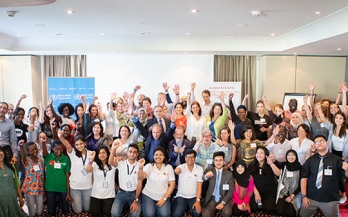
A couple of weeks ago GAIN and the World Health Organization (WHO) organised a consultation “Adolescents: Agents of Change for a Well Nourished World”. This was the third in four “stepping stones” towards forging a consensus on promising approaches for programming to improve adolescent nutrition outcomes. The x-factor in the consultation was the participation of 10 adolescents from Bangladesh, Indonesia, Pakistan and Zambia.
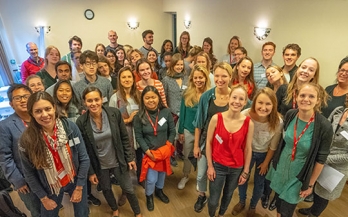
On 28 and 29 September 2018, the Global Alliance for Improved Nutrition (GAIN) Netherlands office organised GAIN’s first student challenge. In small teams, more than 40 students from 10 Dutch universities, with 15 nationalities and more than 20 different academic backgrounds competed against each other to come up with creative ideas to be implemented in one of GAIN’s current projects.
Today we are celebrating #WorldEggDay with the publication of the Global Alliance for Improved Nutrition (GAIN)/RTI co-edited special supplement of the journal Maternal and Child Nutrition on Eggs: a high potential food for improving maternal and child nutrition. This supplement explores, in nine novel papers, the science base supporting increased consumption of eggs in resource-poor countries.
Nearly 19 million babies born globally every year – 14% – are at risk of permanent yet preventable brain damage and reduced cognitive function due to a lack of iodine in the earliest years of life, according to a new joint report by UNICEF and GAIN released today. More than 1 in 4 of these children – 4.3 million – lives in South Asia.
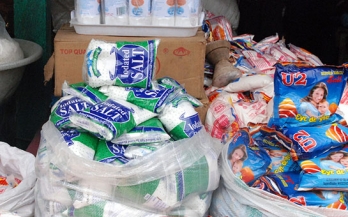
An international research team, led by ETH Zurich in collaboration with the Global Alliance for Improved Nutrition (GAIN), and with inputs from UNICEF, demonstrate that if most salt for human consumption is iodized, salt will provide sufficient dietary iodine to all population groups.
Scientists fear up to 50% of all newborns in Europe do not reach their full cognitive potential due to iodine deficiency. Today with the Krakow Declaration on Iodine presented at the Jagiellonian University, scientists from the EUfunded project EUthyroid, supported by several stakeholder organisations, call on European policy-makers to support measures to eliminate iodine deficiency.