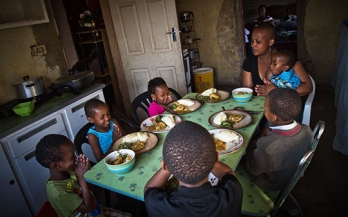
The objective of this study was to examine effects on child development of a group-based parenting support program when combined with Mexico’s conditional cash transfer program.
Behaviour change communication (BCC) is a critical component of infant and young child feeding interventions. In this study we asked BCC practitioners working in low‐ and middle‐income countries to participate in an examination of BCC practice.
GAIN together with the Government of the Netherlands and the Ministry of Health and Family Welfare of the Government of Bangladesh, organized the official World Health Assembly 70 side event 'Embodying the future: How to improve the nutrition status of adolescents?'.
GAIN, together with the WHO, co-hosted the World Health Assembly side event titled ‘Accelerated Action for the Health of Adolescents (AA-HA!) A Never Before Moment for countries to ACT NOW’, on Thursday, 25 May.
The objective of this Food and Nutrition Bulletin supplement is to focus attention on the need to integrate actions to improve maternal, infant, and young child nutrition.
This investigation used data from focused ethnographic studies in five rural counties in Kenya to determine whether the concept of “special foods for infants and young children” exists in the different ethnic groups in these areas as an identifiable component of cultural beliefs and knowledge.
Iron deficiency anemia is a major public health problem in sub-Saharan Africa. The objective of this study was to evaluate the efficacy of a complementary food fortified with sodium iron EDTA plus either ferrous fumarate or ferric pyrophosphate to combat iron deficiency anemia in preschool-age children in a highly malaria endemic region.
The objectives of this study were to review the evidence base for maternal and Infant and Young Child Nutrition (IYCN) actions and to discuss the development of the Maternal, Infant, and Young Child Nutrition Network in relation to the IYCN Working Group's role and structure.