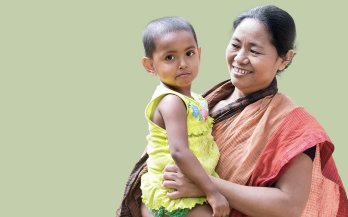
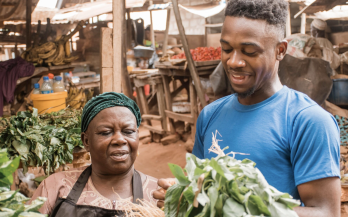
This Solutions Session side event explores inclusive innovation as a practical tool for reaching the most vulnerable and eradicating poverty, focusing on how locally-driven, participatory approaches can enhance the quality and impact of development interventions. Designed as an interactive and participatory experience, the session will give participants firsthand exposure to how inclusive innovation operates in real-world contexts.
When we tell people we analyze the environmental and nutritional impacts of food, we're almost always met with the same question: “So, what should I eat?” It's a deceptively complex question that highlights one of the greatest challenges facing our food systems today—how do we nourish a growing global population while protecting the planet we all share?
This challenge has driven us at the Global Alliance for Improved Nutrition (GAIN) to develop a new approach that we're excited to share in our latest briefing paper, "Nourishing People and Planet: Enviro-Nutritional Insights into Local Foods for Policy, Programmes, and Industry."
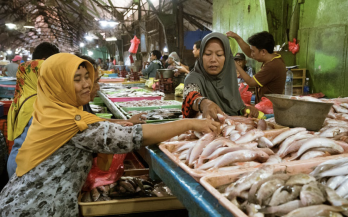
Food culture refers to a shared value system, norms, symbols, and perceptions. Yet within the food and nutrition sector, it is often reduced to traditional foods, dishes, or cuisines—a narrow view that constrains how food culture could be leveraged to shape future food preferences and habits. This working paper reviews Indonesian food culture broadly, seeking to understand and appreciate the country’s diverse cuisine. The paper draws on data from governmental reports, academic papers, media reports, social media analysis, and expert interviews.
Five years ago, fragmented food systems data made it challenging for stakeholders to take away meaningful insights for evidence-based decision-making. Today, the Food Systems Dashboard has transformed the data landscape and become an indispensable resource for food systems stakeholders worldwide, providing nearly 200,000 users with comprehensive, visual data and expert analysis that can help turn data into action and insights into impact.
The world is currently facing two interconnected and severe crises: widespread malnutrition and environmental degradation. Food systems are central to both issues, as they are responsible for a significant portion of greenhouse gas emissions, natural resource depletion, and environmental damage, while simultaneously feeding billions of people. Diets are a crucial link between human and planetary health and have been identified as a key lever to address both the climate and malnutrition crises. However, there are inherent trade-offs between nutritional and environmental goals, making it difficult to find solutions that simultaneously improve both outcomes. This paper introduces nutritional Life Cycle Assessment (nLCA) as an evidence-based tool to guide policy, programmatic, and industry decision-making, and demonstrates how nLCA can provide actionable, context-specific insights that help reconcile (often competing) nutritional and environmental priorities.
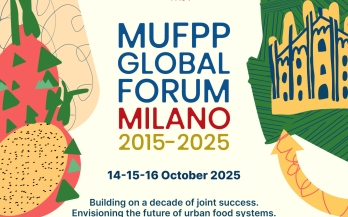
Every 2 – 3 years, the Global Forum brings cities and partners together to learn, share urban food policy knowledge and best practices, network, and to expand and strengthen partnerships. 2025 marks 10 years since the MUFPP was established. The pact gives ‘cities a voice and provide them with a political and operational framework to act, learn, and collaborate’, towards the goal of sustainable food systems that are ‘inclusive, resilient, safe, and diverse.' There are now more than 300 signatory cities, worldwide; and more than 900 transformative best practices have been developed and shared. Learn more about the Pact: The Milan Pact - Milan Urban Food Policy Pact
Food policy has been an active area in the UK throughout 2025. Three of four UK nations having recently published food strategies and plans, with another in preparation, all within a changing geopolitical context. Against this backdrop, this working paper highlights key gaps and potential actions for fostering coherence within food strategies and governments in the UK based on an analysis of UK food strategies using a new tool, the Food Systems Policy Coherence (FSPC) Diagnostic tool. This tool, composed of two modules, aims to provide a simplified and standardised approach to measure policy coherence.
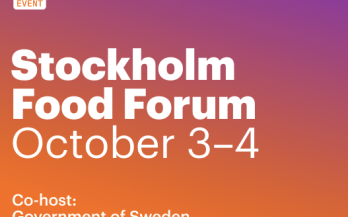
Stockholm Food Forum: Engage. Act. Transform.
The Stockholm Food Forum, convened by EAT, is a carefully curated event open to up to 700 participants by invitation only. This results in a gathering of global thought leaders from science, politics, business, civil society and beyond.
The Second United Nations Food Systems Summit Stock take (UNFSS +4) which held 27–29 July 2025 in Addis Ababa, co‑hosted by Ethiopia and Italy – closed with a powerful reaffirmation of political will, partnership, and accountability in support of sustainable, inclusive, and resilient global food systems transformation. It brought together 3,500+ participants, 145+ national delegations and 700+ non-state actors. Participants from governments, civil society, producers, youth, Indigenous Peoples, academia, and the private sector gathered for Plenary sessions, High-level Panels, Ministerial Roundtables, Investment Dialogues, and Stakeholder-led constituencies.
The Second United Nations Food Systems Summit Stock take (UNFSS +4) which held 27–29 July 2025 in Addis Ababa, co‑hosted by Ethiopia and Italy – closed with a powerful reaffirmation of political will, partnership, and accountability in support of sustainable, inclusive, and resilient global food systems transformation. It brought together 3,500+ participants, 145+ national delegations and 700+ non-state actors. Participants from governments, civil society, producers, youth, Indigenous Peoples, academia, and the private sector gathered for Plenary sessions, High-level Panels, Ministerial Roundtables, Investment Dialogues, and Stakeholder-led constituencies.