- 22/10/2025
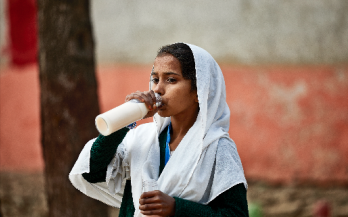
As Pakistan advances its URAAN Plan and National Food Systems Transformation Pathway, meaningful youth engagement will determine how inclusive that progress becomes. Despite strong national frameworks and growing youth-led innovation, young people remain largely outside formal decision-making. This policy brief sets out practical actions to institutionalise youth participation across governance structures—embedding the Scaling Up Nutrition Youth Network (SYN) within national and provincial coordination bodies, assigning youth advisory roles and quotas, and establishing a Youth in Food Systems Working Group to align mandates and financing. It further calls for building leadership pipelines through a Youth Food Policy Fellowship, integrating national programmes like Kamyab Jawan with food system priorities, and introducing digital accountability tools such as a Youth Engagement Scorecard. By embedding youth as architects of transformation, Pakistan can turn its demographic strength into a lasting engine for innovation, accountability, and resilient food systems.
- 21/10/2025
Bangladesh is redefining its path toward a more equitable, climate-resilient, and nutrition-secure future—and young people are at the centre of that journey. As the country advances major national strategies like the National Food and Nutrition Security Policy, this policy brief highlights how youth can move from community action to shaping national decision-making. It proposes creating formal youth roles in bodies such as the Bangladesh National Nutrition Council (BNNC) and District Nutrition Coordination Committees and strengthening cross-ministerial collaboration through a Youth in Food Systems Working Group. The brief also calls for expanding Department of Youth Development (DYD) programmes to include policy and governance, integrating food systems into university curricula, and building leadership pipelines through fellowships, mentorships, and digital participation tools. By positioning young people as active partners in governance, Bangladesh can cultivate a generation of leaders driving food systems transformation in line with the country’s long-term development agenda.
Every October, the world comes together to mark World Food Day, a moment to reflect on progress and renew our commitment to building food systems that nourish everyone. The 2025 theme, “Hand in Hand for Better Foods and a Better Future,” speaks to the power of collaboration. At GAIN Nigeria, we see this play out every day in our partnerships across governments, industry, and civil society. It is not just about what we do as an organization it is about what we achieve together. One powerful example of this is the Digital Fortification Quality Traceability Plus platform (DFQT+) platform, now transforming how fortified foods are monitored in Nigeria.
- 15/10/2025
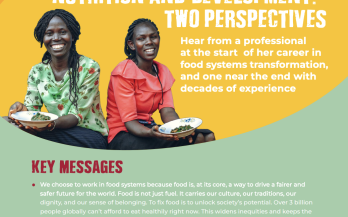
Hear from a professional at the start of her career in food systems transformation, and one near the end with decades of experience
Key Messages
• We choose to work in food systems because food is, at its core, a way to drive a fairer and
safer future for the world. Food is not just fuel. It carries our culture, our traditions, our
dignity, and our sense of belonging. To fix food is to unlock society’s potential. Over 3 billion
people globally can’t afford to eat healthily right now. This widens inequities and keeps the
vulnerable trapped in cycles of poor health.
• Food systems transformation touches every aspect of our lives and cannot be achieved in
isolation. It spans agriculture, health, trade, finance, education, environment, and social
protection, and it relies on people all along the supply chain, from farmers and traders to
processors, retailers, policymakers, and consumers. Few other areas of work demand such
breadth. That is why transforming food systems requires collaboration across sectors
directly and indirectly linked to food, and why it offers opportunities for people with
different skills, perspectives, and passions to contribute.
• The 2025 World Food Day theme calls for greater collaboration across sectors and silos to
transform agrifood systems for people and planet. This is a huge part of the work that
must be done, and we remain hopeful that solidarity and compassion will win over more
selfish politics. At GAIN we work hard to bring disparate voices across the food system
together, for real transformation.
‘Ultra-processed food’ (UPF) has been the nutrition buzzword of the past few years, making its way from scientific research into headlines and policy debates. These foods, commonly defined as industrial food formulations made with ingredients rarely used in home cooking, make up a shockingly large share of diets and have been associated with various negative health effects – but their role remains complicated and contested. At the recent Stockholm Food Forum, I joined this debate, participating on a panel discussion on the topic.
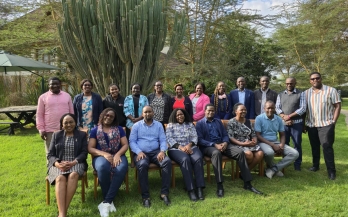
In mid-September, 2025, stakeholders from across Kenya’s food, health, trade, and development sectors gathered at Sawela Lodges in Naivasha to review and revise the Draft National Food and Nutrition Security Policy (NFNSP).
The meeting, convened by the Ministry of Agriculture and Livestock Development with the support of the Food and Land Use Coalition (FOLU), the Global Alliance for Improved Nutrition (GAIN) and the World Resources Institute (WRI), saw participation from experts in agriculture, livestock, health, education, trade, arid and semi-arid lands, fisheries, and gender. This multi-sectoral gathering contributed to the ongoing comprehensive review of Kenya’s food and nutrition security policy.
- 11/10/2025
KEY MESSAGES
Children in both urban and rural Ethiopia are increasingly consuming ultra-processed foods that contain unhealthy levels of sugar, salt, and unhealthy fats. These items, heavily marketed and widely accessible, are rapidly replacing traditional healthy diets.
Inadequate and unhealthy diets during childhood can compromise physical and cognitive development, diminish immune function, and increase susceptibility to chronic illnesses later in life.
Priority policy areas the government should consider include: more nutrition education; improved regulation of the food environment to make healthy options more prominent and unhealthy options less prominent; subsidies that prioritize healthy diets for children; and improved coordination and coherence across sectors seeking to transform food systems (e.g. Agriculture, Education, Health, and Trade).
Reducing unhealthy diets in children is not just a nutrition issue – it’s a systems issue. Ethiopia must urgently implement a coordinated, multi-sectoral strategy with actions to ensure all children have access to diverse, healthy, safe, and affordable diets from the start of life.
- 11/10/2025
Global food systems generate a wide range of health, environmental, and socio-economic externalities that vary across regions, demographic groups, value chains, and production contexts. These include positive effects such as improved food and nutrition security, better air and water quality, job creation and community development, but also negative outcomes such as malnutrition and diet-related diseases, climate change and land degradation, unfair labour practices and rights violations. Yet, these costs and benefits are rarely reflected in the market price of food. To design future food systems that promote health, environmental sustainability, social equity/justice, and resilience, we must make these hidden impacts visible and act upon them.
- 08/09/2025
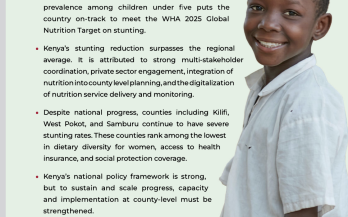
Stunting is a major concern in Eastern Africa, where nearly 1 in 3 children under 5, about 22.6 million, are
affected (UNICEF, WHO, Worldbank, 2023). In Kenya, the prevalence has declined to approximately one in
five children (18%), outperforming the regional average of 31.6%. However, this still represents more than
1.2 million children at risk (KNBS, Ministry of Health, ICF, 2023). The consequences are far-reaching;
stunting contributes to child mortality, vulnerability, and lifelong impairments in physical growth and
cognitive development, impacting both individual well-being and national productivity. In Kenya, child
undernutrition, including stunting as a key component, is estimated to cost the economy KES 374 billion
(approximately USD 4.2 billion) annually, equivalent to 6.9% of the GDP (Government of Kenya, 2019).
Stunting, a persistent form of long-term nutritional deprivation, acts as a silent driver of inequality, limiting
opportunities, lowering future earnings and reducing the potential to contribute equally to the economy.
Yet the returns on investment in nutrition are high, with every dollar yielding up to $22 in economic
benefit. (Eberwein, et al., 2016)
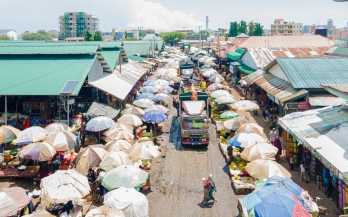
As we prepare for the 2025 Global Forum (13 – 17 October) marking ten years of the Milan Urban Food Policy Pact, we're bringing insights from our work across Africa and Asia on how city governments and local food markets can transform urban food environments and wider food systems.
Walking through any bustling urban food market, from Pemba (Mozambique) to Arusha (Tanzania) and Bogor (Indonesia), is a remarkable experience. Beyond the offerings of fresh, dried, iced and frozen produce, spices, cooked traditional meals, and animated negotiations between vendors and customers, the experience of the market is at the nexus of food systems and nutrition policies and daily realities. These markets are about more than selling and buying food; they are where the future of food systems, within cities and across urban–rural landscapes, borders, and territories, is being lived, innovated, and imagined.