FAO, GAIN and Johns Hopkins Alliance for a healthier world launch new online dashboard to inform better food policy
The Food and Agriculture Organization of the United Nations, The Global Alliance for Improved Nutrition, and The Johns Hopkins Alliance for a Healthier World today launched a new easy-to-navigate online tool designed to help decision makers understand their food systems, identify their levers of change, and decide which ones to pull.
GAIN’s Uduak Igbeka joins Global South Experts on new Commission on Sustainable Agricultural Intensification
The Global Alliance for Improved Nutrition (GAIN) is pleased to announce thatUduak Igbeka, Country Support Manager for the SUN Business Network (SBN), a network co-convened by the Global Alliance for Improved Nutrition (GAIN) and the UN World Food Programme (WFP) will sit as an expert in the new Commission on Sustainable Agriculture Intensification (CoSAI).
Impacts of COVID-19 on small- and medium-sized enterprises in the food system
- 22/05/2020
The COVID-19 pandemic and associated control measures have been having far-reaching effects on societies worldwide, and food systems have not been spared. To better understand these impacts, GAIN and partners, including the Scaling Up Nutrition (SUN) Business Network, undertook a survey of over 350 food system SMEs in 17 countries in early May 2020, aiming to assess the impacts of the COVID-19.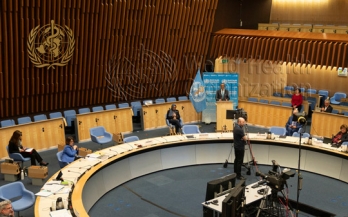
GAIN Statement @ WHA 73
The collateral effects of necessary lock-down and physical distancing measures may, unless accompanied by measures to protect infant and young child nutrition, damage lives for many decades. While needed to curb disease spread, containment measures are disrupting nutrition and social protection interventions and food systems. Early tracking shows price increases of several nutritious foods; market closures and labour disruptions affecting livelihoods are decreasing nutritious food access.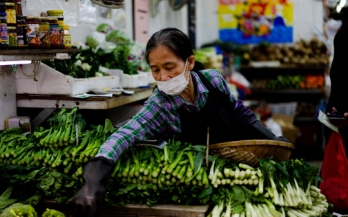
Impact of COVID-19 on food systems: a situation report I
- 10/05/2020
These document series summarise some rapid assessments undertaken by the Global Alliance for Improved Nutrition (GAIN) to understand early impacts of the COVID-19 coronavirus pandemic on food systems in a set of low- and middle-income countries where GAIN works (Bangladesh, India, Pakistan, Indonesia, Mozambique, Ethiopia, Kenya, Tanzania, Rwanda, and Nigeria).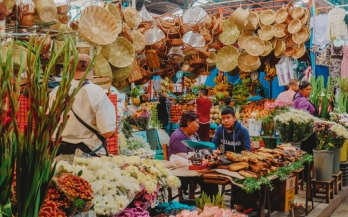
Impact of COVID-19 on food systems: a situation report II
- 09/05/2020
These document series summarise some rapid assessments undertaken by the Global Alliance for Improved Nutrition (GAIN) to understand early impacts of the COVID-19 coronavirus pandemic on food systems in a set of low- and middle-income countries where GAIN works (Bangladesh, India, Pakistan, Indonesia, Mozambique, Ethiopia, Kenya, Tanzania, Rwanda, and Nigeria).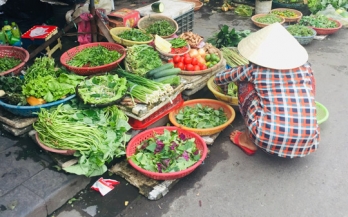
Impact of COVID-19 on food systems: a situation report III
- 08/05/2020
These document series summarise some rapid assessments undertaken by the Global Alliance for Improved Nutrition (GAIN) to understand early impacts of the COVID-19 coronavirus pandemic on food systems in a set of low- and middle-income countries where GAIN works (Bangladesh, India, Pakistan, Indonesia, Mozambique, Ethiopia, Kenya, Tanzania, Rwanda, and Nigeria).
Covid-19 and food prices: what do we know so far?
Since the Covid-19 pandemic and associated control measures began affecting food systems around the world, many of us who care about nutrition and livelihoods have been thinking anxiously about food prices: would they be affected? If so, how badly, for which foods, and for how long? Food prices are important for several reasons.