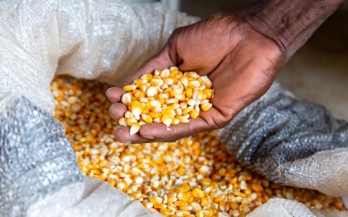
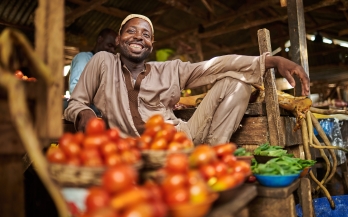
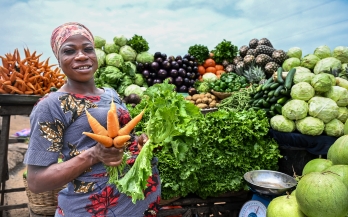
Lower-income populations in low- and middle-income countries (LMICs) often face challenges accessing affordable, desirable, safe, and nutritious food, contributing to poor diet quality and malnutrition. As the main source of food for the majority of this population, private-sector firms have the potential to play a key role in alleviating this – and if they can do profitably, could help their bottom line in the process.
UNFSS Stocktaking Series - Nigeria
EP 19
In this episode we'll be asking what is it really like to lead and coordinate the process on food…
Companies entering the lower-income consumer market often adapt existing products to meet lower-income consumers’ needs—in particular, redesigning the product to improve affordability. One way to do this is to simply replace more expensive ingredients with cheaper alternatives, or omit certain ingredients altogether.
UNFSS Stocktaking Series - Introduction
EP 18
The 2023 United Nations Food Systems Stock Taking moment in Rome, follows the transformative 2021…
This Interview Cruncher will highlight the crucial role of "food systems infrastructure" in enabling access to healthy and sustainable diets in low- and middle-income countries. It will aim to offer a clear definition of what food systems infrastructure entails and identifies gaps that still need to be addressed.
The 78th session of the UN General Assembly (UNGA 78) will open on Tuesday, 12 September 2023. The first day of the high-level General Debate will be Monday, 25 September 2023.
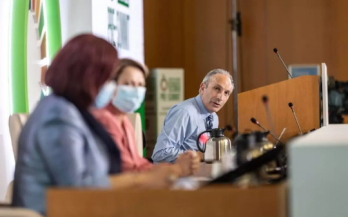
Recently I was on panel chaired by the UN Deputy Secretary General, Amina Mohamed, where I was asked three questions about the UN’s “Stocktaking Moment” two years after the UN Food Systems Summit of 2021 (UNFSS). Here are my answers to the questions.
The Africa Climate Week 2023 will bring together government leaders, businesses, civil society organizations, and communities from across the continent to share their experiences, insights, and solutions.
The Africa Food Systems Forum (AGRF) will host its 13th annual summit in a hybrid event from Sep 5th -8th 2023 in Dar es Salaam, Tanzania. Hosted under the leadership of H.E Samia Suluhu Hassan, the president of the United Republic of Tanzania; this year’s summit is anchored around building Africa’s Food Systems and Food Sovereignty with the youth and women at the center.
Gallup, Harvard T.H Chan School of Public Health, and the Global Alliance for Improved Nutrition (GAIN), today launched the Global Diet Quality Project’s website, dietquality.org, releasing data from 56 countries alongside ready to use tools for diet data collection and analysis.