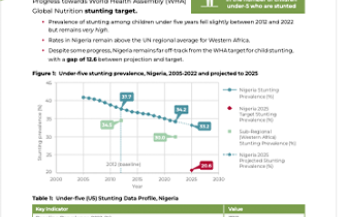
WHA Global Nutrition Stunting Target 2012-2025
Achieve a 40% reduction in the number of children under-5 who are stunted
WHA Global Nutrition Overweight Target 2012-2025
Ensure that there is no increase in childhood overweight
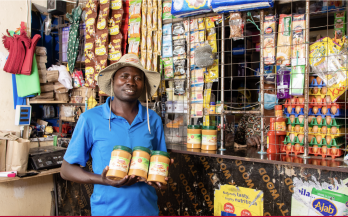
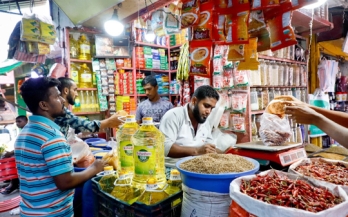
Fighting malnutrition in all its forms is one of the major challenges of the 21st century. While more than 820 million people suffer from undernutrition and hunger, with 150 million children under age 5 stunted (too short for their age), another 2 billion people are overweight or obese. With SMEs in Africa producing and distributing approximately 70%-80% of the nutritious foods available on the continent, they are key drivers of food supply, job creation and economic growth. How can they reach lower-income consumers and create sustainable nutrition impact?
The United Nations General Assembly declared 27 June as Micro-, Small and Medium-sized Enterprises Day, to raise public awareness of their contribution to sustainable development and the global economy. Policymakers must move beyond recovery and consider ways in which to lower and eliminate barriers faced by MSMEs, improve the business environment and access to finance, markets and technology in these fragile times. It is critical that countries and their development partners continue to support and empower MSMEs and unlock their full potential through inspiring innovation, creativity and decent work for all.
Join us for an engaging discussion on how Enterprise Support Organisations (ESOs) can drive real change in the fight against malnutrition. ESOs are key drivers in strengthening food systems, supporting agri-businesses, and fostering innovation to combat malnutrition. But how can they be better leveraged for impact? Let's find out.
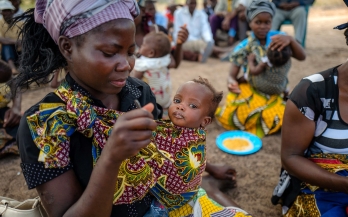
This webinar explores the intersection of women's empowerment and food security, highlighting CASCADE's approaches to improving nutrition and building resilience for women of reproductive age and children.
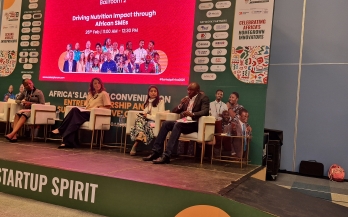
Micro, small, and medium-sized enterprises (MSMEs) play a pivotal role in addressing Nigeria’s nutrition challenges, given their significant contribution to the local food system and economy. MSMEs are essential drivers of innovation, employment, and food production, helping make nutritious foods more accessible to underserved populations. However, MSMEs face an array of systemic barriers that hinder their growth and ability to scale sustainable nutrition solutions, such as high costs, complex regulations, and restricted access to finance. To bring together policymakers and the private sector to discuss these challenges, a Nutrition Policy Dialogue was convened by GAIN and the Scaling Up Nutrition Business Network (SBN) in Abuja on October 31, 2024. Attendees included the Regional and State Hub leads for SBN in Nigeria as well as representatives from businesses, government departments, academia, civil-society organisations, and other key stakeholders.
Through a keynote address, a panel discussion, and two breakout groups, the meeting highlighted key challenges, including regulatory overlaps, limited financial access, and policy inconsistencies affecting MSMEs. It also proposed actionable recommendations such as harmonising regulatory frameworks, developing cluster-based financing models, and enhancing financial literacy. Finally, it served to foster stakeholder commitments to training programs, advocacy efforts, and implementation of innovative financing solutions.
NUTRITION IMPACT AT SCALE (NIS) Through the Nutrition Impact at Scale project, GAIN seeks to scale the impact of its work to increase access to safe and nutritious foods, especially for low-income consumers. By working with other organisations (Enterprise Support Organisations) that are willing and have the requisite capacity to attach a 'nutrition lens' to their work with small and medium enterprises (SMEs), Nutrition Impact at Scale (NIS) will enable a large-scale and accelerated nutrition impact for the larger African population. Funded by the Ministry of Foreign Affairs of the Netherlands, NIS uses a market systems development approach to improve food systems, increase inclusivity, and, ultimately, nutrition outcomes. The project leverages on the extensive experience GAIN have developed over the years of providing quality technical assistance, networking experience, knowledge sharing, building capacity of partners, and the provision of various tools and resources to MSMEs, to attach a 'nutrition lens' to the work of ESOs in Nigeria, Benin, Uganda, Ethiopia, Mozambique, and Kenya.
The SUN Business Network (SBN), co-convened by the World Food Programme (WFP) and the Global
Alliance for Improved Nutrition (GAIN), operates within the Scaling Up Nutrition (SUN) Movement’s multisectoral
framework to address malnutrition, through private sector engagement.
Last month the UN Food and Agriculture Organization released its biennial State of Agricultural Commodity Markets report, and we were delighted to see it focusing on a topic close to our own hearts: policy coherence between trade and nutrition.
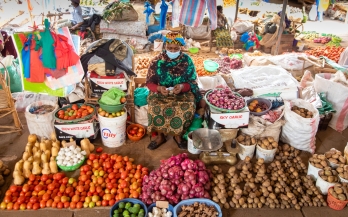
Micro, small, and medium enterprises (MSMEs) are the backbone of economic development in many low- and middle-income countries (LMICs). Their role is particularly important since they are estimated to make up the vast majority of food system businesses and play a critical role in achieving food security and supporting nutrition, as well as providing employment. To function optimally, business-support programmes and interventions are often developed based on the assumption that institutional constraints impede MSMEs from maximising their potential. Support services can be broadly grouped into financial assistance (e.g., grants, loans) and technical assistance (e.g., business development services, training, networking).