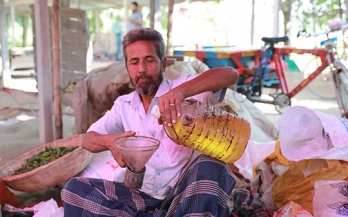
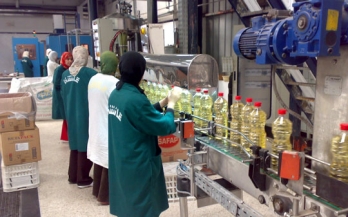
Fortification of vegetable oils is a strategy implemented worldwide to prevent Vitamin A deficiency. The objective of this study was to assess vitamin A content in the oil industry.
Unbranded palm cooking oil has been fortified for several years and can be found in the market with different oxidation levels. This study aimed to investigate the stability and shelf life of unbranded, bulk, vitamin A-fortified palm oils with the most commonly observed oxidation levels in Indonesia.
In this paper we review the evidence basis for prevention of folic acid–sensitive neural tube defects through public health interventions in women of reproductive age, the proven vehicles for delivery of folic acid, and what is needed to effectively scale these, and provide a snapshot of potential innovations that require future research.
This study was conducted to determine the operational performance, economic sustainability and social impact of a decentralised production model for India’s Supplementary Nutrition Program, in which women groups run small-scale industrialised units.
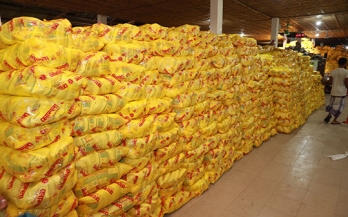
The aim of this study was to review experience of the use of iodized salt in the food industry globally, and analyze the market context in Bangladesh and Pakistan to test whether this experience may be applicable to inform improved national universal salt iodization programming in developing countries.
Rapid test kits (RTK) have been included in household surveys to test the iodine content in salt. The aim of the current paper was to examine the performance of RKT under field conditions and to recommend their most appropriate use in household surveys.
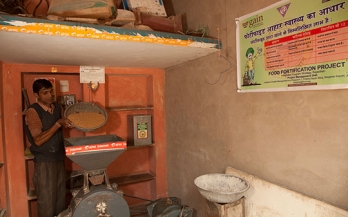
The purpose of this study was to assess the performance of the iron spot test in Arabic bread made from white wheat flour. These results show that a field-friendly method for testing bread could have a useful role in the monitoring and evaluation process for flour fortification programs.
This study used data from three population-representative surveys of women of reproductive age in Kenya, Senegal and India to develop a new approach to apportion the population Universal Salt Iodization levels by the principal dietary sources of iodine intake, namely native iodine, iodine in processed food salt and iodine in household salt.
This event advocated for policy makers, industries, government agencies, development partners, and interested stakeholders to take the next step towards improving the food fortification programme and its coverage.
GAIN, together with the World Health Organization (WHO), the Iodine Global Network (IGN), the Swiss Federal Institute of Technology (ETH), and Effective Altruism Geneva organize the event ‘Towards the Elimination of Iodine Deficiency by 2020’.