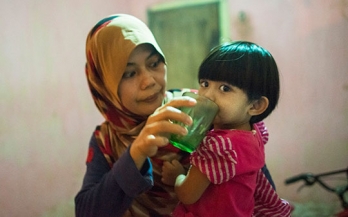
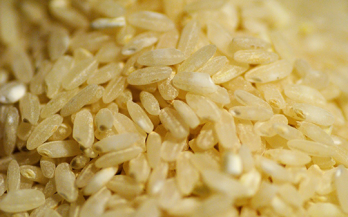
The Government of Kazakhstan, USAID, and GAIN co-hosted the first Central Asia regional summit on micronutrient fortification, "Fortify our Future: Regional summit for improving the health of women and children through flour fortification" from 3-4 April in Almaty, Kazakhstan.
The objective of this study was to document the achievements, challenges, lessons learned, and management responses associated with national fortification projects in Morocco, Uzbekistan, and Vietnam.
The objective of this study was to provide an overview of efficacy, effectiveness, economics of food fortification and biofortification, and status of and challenges faced by large-scale food fortification programs in low- and middle-income countries.
Iron deficiency anemia is a major public health problem in sub-Saharan Africa. The objective of this study was to evaluate the efficacy of a complementary food fortified with sodium iron EDTA plus either ferrous fumarate or ferric pyrophosphate to combat iron deficiency anemia in preschool-age children in a highly malaria endemic region.
This paper reports on case studies supported by the Global Alliance for Improved Nutrition (GAIN)-UNICEF USI Partnership Project to investigate processed food industry use of adequately iodised salt in contrasting national contexts.
The objective of this study was to assess the contribution of iodine intake from iodised household salt, iodised salt in instant noodles, and iodine in ground water in five regions of Indonesia.
The papers presented in this Supplement cover a wide range of topics pertinent to the implementation of large-scale food fortification programs and contribute to strengthening ongoing programs, as well as providing important lessons for new countries.
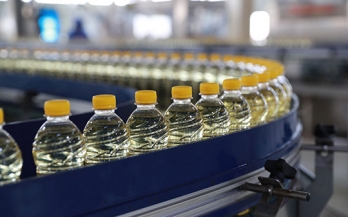
Food fortification is implemented to address vitamins A and D deficiencies in numerous countries. The stability of vitamins A and D3 was assessed during a two-month period reproducing the usual oil storage conditions before sale to consumers.
The objective of this study was thus to analyze the dietary micronutrient intakes of these women, to select the food vehicles to be fortified and to calculate their contributions to meet the recommended nutrient intake for iron, zinc, vitamin A and folic acid.