- 08/04/2026
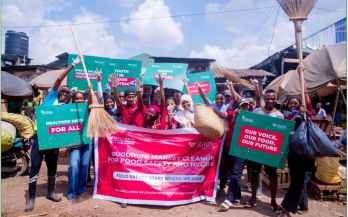
Young people represent a critical yet underutilised force in transforming food systems. By actively engaging youth in transformation processes, they can co-lead initiatives, shape agendas, and influence policymakers to address their priorities and make decision-making more inclusive.
Collective action is a powerful mechanism through which young people organise around shared food systems priorities to generate sustained pressure for policy change while building capacity for long-term engagement in governance processes. However, despite the growing visibility of youth-led movements, the pathways through which young people’s collective voices shape and become institutionalised within national food and nutrition policies remain underexamined, particularly in low- and middle-income countries.
- 22/10/2025
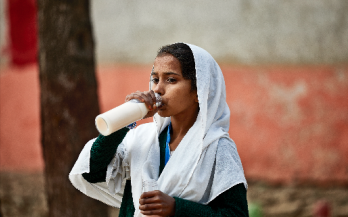
As Pakistan advances its URAAN Plan and National Food Systems Transformation Pathway, meaningful youth engagement will determine how inclusive that progress becomes. Despite strong national frameworks and growing youth-led innovation, young people remain largely outside formal decision-making. This policy brief sets out practical actions to institutionalise youth participation across governance structures—embedding the Scaling Up Nutrition Youth Network (SYN) within national and provincial coordination bodies, assigning youth advisory roles and quotas, and establishing a Youth in Food Systems Working Group to align mandates and financing. It further calls for building leadership pipelines through a Youth Food Policy Fellowship, integrating national programmes like Kamyab Jawan with food system priorities, and introducing digital accountability tools such as a Youth Engagement Scorecard. By embedding youth as architects of transformation, Pakistan can turn its demographic strength into a lasting engine for innovation, accountability, and resilient food systems.
- 21/10/2025
Bangladesh is redefining its path toward a more equitable, climate-resilient, and nutrition-secure future—and young people are at the centre of that journey. As the country advances major national strategies like the National Food and Nutrition Security Policy, this policy brief highlights how youth can move from community action to shaping national decision-making. It proposes creating formal youth roles in bodies such as the Bangladesh National Nutrition Council (BNNC) and District Nutrition Coordination Committees and strengthening cross-ministerial collaboration through a Youth in Food Systems Working Group. The brief also calls for expanding Department of Youth Development (DYD) programmes to include policy and governance, integrating food systems into university curricula, and building leadership pipelines through fellowships, mentorships, and digital participation tools. By positioning young people as active partners in governance, Bangladesh can cultivate a generation of leaders driving food systems transformation in line with the country’s long-term development agenda.
- 11/10/2025
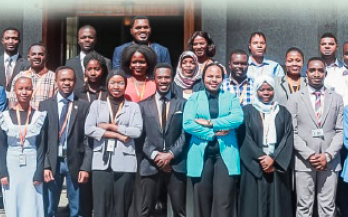
Youth in Tanzania are active at the community level but remain largely absent from formal
governance. There is potential for Tanzanian youth to more actively help Tanzania in its ambition to
achieve a nutrition-sensitive, climate resilient, inclusive food system.
- 11/10/2025
KEY MESSAGES
Children in both urban and rural Ethiopia are increasingly consuming ultra-processed foods that contain unhealthy levels of sugar, salt, and unhealthy fats. These items, heavily marketed and widely accessible, are rapidly replacing traditional healthy diets.
Inadequate and unhealthy diets during childhood can compromise physical and cognitive development, diminish immune function, and increase susceptibility to chronic illnesses later in life.
Priority policy areas the government should consider include: more nutrition education; improved regulation of the food environment to make healthy options more prominent and unhealthy options less prominent; subsidies that prioritize healthy diets for children; and improved coordination and coherence across sectors seeking to transform food systems (e.g. Agriculture, Education, Health, and Trade).
Reducing unhealthy diets in children is not just a nutrition issue – it’s a systems issue. Ethiopia must urgently implement a coordinated, multi-sectoral strategy with actions to ensure all children have access to diverse, healthy, safe, and affordable diets from the start of life.
- 13/08/2024
ACT4FOOD was launched as a global youth-led movement to transform food systems, with a pledge to encourage millions of young people to create sustainable food systems and more opportunistically to get involved in the UNFSS and to bring their demands to the decision-making table.
- 12/08/2024
The youth leadership initiative is a platform for young individuals aged 18-25 to actively participate in food systems decision-making. This initiative aims to provide opportunities for young people to have a voice and influence in the decisions that shape food systems, especially national food systems pathways.
- 18/04/2024
In 2023, Criterion Institute and UNICEF partnered to develop child lens investing: an emerging field that intentionally integrates considerations of child rights and wellbeing into investment processes. Understanding is growing of the opportunity that exists for increasing economic, social, and environmental impact by considering children when making investments.
- 05/07/2023
The objective of this paper is to describe the initial scaling-up phase of the 'Baduta' programme (Baduta 2), which aimed to support national stunting-reduction efforts in Indonesia through emotional demonstrations (‘emo demos’), reflecting on the challenges faced and ensuing lessons learned, following the promising results of the 2017 evaluation of the programme.
- 01/12/2022
This working paper describes the application of the Behaviour Centred Design (BCD) framework to develop the 'Moments with Mothers' campaign, an intervention to improve IYCF practices supporting pregnant women, mothers, and other caregivers in Nacala Porto and Mossuril, Nampula province.