
Reports and publications
Refine your search
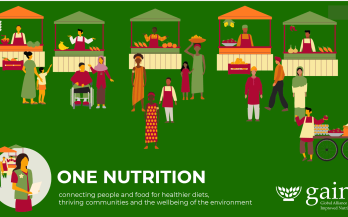
One Nutrition Toolkit
The ONE Nutrition Toolkit brings together practical guidance and training materials to support a systems-based approach to nutrition. It helps practitioners link food systems, human health, and environmental sustainability to drive better diets and stronger communities. It includes a Facilitator’s Guide and Slide Deck designed to support training, learning, and real-world application of the ONE Nutrition approach across diverse contexts.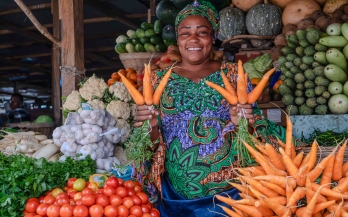
Nutritional Value Score Rates Foods Based on Nutrient Density and Noncommunicable Disease Prevention
- 26/03/2026
Nutrient deficiencies and related undernutrition (including stunting, wasting, and anemia) are widespread in low- and middle-income countries (LMICs), with as many as 9 in 10 females being deficient in ≥1 micronutrient and 1 in 2 females experiencing anemia in several countries in South Asia and sub-Saharan Africa.
Food Fortification protects billions—but could triple its impact
- 26/03/2026
New analysis provides first-ever global estimates of how fortified foods improve nutrition and the untapped potential to dramatically expand benefits at a minimal cost.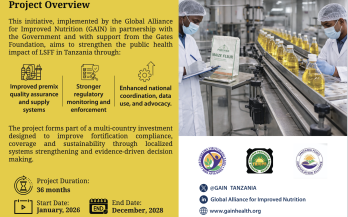
Advancing Large-Scale Food Fortification (LSFF) through Localisation, and Coordination
- 25/03/2026
Tanzania has established a strong policy and regulatory framework mandating the fortification of staple foods, including wheat flour, maize flour, edible oils, and salt. Despite this progress, implementation and compliance gaps persist, limiting the public health impact that fortification programmes can achieve Market evidence and engagement with Millers for Nutrition (M4N) highlight that inconsistent compliance and coverage stems from structural barriers within Tanzania’s fortification ecosystem.
Lishe Shuleni Fact Sheet
- 25/03/2026
Despite progress in policy development, Tanzania’s school feeding programs still face significant implementation challenges, particularly in delivering nutritionally adequate meals. Although 96% of public primary schools provide meals, these often rely onmonotonous staples like maize and beans, which lack essential micronutrients. As a result, 25% of school-aged children remain stunted, with over one-third experiencing vitamin A deficiency or anemia.
Nutrition for Growth Paris 2025: Tracking Commitments to Large-Scale Food Fortification
- 23/03/2026
Ending hunger and malnutrition in all its forms is about more than securing enough food to survive – what people eat must also be nutritious. However, nutritious foods and, by extension, healthy diets are unaffordable and unattainable for vast numbers of families. Approximately 2.8 billion people worldwide – a third of the global population – cannot afford a diet with the minimum variety of food necessary to meet essential nutrition standards. This affordability gap is most acute in low-income countries, where up to 3 in 4 people lack the means for a nutritionally adequate diet.
Clean Energy to Nourish a Continent: Unlocking renewable power for Africa’s food systems
- 18/03/2026
This white paper was commissioned by Partners in Food Solutions, SNV*, and GAIN and prepared with research, technical, and drafting support from Earth Partners Ltd. The authoring organisations extend their sincere gratitude to the funders, partners, and food processors for their generous contribution in making this research possible. The analysis reflects an independent synthesis of evidence and stakeholder perspectives and should not be interpreted as representing the official views, policies, or positions of the authoring organisations, their governing bodies, partners, or funders.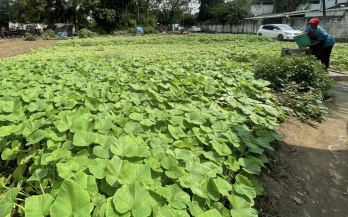
GAIN Working Paper n°65: Cities Accelerating Transitions to Regenerative Food Systems
- 09/03/2026
Transformation towards just and sustainable food systems is needed to ensure the health of people and the planet. Current large-scale industrial agri-food systems practices across an increasingly urbanised system are increasing soil degradation. These practices, alongside intersecting environmental challenges and widening socio-economic inequalities, are negatively impacting food security and access to healthy diets and increasing interest in climate-smart, agroecological, and regenerative food production. Cities are dynamic places of human settlement where food systems innovation can be catalysed. This makes them key to food policy and delivering nourishing, just and sustainable food systems. In 2024-5, the Transforming Urban Rural Food Systems (TURFS) Consortium conducted a mixed-methods exploratory inquiry in Dar es Salaam, Tanzania to explore how cities can incentivise regenerative agricultural transitions.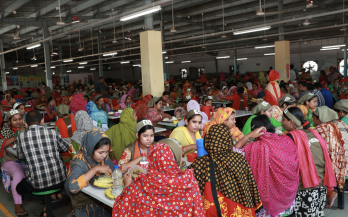
GAIN Working Paper n°64 Worker Nutrition In Bangladesh And Opportunities For Integration Into Occupational Safety and Health
- 02/03/2026
Many adults spend most of their waking hours in the workplace, making it an important—yet underappreciated—leverage point for change. In the context of food systems, workplaces can contribute to significantly improved nutrition through employer-provided nutrition programmes (also known as ‘workforce nutrition programmes’ (WFN)). However, the process of gaining support for these initiatives and the potential for institutionalising them within policy remain underexamined. This case study aims to address this by examining the development of WFN in Bangladesh, including at the factory level and through the government-led National Workforce Nutrition Alliance (NWNA). It also considers opportunities for integrating nutrition considerations into occupational safety and health (OSH) policies, regulations, and practices in Bangladesh.