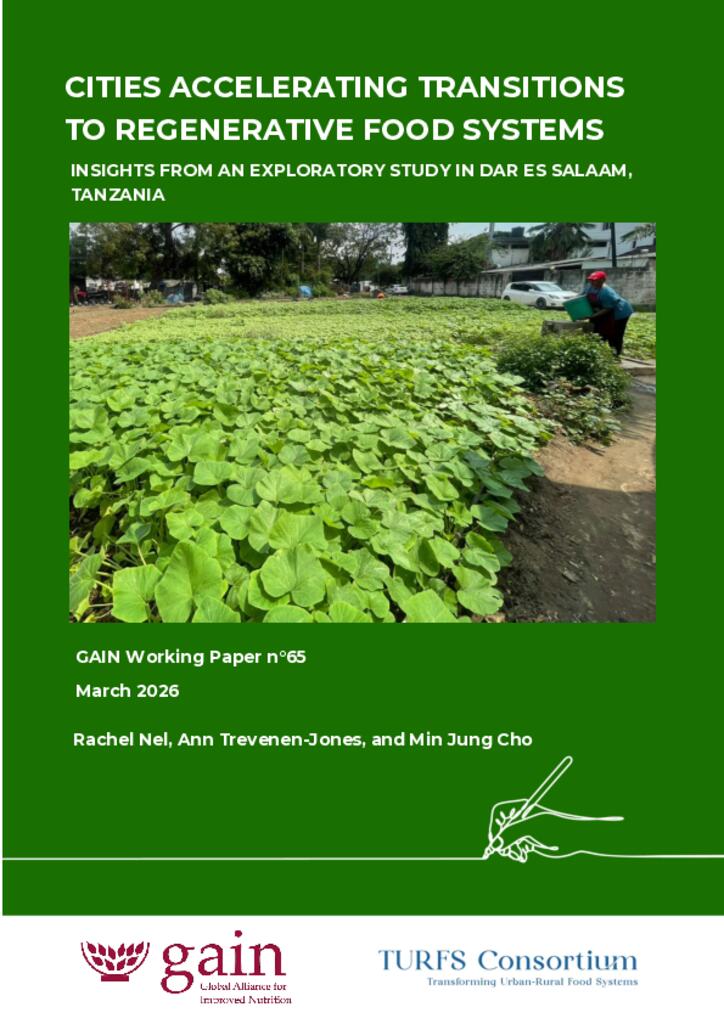
Transformation towards just and sustainable food systems is needed to ensure the health of people and the planet. Current large-scale industrial agri-food systems practices across an increasingly urbanised system are increasing soil degradation. These practices, alongside intersecting environmental challenges and widening socio-economic inequalities, are negatively impacting food security and access to healthy diets and increasing interest in climate-smart, agroecological, and regenerative food production. Cities are dynamic places of human settlement where food systems innovation can be catalysed. This makes them key to food policy and delivering nourishing, just and sustainable food systems. In 2024-5, the Transforming Urban Rural Food Systems (TURFS) Consortium conducted a mixed-methods exploratory inquiry in Dar es Salaam, Tanzania to explore how cities can incentivise regenerative agricultural transitions. This inquiry focused on three areas of interest: food production, food retail, and food systems governance. Three participatory group workshops (with 146 total participants) and 27 key informant interviews were conducted. Findings highlight opportunities to leverage the city’s organic food culture, better use existing local food systems data, and strengthen coordination, clarity, and resourcing across levels of government. Enabling actions will be needed to foster effective and inclusive collaboration among diverse actors (e.g., farmers, vendors, governments, and researchers) on shared priorities. Persistent knowledge gaps on local markets, urban food systems governance, and the socio-economic and environmental trade-offs of regenerative approaches remain. The participatory design of the inquiry supports locally led transitions and offers insights for scaling and transferring regenerative strategies in other urban contexts.