- 01/01/2025
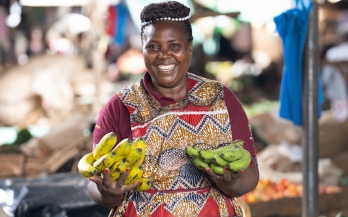
To address the triple burden on Mozambican’s Food system, GAIN in Mozambique is focused on innovative, scalable, and impactful initiatives aimed at identifying, updating, and disseminating legislation; developing businesses that produce and distribute safe and nutritious food; and implementing approaches to increase the demand and consumption of healthier diets by all Mozambicans
- 03/12/2024
The PSWG fosters an open dialogue between public and private sector actors on selected priority areas in addressing all forms of malnutrition. It recognizes that many of the root causes of malnutrition cannot be solved without the involvement of those who grow, produce, and market food. These commitments, while important, are part of a larger goal to catalyse sustained private sector action, complementing efforts by other N4G stakeholders.
- 12/11/2024
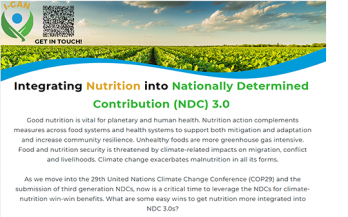
Good nutrition is vital for planetary and human health. Nutrition action complements measures across food systems and health systems to support both mitigation and adaptation and increase community resilience. Unhealthy foods are more greenhouse gas intensive. Food and nutrition security is threatened by climate-related impacts on migration, conflict and livelihoods. Climate change exacerbates malnutrition in all its forms.
- 07/10/2024
Approximately 11 million Nigerian children, or one-third of the population, experience severe child food poverty, significantly increasing their risk of malnutrition, including a 50% higher likelihood of wasting (UNICEF, 2024).
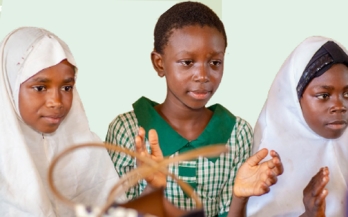
This mirrors a wider global issue, with 66 million children in low- and middle-income countries, including 23 million in Africa, attending school hungry every day (Bekri et al., 2023). Addressing this urgent crisis requires social protection interventions that combat child hunger and improve nutrition outcomes, such as school feeding programmes.
- 09/10/2024
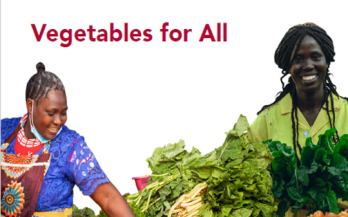
Vegetables for All is a Dutch Government-funded five-year project aimed at improving dietary diversity for 1.1 million urban and peri-urban Bottom of the Pyramid (BoP) consumers by increasing vegetable consumption in alignment with global guidelines. The project is being implemented across five counties: Nairobi, Kiambu, Machakos, Nakuru, and Mombasa, and it specifically targets families with children aged 3-12 in the lower-income group, Living Standard Measure (LSM) 3-7, who earn between USD 1.9 and 3.2 per day.
- 26/07/2024
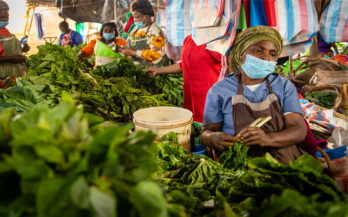
The FTF EatSafe activity sought to improve food safety in traditional markets, adopting a systems approach and a focus on consumer demand. Traditional markets in LMICs are complex spaces at the core of food systems. Traditionally neglected, they are now recognized as key food environments where most people in LMICs procure their food, and where consumer demand meets supply chains.
- 24/07/2024
Feed the Future's Evidence and Action Towards Safe Nutritious Food (EatSafe) aimed to increase consumer demand for safe, nutritious foods in traditional food markets in Nigeria and Ethiopia. This document details recommended approaches for implementing activities aimed at enhancing food safety in traditional markets through demand-driven behavior change, drawing on insights and lessons learned from EatSafe’s activities in these countries.
- 26/07/2024
Improving food safety in low- and middle-income countries (LMICs), particularly in the traditional markets where most consumers shop, is crucial for advancing nutrition, health, and other development goals. Feed the Future’s (FTF) Evidence and Action Towards Safe, Nutritious Food (FTF EatSafe) activity aimed to stimulate and leverage consumer demand for safer food to drive improvements in food safety in traditional markets.
- 26/07/2024
Feed the Future’s EatSafe: Evidence and Action Towards Safe, Nutritious Food (FTF EatSafe) aimed to boost consumer demand for safe, nutritious foods in traditional markets in low- and middle-income countries (LMICs), specifically Nigeria and Ethiopia. Utilizing a two-phased approach, FTF EatSafe's Phase I combined global evidence with local situational analyses to understand the context, and Phase II involved designing, testing, and implementing interventions to empower consumers.
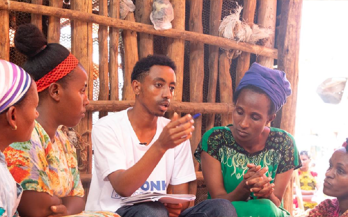
Insights from formative research guided the development of interventions, including the Vendor Training Initiative in Hawassa, Ethiopia. The Vendor Training Initiative, piloted in the Aroge Gebeya market in Hawassa
- 27/08/2024
As a follow-on to the core report ‘The Case for Investment in Nutritious Food Value Chains: An Opportunity for Gender Impact’, GAIN and SAGANA are publishing the nine case studies showcasing the business and impact case for gender-smart nutrition investments.