- 13/05/2020
Information on the coverage and consumption of biofortified foods is critical to assess the performance and potential for impact of programmes. The objective of this study was to develop and test methods for assessing the coverage and consumption of biofortified foods and their contribution to nutrient intakes of children and women of reproductive age.
- 01/05/2020
Nutrition programmes within commodity value chains provide a unique opportunity to improve health outcomes for workers, farmers, their households, and communities. They bring benefits to communities, businesses, governments, and markets. In order for these programmes to be viable in the long term, businesses need to be willing to invest, and the business case for doing so must be understood.
- 19/12/2019
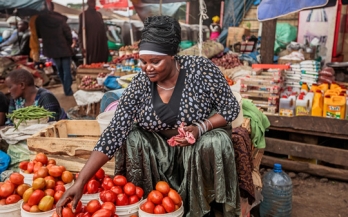
This paper posits the urban food environment as an extremely useful policy-making framework for developing actions to improve nutrition, as it is the point at which people and food interact. It describes the nutritional challenges of urban areas and how urban food environments influence nutrition through the affordability, physical access to, convenience and desirability of healthy foods.
- 27/04/2020
The world is urbanising rapidly, and malnutrition in urban areas (including both undernutrition and overweight/obesity) is an increasing problem. City policymakers in all countries are well placed to address urban malnutrition by virtue of their access to a wide variety of policy-level entry-points to food access and physical activity.
- 17/04/2020
Fighting malnutrition in all its forms is one of the major challenges of the 21st century. Addressing it will require an agricultural transformation. Within Africa, this must include a focus on small and medium-size farms, which provide about 80% of total calories in sub-Saharan Africa, as well as other small actors along the value chain.
- 07/04/2020
The SUN Business Network (SBN) / Global Alliance for Improved Nutrition (GAIN) are conducting a pilot project with the International Food and Beverage Alliance (IFBA) to support the replacement of industrially-produced trans-fatty acids (iTFA) by local companies in Nigeria and Pakistan.
- 19/03/2020
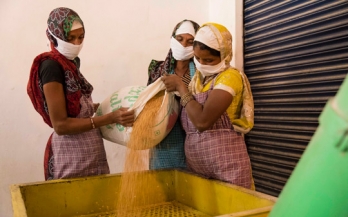
Through funding from BESTSELLER, GAIN worked in the states of Karnataka and Bihar in India, to improve the nutrition and lives of groups of semi-literate women and children. GAIN equipped women’s Self-Help Groups (SHGs) to produce nutritious food rations.
- 19/03/2018
In 2017, a cross-sectional survey, comprised of a household and market in two states (Ebonyi and Sokoto) was conducted using the Fortification Assessment Coverage Toolkit (FACT). The aim of the survey was to provide information on household coverage and consumption of fortifiable and fortified foods among children and women of reproductive age, and availability and quality of fortified foods from markets.
- 17/10/2018
While the first 1,000 days remains a critical period of nutritional need, adolescence the period from 10-19 years of age is characterised by rapid biological and psychosocial growth and development. Up to 45% of skeletal growth takes place and 15 to 25% of adult height is achieved during adolescence.
- 14/11/2019
Making Markets Work (MMW) is a joint programme between GAIN and six leading development agencies which aims to catalyse the power of markets and the private sector to make nutritious and safe foods more available, affordable and desirable. The programme charts new models, approaches and concepts to guide governments, investors and business to equip and shape markets to tackle malnutrition.