


Overview

The Islamic Republic of Pakistan, located in South Asia, is the world’s fifth most populous country with an estimated population of over 241 million in 2024. It is a young nation, with nearly 64% of its people under the age of 30, and a significant rural majority, as around two-thirds of the population lives outside urban areas. 

Ranked 168th out of 193 countries on the 2025 Human Development Report, Pakistan faces considerable development challenges, including poverty, inequality, and food insecurity. At the same time, the country holds vast potential for growth, with a large agricultural base, a strategic geographic location, and an increasingly dynamic private sector.


Malnutrition in Pakistan

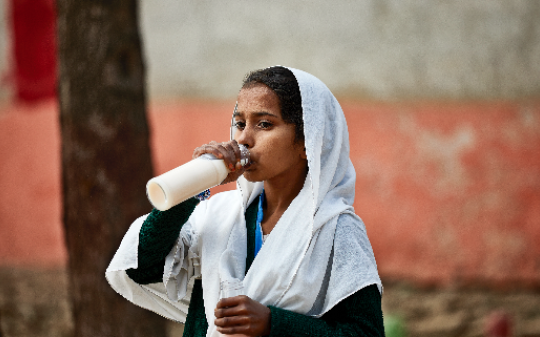
Pakistan has one of the highest malnutrition burdens in the world. Stunting, wasting< and micronutrient deficiencies are endemic. 

The National Nutrition Survey 2018 revealed that:

40.2%

of children under five were 

Stunted


17.7%

of children under five were 

Wasted

9.5%

of children under five were 

Overweight

42.6%

 of women of reproductive age, have anaemia,

46.6%

of pregnant women were iron deficient

VITAMIN D DEFICIENCY


81.2% of pregnant women

62.7% of children were vitamin D deficient. 


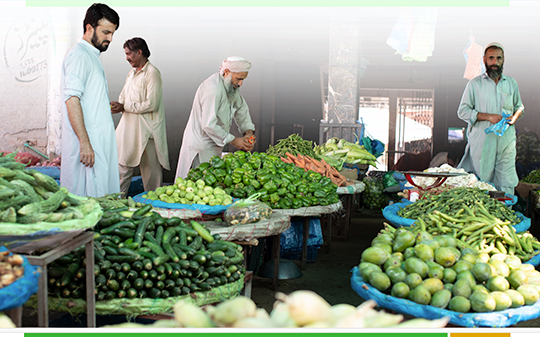
Diet is the number one risk factor in the burden of disease and is a central driver for all forms of malnutrition. The State of Food Security and Nutrition in the World (SOFI 2025) highlights an acute food security crisis in Pakistan characterized by seemingly everlasting high food prices, pervasive inability to purchase healthy and nutritious diets. Only 33% of the population in Pakistan can afford to buy food that is safe and healthy compared to the global average of 58%. Furthermore, Pakistan is still among the ten countries with the greatest fluctuations in food prices. The nutrition situation keeps getting worse: stunting is over 40% among children in rural areas and wasting is common. Furthermore, women are more food insecure than men (39% versus 30%), with the situation being the worst in Balochistan and Sindh provinces. The crisis primarily affects children and women who are now forced to eat nutrient- poor and very cheap processed food. The past decade (2015-2024) has shown stagnation or decline in most key indicators due to climate shocks, inflation, low purchasing power, and poor governance in the food system. Poor diets do not just cause micronutrient deficiencies, but also overweight and obesity, whose levels are rising. The prevalence of overweight among children under five has almost doubled over seven years, increasing from 5% in 2011 to 9.5% in 2018 (as per NNS 2018). This causes further health problems, such as increases in heart diseases, higher blood pressure, and diabetes.
GAIN in Pakistan

The Global Alliance for Improved Nutrition (GAIN) is working in Pakistan since 2007 to tackle malnutrition, with an initial focus on Large-Scale Food Fortification. Later, GAIN’s focus expanded to include adolescents’ nutrition and private sector engagement through SUN Business Network. GAIN plays a significant role in the public policy landscape in Pakistan, as it does in many other countries around the world. GAIN partners with governments, businesses, academia and civil society organizations

GAIN’s Contribution  

In Pakistan, malnutrition, particularly among children and women, remains a significant public health challenge. GAIN's work in the country is aimed at helping the government address these issues through evidence-based policies and programs, and by fostering collaboration among various stakeholders. GAIN's role in the public policy landscape in Pakistan is aligned with the global effort to achieve Sustainable Development Goal 2, which aims to end hunger, achieve food security, improve nutrition, and promote sustainable agriculture. Today, together with our partners, we are implementing various programmes, as shown below.

Policy & Systems Strengthening Initiatives

Innovation and Market Based Projects

Impact

GAIN Pakistan has achieved remarkable progress in enhancing nutrition and health across the nation.


26913

0

Farmers engaged

300

0

SMEs trained

4100000

0

People reached

Partners

Arla Food Ingredients  SUN Secretariat / Research Himalayan Foods Nutrilov Shazday Foods  Dairyland Cakes and Bakes

Hunza Foods


Government of Punjab Other Brands


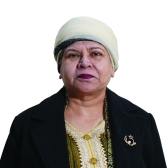
Message from Country Director, GAIN Pakistan

We believe that everyone should have access to safe, healthy, affordable, and nutritious diets, especially the most vulnerable. Working with multiple stakeholders, GAIN is committed to finding solutions that enhance the availability, accessibility, and affordability of healthy diets for all.

We collaborate with the government to implement robust policies for food system transformation, the private sector to develop nutritious and innovative options while moving towards a circular economy, and civil society organizations to advocate for nutritious diets. We also engage communities to create demand for healthier food choices.
Key solutions we focus on include:

  • Policy alignment for food system transformation
  • Promotion of nutrient-enriched crops (NEC)
  • Supporting SMEs for healthier products and eco-friendly solutions
  • Strengthening nutrient offerings of social safety nets
  • Creating demand for healthier options that work for everyone


Thank you for visiting our page and supporting the cause of a better nourished Pakistan.
Farrah Naz
Country Director, GAIN Pakistan

Contact Us

Islamabad, Pakistan
Office 10, 11, First Floor, Pakland Medical Center,
Plot# 14-X, Sector F-8 Marka
Islamabad, Pakistan
Telephone +92 51 831 3981-82