Campaigns

Vitamin and mineral deficiencies are a significant public health problem, affecting 1 in 2 children and 2 in 3 women of reproductive age worldwide.  The impacts can be severe, including birth defects of the brain and spine, death in childbirth, childhood blindness, and compromised immune systems.  Large Scale Food Fortification (LSFF) is a key part of the solution as the intervention best suited to tackle this enormous challenge at scale.  


LSFF is the addition of vitamins and minerals to widely consumed foods and condiments to increase their nutritional value. Food fortification is still underutilised in many of the countries suffering the worst effects of malnutrition. That is why the World Health Assembly took action in 2023, passing a landmark resolution calling for accelerated efforts to advance food fortification and prevent micronutrient deficiencies.

We are left with five years to redouble our efforts to achieve Goal 2 of the U.N. Sustainable Development Agenda's target of ending malnutrition by 2030.    


Future Fortified Logo


Briefs to share in advocacy meetings:

These briefs introduce the crisis of micronutrient malnutrition, present food fortification as a safe and cost effective part of the solution, and share steps to accelerate the impact of food fortification in response to the recent World Health Assembly resolution.  


They are suitable for sharing with government officials and private sector leaders. They can also be used in outreach to local stakeholders.  

Large-Scale Food Fortification is a Safe and Cost-Effective Strategy to Improve Nutrition

Large-Scale Food Fortification is a Safe and Cost-Effective Strategy to Improve Nutrition

Read the document

Policy Brief

World Health Assembly Resolution on Food Fortification

Read the Policy Brief

What is the WHA resolution on food fortification?

On May 29th, 2023, the World Health Assembly unanimously approved the resolution “Accelerating efforts for preventing micronutrient deficiencies and their consequences, including spina bifida and other neural tube defects, through safe and effective food fortification”.

This resolution became decision WHA76.19.
Decision WHA76.19 requests the WHO Director General to provide guidance, standards, and technical support to Member States as they pursue the use of food fortification and other interventions to combat micronutrient malnutrition.

Ministries of Health should be encouraged to update WHO on steps their country has taken to implement this resolution.  Updates will be included in the Director General’s reports to the WHA in 2026, 2028, and 2030.

Civil Society letter endorsing the WHA food fortification resolution

In the lead up to the 76th WHA, over 70 civil society organizations urged support for the food fortification resolution, representing the medical community, families impacted by Spina Bifida, advocacy groups, and development organizations, among others. 

What is Food Fortification?

This 3-minute introduction to Food Fortification is suitable for sharing with government officials, private sector representatives, or coalition partners. The video is available in English and Amharic and subtitled in Amharic, Bangla, French, Hindi, Indonesian, Portuguese, Swahili, and Urdu.  Find the playlist here

Data and visualisations for food fortification

The Global Fortification Data Exchange provides all the data necessary to track global progress on food fortification, and to enable decision makers to use data to improve the quality of national fortification programs.

Scaling Up Nutrition

Guide for Communicating

This communication guide contains tips for talking about food fortification to government officials, potential allies, and other audiences.  It is a great resource to help advocates prepare for meetings and presentations.  

Contact Us

 Jessie Genoway

What is International Women's Day?

International Women’s Day (IWD) is celebrated on March 8th every year. ​

IWD is a global event dedicated to recognising the achievements of women across various fields, promoting gender equality, and raising awareness about the challenges women continue to face worldwide. ​

It has been consistently celebrated by numerous organisations, governments, and communities around the globe, including GAIN. ​

It serves as a celebration of achievements but also a call for action, IWD encourages individuals, organisations, and governments to take concrete steps towards addressing these gender disparity issues.​

This year's theme "Invest in women: Accelerate progress #InspireInclusion" means not only empowering women to break through barriers but also to accelerate progress for all, creating a world of inclusive growth, shared success, and equity.​


Explore some of GAIN's past International Women's Day

International Women's Day 2023

International Women's Day 2022

GAIN Interview Cruncher: Tackling Equity in our Food Systems

In this Interview Cruncher, we address the specific challenges faced by women and girls within food systems, exploring how these imbalances contribute to health inequities, unhealthy diets, and malnutrition risks. We'll examine the urgency of addressing these issues in light of missed SDG targets and the role of human rights in fostering equality.

Discussion covers the magnitude of the problem, including global trends and policy implications for equity. We explore the holistic solutions from a human rights perspective, focusing on support strategies for women and girls, the importance of data and behavioral change, and strategies for transforming food systems to enhance economic opportunities, food security, and equitable access to healthy diets globally.

Watch the Interview Cruncher here

EmpowerHer: Conversations with Women Entrepreneurs

Strengthening and equipping women-led businesses and entrepreneurs is a cornerstone of GAIN's gender work. Ensuring support, technical work and empowerment at at the centre of our work, below we present profiles of successful women who have been part of the work of the SUN Business Network.

Maliha Ahmed

View business as more than just profit-making; it's a journey of continuous learning and growth. Invest in upgrading your products, and services and expanding your network. 

Read Maliha's Story

Noela Victoria Ojara

Seize every opportunity to talk about your work and its impact on the community. Remain consistent in what you are doing and do it to your very best by learning and unlearning till your brand speaks for itself.

Read Noela's Story

Noela Victoria Ojara

Women entrepreneurs should emphasise their business narrative, engage in mentorship, collaborate with similar organizations, and showcase women's unique strengths.

Read Tasmia's Story

Alima Napido

SBN's trainings are very impactful, and I've taken part in all of them. It's hard for me to single one out because they are all interconnected and, in my view, they complement each other and have helped me to have a much broader vision of my business.

Read Alima's Story

CASCADE is Inspiring Inclusion

CAtalyzing Strengthened policy aCtion for heAlthy Diets and ResiliencE (CASCADE) is a Dutch-funded project whose goal is to improve food security and contribute to the reduction of malnutrition of at least 5 million women of reproductive age and children under five in Benin, Nigeria, Uganda, Kenya, Ethiopia, and Mozambique. Leads of CASCADE share how the programme is empowering women. 

The Story of Joana, a Vegetable Seller in Mozambique

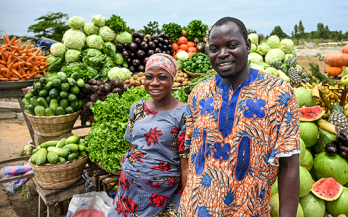
Joana Celestina is a vendor at the central market in Mozambique: "After losing my husband, and with a family to look after, I had to wipe away my tears and battle to provide for my family. I realised I needed to be the breadwinner of the family, and I became a vendor at the Munhava Market in Beira city".

Background

COP28 will be GAIN's third COP, and our first as an accredited NGO. At COP27, we participated in two key sessions on the Presidency programme (including the official high-level launch of the Initiative on Climate Action and Nutrition and a roundtable session on food security and climate), as well as a wide range of events in the Food Systems Pavilion, Food4Climate Pavilion, Food and Agriculture Pavilion, and other pavilions where food systems were featured. Highlights included the Food Systems Pavilion plenary event on nutrition and climate, and a side-event with the Government of Bangladesh and ICCCAD at the Bangladesh Pavilion.
 
We published a wide range of blogs and articles (all of which can be found on the GAIN@COP27 web page) and participated in media interviews and press conferences, all seeking to highlight the various ways in which climate and nutrition are linked - and how climate action can improve nutrition outcomes. We also co-signed a joint letter from the Food Systems Pavilion calling for stronger commitment to food systems transformation in the Koronivia negotiations, as they threatened to stall. 
 
During our two weeks at COP27, we had the opportunity to meet many colleagues and partners, notably at the Eat4Change Dinner co-organised by WWF, the Global Alliance for the Future of Food, the Rockefeller Foundation and GAIN. And we established new relationships with the UAE Presidency ahead of COP28, meeting officials at for a consultation and dinner event on the sidelines of the conference.

Road to COP28

The impact of malnutrition in
all its forms is estimated to be

US$3.5tn

each year...

cost

...and climate change is
predicted to cost

US$3.7tn

each year.

Building on the progress made for food systems at COP27, the last year has been a busy one for GAIN and partners. The UAE Presidency has been highly engaged in organising a strong food agenda at COP28, resulting in the first formal Food Day on the official programme.
 
Throughout the year, GAIN (along with many other partners) has given significant input into the Presidency's strategic planning, attending workshops in Abu Dhabi and participating in various consultations. GAIN supports the Presidency Initiatives planned for COP28 and will play an active role in promoting them and delivering on the objectives.
 
GAIN and partners also provided multiple submissions to the Sharm El Sheikh Joint Work on Implementation of Climate Action on Agriculture and Food Security, with a view to influencing the negotiating agenda at COP28.


 GAIN also had a presence at Africa Climate Week, the African Food Systems Forum, New York Climate Week / UNGA, CFS, the World Food Prize, the Micronutrient Forum, and Asia-Pacific Climate Week.

Strategy

GAIN Strategy for COP28

GAIN's Environment programme focuses on the two-way relationship between food systems and the environment. Food systems are a driver of environmental harm, and also a victim of climate change and the degradation of our natural ecosystems. To learn more about these linkages, please take a look at our Environment-Nutrition Infographic or watch our Interview Cruncher on Climate Change, Nutrition and Food Security. Our focus at COP27 was to highlight the importance of this two-way relationship to promote integrated action to achieve multiple outcomes across human and planetary health.
 
We will bring a similar message to COP28. Whereas last year we joined a global call to action, this year we will shift our focus to country-level implementation.

Presidency

Firstly, the Initiative on Climate Action and Nutrition addresses multiple ways in which interventions can be designed to benefit both climate and nutrition at national level. For example, it considers integration of nutrition in NDCs, NAPs, and other key climate policies - and, on the reverse, the integration of climate in key nutrition policies. This builds on the paper published in October 2023 about the current state of integration and opportunities to accelerate action. 

outcomes

Secondly, events at country pavilions offer the opportunity to engage with key stakeholders directly, as well as to share tangible examples of coherent action across food systems. Building on the success of last year's event at the Bangladesh Pavilion, we will seek further opportunities to engage with our national partners.

highlights

Thirdly, the official negotiations and the Presidency agenda on food systems present multiple entry points for country-level action, including the Leaders' Declaration, Alliance of Champions on Food, and the Sharm el Sheikh Joint Work on Implementation of Climate Action on Agriculture and Food Security. We will work with partners to amplify and support these initiatives, including in GAIN countries.

GAIN Events at COP28

Scroll through the list to discover all the events GAIN is leading and attending at COP28. Please also check out GAIN's work at COP27 and the initiatives we're building on here:

Gain Goes Green over a forest

As well as our letter to the stakeholders of COP26.

If you have any questions you can contact Oliver Camp at [email protected].

Event title

Description

Organiser

Date

Time

Location

Livestream

The Great Food DebateA debate on the role of animal-source foods and action required across production, consumption, and nutritionILRI, ProVeg1.12.202310:00-12:00Food4Climate PavilionView
I-CAN at the Egypt PavilionTBCGovernment of Egypt3.12.202310:00-10:45Egypt Pavilion 
Scaling up integrated actions to address malnutrition and climate changePavilion Event focusing on actions that can achieve co-benefits across nutrition and climate mitigation and adaptation.FAO3.12.202311:00 - 12:00Food & Ag PavilionView
I-CAN at the Food Systems PavilionPresenting the integrated nutrition-climate agenda with a view to highlighting win-wins and opportunities in greater coherence.CGIAR Nutrition, FOLU, FSP Partners
 
3.12.2023TBCFood Systems Pavilion
 
 
Building Climate-Resilient Health Systems through Partnerships like ATACHHigh-level event with WHO, ATACH, IsDB, and Member States discussing climate-health interactions and the Alliance for Transformative Action on Food (which hosts the Initiative on Climate Action and Nutrition).WHO, FAO, OHCHR, UNICEF, UNDP, UNFPA4.12.202313:15-14:45UNFCCC SE Room 5 
Initiative on Climate Action and Nutrition ATACH event
 
An event led by WHO on the Health Pavilion day focusing on the Alliance for Transformative Action on Health, showcasing the Initiative on Climate Action and Nutrition.WHO4.12.202316:00-17:15WHO Pavilion
 
View
Breakfast event on animal-source foodsA debate-style invitation-only event to address some of the challenging complexities and nuances around the role of animal-source foods in healthy and sustainable diets.CGIAR, ILRI, SNV, FSP
 
6.12.202307:30-08:45Food Systems Pavilion
 
 
UNFCCC Sustainable Food Systems Futures EventAn official UNFCCC side-event in partnership with Clim-Eat and the Government of Vietnam, discussing the sustainable food system of the futureClim-Eat, GAIN, Government of Vietnam6.12.202313:15-14:45SE Room 8View
Cities leading the way on sustainable food and climate
 
A Presidency event highlighting the essential role of cities in ensuring nutritious, safe, sustainable food for allUAE Presidency, C40, ICLEI
 
6.12.202310:00-11:30One of 4x Presidency spaces 
GAIN-Government of Bangladesh Event: Climate change Adaptation in Bangladesh Agriculture and its financingAn event in partnership with the Government of Bangladesh on adaptation in agriculture and food systemsGAIN & Bangladesh MoA and MOEFCC8.12.202313:30-16:00Bangladesh Pavilion 
Connecting Climate Action and Nutrition: Paving the Way to Healthy Diets from Sustainable Food Systems
 
An event where I-CAN will feature as a part of efforts to link climate and nutritionHealthy Diets Coalition, EDF, Nordic Council of Ministers
 
8.12.202319:30-20:30EU Pavilion (online only)View
Animal-source foods' contributions to healthy diets and sustainable food systems
 
A Pavilion event on animal-source foods and their impacts on health and the environment.IICA. Protein PACT, RedFlag
 
08.12.202313:30-14:30IICA Pavilion
 
View
Healthy and sustainable diets for nurturing people and planetA WHO Pavilion event on healthy and sustainable diets, featuring I-CANWHO, Brazil, Switzerland/OPN SFS Programme,  UN-Nutrition and WHO EURO10.12.202309:30-10:45WHO PavilionView
I-CAN Make a Difference: Innovative Solutions to Address Climate Change and MalnutritionA fire-side chat format on nutrition-climate links at national level, framed around I-CANUNFCCC, FAO
 
10.12.202310:00-11:00Global Innovation HubView
Sustainable Consumption, Diets, and FLW Presidency EventA Presidency event on healthy and sustainable diets and food loss and waste, taking an urban view and linking to the effects on rural areasUAE Presidency, TURFS10.12.202310:30-12:00One of 4x Presidency spaces 
Accelerating Transformation at the Nutrition-Climate NexusA high-level Presidency event on the links between nutrition and climate, and opportunities to accelerate action by taking an integrated approach to both issuesUAE Presidency, GAIN, SUN10.12.202313:00-14:00Connect Conference, Green ZoneNA
The role of livestock in meeting our global climate, food security and nutrition goalsA discussion on the challenges and benefits of livestock to climate and nutrition goals.

Australian Department of Agriculture, Fisheries and Forestry and Meat and Livestock Australia

10.12.202315:00-16:00Australia PavilionView
Tackling Micronutrient Malnutrition in a Warming World
 
A WHO Pavilion event on tackling micronutrient malnutrition through interventions including (but not limited to) fortification and biofortificationGAIN, SUN, UNICEF, WFP, MNF, ST4N, IFSBH10.12.202315:15-16:30WHO Pavilion
 
View
Food Systems & Healthy Diets for Climate ActionThe event will bring together experts and thought leaders to highlight the interconnectedness between food systems, health, nutrition, and climate. How can we eat for our health while preserving the health of our planet? What interventions can be put in place to promote sustainable food systems and just food environments?Nordic Council of Ministers with UN Coordination Hub10.12.202316:45 - 17:30Nordic PavilionView
Financing Nutrition for a Healthier Climate: The Power of Sustainable Diets

An event in the Food and Agriculture Pavilion discussing the crucial issue of finance for healthier and more sustainable diets

WHO11.12.202317:00-18:00

Food & Ag Pavilion

View
Health, Food and Climate: A Systems PerspectiveAn official UNFCCC side-event on the interlinkages between food, health and climateFinland, Nordic Council of Ministers, WHO11.12.202318:30-20:00SE Room 4, UNFCCC Pavilion 

Attendees from GAIN

Oliver Camp
Tanvi Sood

Discover all GAIN's Environment publications

The Initiative on Climate Action and Nutrition (I-CAN) is a multistakeholder, multi-sectoral global flagship program

Launched by Government of Egypt at the “Adaptation and Agriculture” thematic day at COP27

Core partners include WHO, FAO, UN-Nutrition secretariat, GAIN and SUN

Formally hosted as a climate and nutrition working group under the Alliance for Transformative Action for Climate and Health (ATACH) co-chaired by the Government of Egypt and GAIN.

Our food systems are harming the health of people and planet

heat

0C

It is likely that warming will exceed 1.5°C during the 21st century

food

0M

As many as 828 million people are undernourished

bank note icon

US$0trillion

The impact of malnutrition in all its forms is estimated to be US$3.5 trillion each year

Breaking down the I-CAN Baseline Report Findings

The I-CAN baseline report aims to provide a snapshot into the current state of integration between climate and nutrition. Across the board, we see low levels of climate-nutrition integration within action, data capacities, policy and strategy, and finance. However, there are many opportunities where climate and nutrition can be closer integrated to accelerate win-win benefits in both domains. I-CAN strives to further advance actions in this area.


The intersection of climate and nutrition action is rich with opportunity to accelerate advancement in both outcomes.  For the first time an evidence based report shines a light on those opportunities for decision makers in government, development agencies and the private sector.

As we approach COP28 a new landscape of opportunity to advance climate and nutrition action has been revealed. We must seize these opportunities for people and planet.

Lawrence Haddad, Executive Director, GAIN

Climate policy commitments rarely consider nutrition

For the I-CAN baseline report, we have developed a methodology where 4 classification levels are used to determine the degree of integration between climate and nutrition. These classification levels are used across a range of indicators (where applicable) and are designed to be action-oriented progressing toward the higher levels.

4 classification levels used throughout analysis to determine the degree of integration between climate and nutrition. These classification levels are used across a range of indicators (where applicable) and are designed to be action-oriented progressing towards the higher levels. Levels are used across a range of indicators (where applicable) and are designed to be action-oriented progressing towards the higher levels. Level of integration between climate and nutrition Initiative on Climate Action and Nutrition (I-CAN) No intentional connectedness between climate and nutritionNo linkages between climate and nutrition are found Level 1 Level 2 Level 3 Level 4 Some intention to connect climate and nutritionSome analysis into linkages, with the understanding that climate affects nutrition and vice versa, e.g., acknowledging climate change decreases crop yields wich worsens nutritional outcomes Intention to mobilise resources to connect climate and nutritionClear statement that climate-nutrition outcomes should be improved and is an objective, with some context on plans, policies or programmes to target this Commitment to mobilising resources and with distinct plans to take action to connect climate and nutritionIn-depth plans targeting objectives to improve nutrition and climate, with context on execution .g., funding, timeline, baseline, targets, lead agencies

Integration of Nutrition into Nationally Determined Contributions (NDCs) (% of total, N=162*)

27 EU countries submitted a joint NDC which we have counted as 1 NDC in this analysis

Chart 1

NDC Levels by Region (% of total region, N=162)

chart2

Integration of Nutrition into Climate National Adaptation Plans (NAPs) (% of total, N=43)

Chart 3

Integration of Climate into National Nutrition Plans (NNPs) (% of total, N=50)

Chart 4

Finance Appears to be Lagging Behind Policy Commitments

chart5

Limited Evidence of Climate Integration in Other Nutrition Action Areas

Global Nutrition Report (434 commitments analysed)

  • 95% of commitments did not include climate considerations
  • Only 1% of commitments directly targeted climate improvement

Food-Based Dietary Guidelines (FBDGs) (70 countries analysed)

  • 54% of FBDGs did not consider climate or sustainability
  • Only 11% of FBDGs recommended eating climate-friendly foods with
    clear examoles of how to do so

Public Food Procurement (93 countries analysed)

  • 83% of countries did not factor climate into public food procurement nutrition-related policies (e.. in school meals and feeding)
  • Only 7% of countries included one or more mandatory sustainability requirements in public food procurement nutrition-related policies

(GNR Commitments Source: Global Nutrition Report NAF Commitment Tracker, version as of April 2023)
(FBDGs Source: FAO FBDG Database, versions as of July 2023)
(Public Food Procurement Nutrition-Related Policies Source: WHO GINA database, version as of June 2023)

Conclusion

What are the applications of the I-CAN baseline report findings towards improving climate and nutrition outcomes?

First, the report identifies opportunities for countries, businesses, and development agencies to improve integration of climate and nutrition action to spur acceleration in the outcomes of both. For example, many initiatives target food and agriculture broadly, which could be leveraged to include more explicit considerations of nutrition.

Second, there are bright spots with certain countries, businesses and agencies leading the way. The NDC of Benin, the Climate NAP of Bangladesh, and the NNP of Ethiopia are all best practices included in the I-CAN baseline report. Cross-learning and information sharing will go a long way towards integrated climate and nutrition advancements.

Third, the actions that serve to accelerate climate and nutrition need to become better understood and socialised. FAO’s I-CAN paper, Climate Action and Nutrition: Pathways to Impact, highlights four core systems: agri-food, water, social protection, and health, where opportunities to further advance climate-nutrition integration exist.

Fourth, there were many challenges in collecting the baseline data. For example, an area which we could not assess includes the amount of agriculture research and development funding that links climate and nutrition. We hope that methods for collecting integrated climate-nutrition data will be improved and hence enhance data availability in the future.

Fifth, we very much hope that individual countries will use the baseline to set their own targets for some of these indicators. All country-level data used in our analysis are available upon request. Tracking of indicators towards targets will help governments assess progress and identify areas where more support can be brought to bear.

2030 is drawing close. Time is of the essence as we strive to achieve the SDGs, aiming to eliminate hunger and malnutrition whilst ensuring positive impacts for climate action and our natural environment. With sustained and combined efforts, closer integration between climate and nutrition is possible, and will have positive impacts on the lives of millions around the world – today and tomorrow.

two people are pulling out a small boat out of the ocean

Contact us

Submit your inquiry and we will contact you

Send us an email

Jessica-colston-headshot


Catherine Lok

Partners

With thanks to

Scaling Up Nutrition

Taking action - the World Health Assembly (WHA) Resolution on Food Fortification


The WHA resolution "Accelerating efforts for preventing micronutrient deficiencies and their consequences, including spina bifida and other neural tube defects, through safe and effective food fortification," has united the health policy, disability rights, and nutrition communities in a joint effort to combat micronutrient deficiencies and their effects worldwide.

GAIN celebrates International Women's Day 2023


Imagine a gender-equal world. A world free of bias, stereotypes, and discrimination. A world that's diverse, equitable, and inclusive. A world where difference is valued and celebrated. Together we can forge women's equality. Collectively we can all #EmbraceEquity.