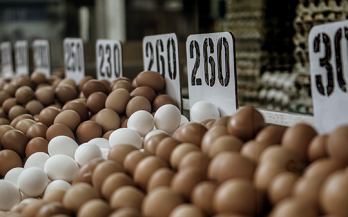
Although eggs are highly nutritious, they remain scarce and relatively expensive in many low-income settings, including across many of the countries where GAIN operates. Moreover, they are only rarely consumed by children in many regions. Globally, the average egg supply is around 3.5 eggs per person per week.
A few months ago, a new analysis came out with a shocking number: about 1.6 billion people could not afford a healthy, sustainable diet. A few weeks ago, the publication of the 2020 "State of Food Insecurity and Nutrition in the World" (SOFI) report further rocked the food and nutrition community with an even more startling number: an estimated 3 billion people could not afford a healthy diet.
The COVID-19 pandemic has disrupted our economies, health and food systems and threatens to deepen the global crisis of malnutrition. Food fortification strategies are an essential part of the nutrition safety net during the COVID-19 pandemic and beyond – helping to restore access to healthy diet when the availability of fresh produce and animal-source foods is limited.
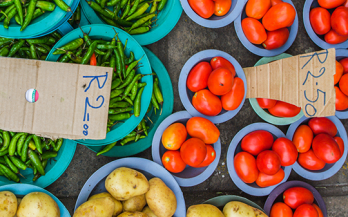
In countries where the Global Alliance for Improved Nutrition (GAIN) main offices are located, tomatoes vary in abundance - with the average supply from approximately one tenth of a medium-sized (60g) tomato per person per week in Ethiopia, to four medium-sized tomatoes per person per week in India, and up to 12 medium-sized tomatoes per person per week in the US.
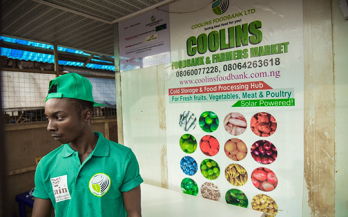
Based on an external assessment, this working paper summarises PLAN’s work in Nigeria (N-PLAN) and Indonesia (I-PLAN), impacts to date, and key learnings. The assessment indicated that PLAN has helped create influential networks, allowing diverse stakeholders to work together to address common issues related to post-harvest loss.
The Jakarta Post webinar series will discuss issues of food loss and waste. Coinciding with the commemoration of the International Day of Awareness on Food Loss and Waste the webinar will feature authoritative speakers, including policymakers, representatives of nonprofit foundations and independent observers.
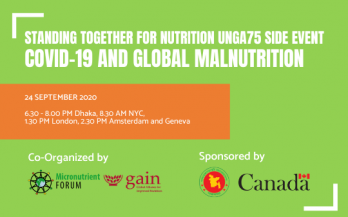
At the 75th United Nations General Assembly (UNGA) from September 15, high-level government, UN and civil society representatives gather virtually and in New York to assess progress on the Sustainable Development Goals, just as COVID19, and other converging threats to the planet and people call for urgent attention.
This global scoping review aims to understand which perception and practice interventions may be effective in changing consumer behaviour, knowledge, attitudes, beliefs and perceptions on food safety.
As the birthplace of the decade of action on nutrition 2016-2025, UNGA is the natural platform to bring leaders together to highlight the impact of COVID-19 on malnutrition and how we move forward to mitigate the damage.
With a year to go, the Summit will offer a platform like no other to bring together key players from the worlds of government, science, business, policy, and academia, as well as farmers, indigenous people, youth organisations, consumer groups, environmental activists, and other key stakeholders.