How do we know whether the world's food systems are actually improving — and fast enough to matter? This webinar presents findings from the Food Systems Countdown Initiative’s 2026 paper, Food Systems Performance Evaluated Against Targets and Benchmarks Reveals Urgent Gaps and a Path to 2050,
The world is confronting interconnected challenges that shape nutrition outcomes, including climate change, food systems disruption, mounting financing pressures, conflict, and displacement. Against this backdrop, the Micronutrient Forum’s 7th Global Conference brings together the global nutrition community in Accra, Ghana and online from 28 September to 1 October 2026.
GAIN joins the Africa Food Systems (AFSF) Forum 2026 in Kigali to spotlight how smarter investment in agri-food systems can drive healthier diets, stronger markets and more resilient communities across Africa.
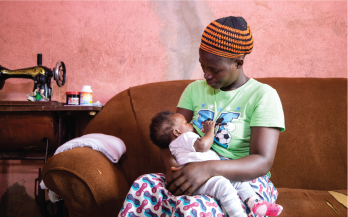
GAIN will be marking World Breastfeeding Week 2026 with reflections and updates on the importance of breastfeeding for child survival, healthy growth and improved nutrition.
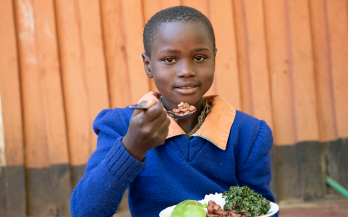
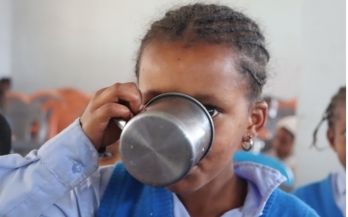
GAIN marks African Day of School Feeding and International School Meals Day, using these moments to highlight how school meals can improve nutrition, learning outcomes, and local food systems when designed with quality, equity, and sustainability in mind.
A child’s diet is central to their long-term development, health, and well-being. For children, access to healthy diets can be instrumental for doing well in school, and ultimately shapes a child’s ability to attain a dignified, productive livelihood and decent quality of life in the future.
Stunting is a major concern in Eastern Africa, where nearly 1 in 3 children under 5, about 22.6 million, are
affected (UNICEF, WHO, Worldbank, 2023). In Kenya, the prevalence has declined to approximately one in
five children (18%), outperforming the regional average of 31.6%. However, this still represents more than
1.2 million children at risk (KNBS, Ministry of Health, ICF, 2023). The consequences are far-reaching;
stunting contributes to child mortality, vulnerability, and lifelong impairments in physical growth and
cognitive development, impacting both individual well-being and national productivity. In Kenya, child
undernutrition, including stunting as a key component, is estimated to cost the economy KES 374 billion
(approximately USD 4.2 billion) annually, equivalent to 6.9% of the GDP (Government of Kenya, 2019).
Stunting, a persistent form of long-term nutritional deprivation, acts as a silent driver of inequality, limiting
opportunities, lowering future earnings and reducing the potential to contribute equally to the economy.
Yet the returns on investment in nutrition are high, with every dollar yielding up to $22 in economic
benefit. (Eberwein, et al., 2016)
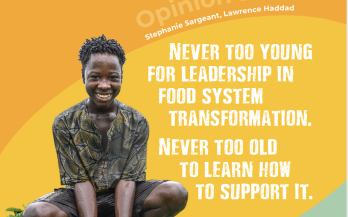
We know in our bones that youth must be part of the solution to the key crises facing
our planet – but why and how exactly? Here we provide government policymakers,
business people, civil society members and development partners in the food systems
space with some ways to advance meaningful youth engagement.
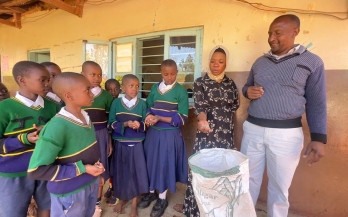
GAIN Tanzania is at the forefront of efforts to tackle micronutrient deficiencies through biofortification, an approach that enhances the nutritional content of staple crops. One of its most impactful initiatives has focused on high iron beans (HIB), a locally accepted, nutrient-rich variety introduced through partnerships with schools and farming communities. By connecting farmers to institutional markets and supporting local seed systems, GAIN is creating a sustainable, scalable model for improving diets and livelihoods. In this interview, Prisca Kokutona Rwezahura, Country Director -GAIN Tanzania, reflects on this journey- sharing insights into policy, partnerships, and what’s next for biofortification in the country.