- 21/05/2026
The health effects of chemical exposure depend not only on the hazard itself, but also on the body’s capacity
to defend, adapt, and recover. This varies between individuals and is strongly shaped by nutritional status,
making nutrition a foundational determinant of occupational health risk.
Adequate nutrition supports immune function, metabolic regulation, tissue repair, and detoxification processes.
Sufficient energy, protein, essential minerals, micronutrients, and antioxidants are required for the body to
maintain physiological stability and respond effectively to harmful substances. When these nutritional needs
are met, workers are better equipped to withstand and recover from ongoing occupational exposures.
- 18/05/2026
Uganda increasingly recognises the importance of addressing the intersection of climate change and nutrition, with emerging efforts demonstrating that integrated action is both possible and already underway. However, climate shocks, including droughts, floods, and pest outbreaks, continue to disrupt food production, dietary diversity, water access, and disease patterns, ultimately undermining nutrition outcomes. A review of 39 national policies and consultations with 22 stakeholders across government, development partners, civil society, and the private sector reveal that climate and nutrition remain largely siloed within Uganda’s policy architecture, and that implementation is constrained by gaps between policy intent and operational reality.
However, a subset of policies demonstrates that effective climate–nutrition integration is already possible, particularly where clear pathways, costed commitments, and system-level investments are in place. Stakeholder interviews indicate that, although policy frameworks increasingly acknowledge the climate-nutrition nexus, integrated action is most often realised at the program level, primarily through donor-funded projects and civil society initiatives, rather than systematically embedded within government systems. These findings highlight a critical opportunity to strengthen policy coherence, institutional coordination, financing alignment, and cross-sector accountability to accelerate climate-nutrition integration efforts in Uganda.
- 15/05/2026
In May 2023, every Member State at the World Health Assembly resolved to accelerate safe and effective foodfortification. Nourishing Progress highlights meaningful progress, growing momentum and emerging opportunities since the resolution's adoption, and the growing coalition of governments, industry, patient associations, and health professionals driving this agenda forward. Anchored in a landmark Lancet Global Health analysis modeling the current and potential impact of large-scale food fortification programs, the report celebrates the progress made since the 2023 WHA resolution and outlines the growing global momentum towards transformative impact.
- 14/05/2026
Chemical exposure is a growing occupational health concern as industrialization and technological change increase workers’ contact with hazardous substances. While occupational safety and health frameworks focus on managing exposure, they do not fully address chemicals that accumulate in the body and weaken immune function. Chemical exposure and poor nutrition can reinforce each other, increasing vulnerability to illness Integrating workforce nutrition into chemical risk management strengthens resilience, supports immunity, and provides an additional layer of protection for workers.
- 27/03/2026
This paper provides brief descriptions of eight key tools available to support national and sub-national transformation of food systems. Produced in advance of the Asia and the Pacific Food Systems Transformation Forum 2026, descriptions and cases provided focus on the Asia region.
- 24/04/2026
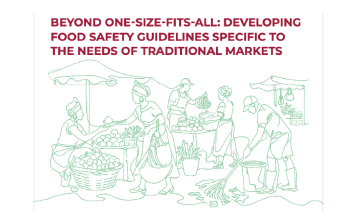
Ensuring access to safe food is one of the core goals of food systems, yet millions of people worldwide get sick from unsafe food every year. This case study examines the development and adoption of international guidelines for food safety – specific to the traditional markets where many lower-income-country consumers buy their
food. It shows how considering the needs and challenges of specific contexts when formulating guidelines or more formal policies can make for a more equitable enabling environment for food system transformation.
- 24/04/2026
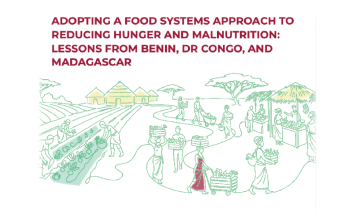
Adopting food-related policies, governance approaches, and action plans that cut across sectors is key to food systems transformation – but how to do so is not always clear.
This case study examines how policy stakeholders in three African countries were able to adopt food systems thinking, adapt their governance approaches to enable cross-sectoral food systems approaches, and start to move towards action.
- 24/04/2026
Young people are an influential force in food systems, particularly in low- and middle-income countries, yet their perspectives remain underrepresented in policy and decision-making.
This case study explores how youth leadership programmes can strengthen young people’s understanding of food systems, develop their leadership and communication skills, and enable them to engage meaningfully with stakeholders across multiple levels. It illustrates how experiential learning, peer collaboration, and opportunities for collective action allow youth to influence decision-making, advocate for inclusive reforms, and contribute to sustainable transformation.
The study highlights how positioning young people as active participants in food systems can gain traction and considers how such approaches could be scaled and institutionalised to ensure that youth perspectives are systematically integrated into food system initiatives.
- 24/04/2026
Young people represent a critical yet underutilised force in transforming food systems. This case study examines how youth-led collective action campaigns can serve as a mechanism to amplify youth voices and influence food system
transformation. It shows how young people can engage with decision-makers at both local and national levels to shape agendas, embed inclusivity, and create opportunities for meaningful participation in policy processes. This case underscores how collective action can reposition young people as active agents of change in food system policy and offers insights on how policymakers and stakeholders can support the integration of youth perspectives into formal decision-making structures.
- 24/04/2026
The workplace can be an important environment to influence nutrition and food choices. This case study examines the potential to use workplaces and employers as leverage points for improving nutrition and fostering larger food system shifts by considering efforts made by individual employers in Bangladesh and how these have been expanded and supported under government leadership through the National Workforce Nutrition Alliance. It shows how a novel concept can gain traction and explores how it could potentially be institutionalised in policy.