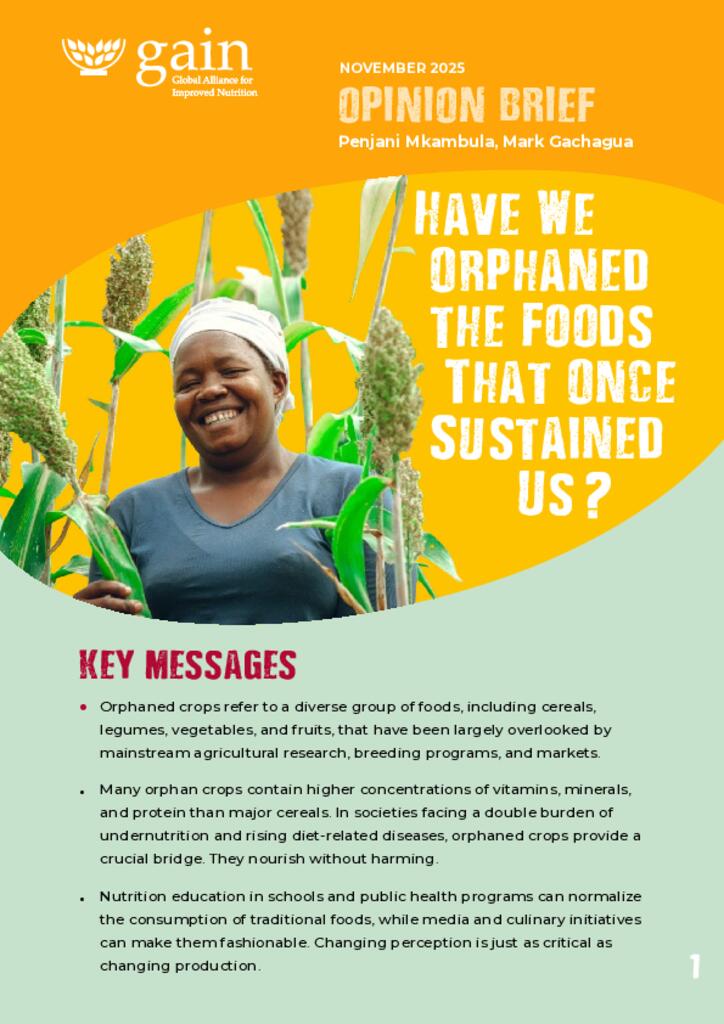
Orphaned crops refer to a diverse group of foods, including cereals, legumes, vegetables, and fruits, that have been largely overlooked by mainstream agricultural research, breeding programs, and markets.
Many orphaned crops contain higher concentrations of vitamins, minerals, and protein than major cereals. In societies facing a double burden of undernutrition and rising diet-related diseases, orphaned crops provide a crucial bridge. They nourish without harming.
Nutrition education in schools and public health programs can normalize the consumption of traditional foods, while media and culinary initiatives can make them fashionable. Changing perception is just as critical as changing production.