- 27/07/2026
Young people are increasingly recognised as important contributors to food system transformation: raising awareness, leading community initiatives and bringing new perspectives to food system challenges. However, opportunities for them to move beyond these roles and engage in decision-making processes remain limited. In Bangladesh, the Food Systems Youth Leadership Initiative was introduced to strengthen youth leadership in food system transformation and deepen young people's understanding of food systems. This initiative also encouraged community-driven actions through collective action campaigns, helping young people build the confidence and capacity needed to engage more effectively in policy and decision-making spaces.
- 21/07/2026
The I-CAN Landscaping Analysis on Climate and Nutrition Policies and Stakeholders in Somalia provides a comprehensive evaluation of the integration between climate action and nutritional outcomes within the national policy framework. Supported by the Agrifood Systems Transformation Accelerator (AFST-A), this analysis examines how Somalia—a nation facing concurrent climate shocks and high malnutrition—aligns its strategic objectives to build systemic resilience.
- 08/07/2026
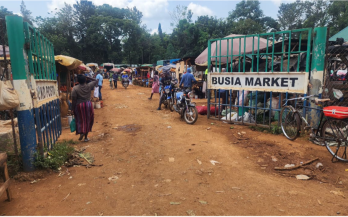
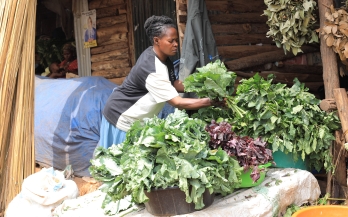
Traditional food markets are central to Kenya’s food systems, providing fresh and affordable food to consumers as well as jobs, income, and livelihoods to farmers and traders. However, despite Kenya’s strong food policy environment, governance of traditional food markets is often weakly integrated and under-prioritised. This prevents unlocking the markets’ full potential for food security, nutrition, and inclusive growth. This briefing paper examines governance in three traditional food markets in Bungoma and Busia County, Western Kenya, using a mixed-methods approach combining key informant interviews, vendor surveys, direct market observations, participatory workshops, and a review of relevant policy and governance documents to assess how governance arrangements shape market performance.
- 06/07/2026
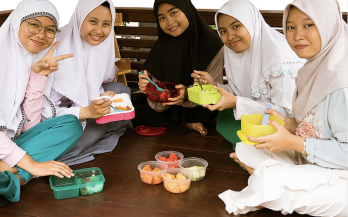
Despite decades of nutrition campaigns, more than 95% of Indonesians consume insufficient fruits and vegetables, and high-risk food consumption continues to rise.
Current approaches (supply-side intervention, SBCC and other relevant health and nutrition campaigns) are insufficient because they overlook the cultural values, shared identities, and social norms that drive food preferences, not just individual knowledge or choice.
- 06/07/2026
Despite progress in reducing hunger and improving the affordability of healthy diets, the region’s food systems are not transforming quickly enough to deliver equitable nutrition, environmental sustainability, resilience and shared prosperity. This report presents eight practical tools covering food-systems monitoring, data visualisation, diet-quality measurement, policy coherence, climate nutrition integration, political-economy analysis, innovative financing and financial-flow tracking that governments and partners can use to identify gaps and opportunities, develop evidence-based plans, align policies across sectors, overcome implementation barriers and direct investment towards priority areas. Drawing on cases and data from across Asia, it highlights substantial differences between countries and subregions, alongside persistent challenges in food security, diet quality, emissions, water use, governance and financing. It concludes that accelerated, coordinated and government-led action supported by reliable data, coherent policies, inclusive decision-making and better-targeted finance is urgently needed to build healthier, fairer and more sustainable food systems and advance the 2030 Sustainable Development Goals.
- 25/06/2026
Achieving healthier, more inclusive and sustainable food systems requires a
fundamental shift in how public and private finance, coordinated action and policy
incentives are mobilised and aligned.
- 23/06/2026
Uganda is increasingly recognizing the importance of addressing the intersection of climate change and nutrition, with a growing number of policies and institutional actors engaging with the climate–nutrition nexus. Several policies and initiatives demonstrate that integrated action is both possible and already underway, particularly where explicit pathways, costed commitments, and system-level resilience investments are included. Institutions such as the Office of the Prime Minister, the National Planning Authority, and the Ministry of Health provide important entry points for strengthening coordination, while informal influence networks and policy windows offer additional opportunities to advance integration.
- 24/06/2025
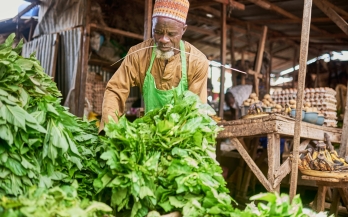
The DELIVER Nigeria project is a three-year initiative designed to enhance livelihoods and food systems resilience among smallholder vegetable farmers. Funded by the Accelerating Resilient Food Systems in Africa (ARFSA), a programme of the Netherlands Enterprise Agency commissioned by the Netherlands Ministry of Foreign Affairs, it builds on the achievements of the SDGP project (2019–2024). DELIVER Nigeria applies a three-pronged approach focused on supply, demand, and access to finance. Since its launch in July 2024, implementation has progressed steadily through partner mobilization, field entry, and the roll-out of key interventions.
- 16/06/2026
This practical guideline provides step-by-step technical guidance for implementing small fish restocking initiatives to improve nutrition, strengthen local food systems, and support sustainable fisheries
- 22/06/2026
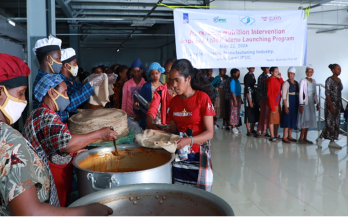
Workplace food provision represents a significant opportunity to improve diet quality among working-age adults. This working paper synthesises cross-country experience from GAIN-supported programmes in Bangladesh, Ethiopia, and Uganda on how improved workplace menus have been assessed, designed, and operationalised.