- 25/10/2022
EatSafe conducted three data collection activities, including interviews, observations, and a randomized experiment, to understand consumers’ and vendors’ food safety knowledge, attitudes, and practices in Hawassa, Ethiopia.
- 15/10/2022
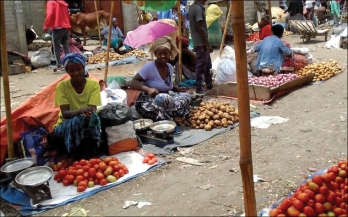
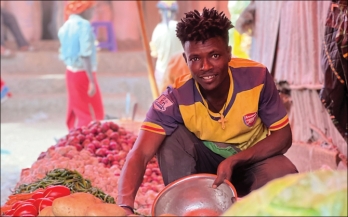
EatSafe conducted a Story Sourcing activity, or the semi-formal process that uses journalistic techniques to gather stories directly from the audience of interest, to gather stories from traditional food market vendors and consumers in Hawassa, Ethiopia.
- 06/09/2022
To increase consumer demand for improved food safety, EatSafe is testing four interventions that seek to change consumers and vendor behaviors in two traditional food markets in Northwestern Nigeria.
- 10/02/2023
The 2022 EatSafe Innovation Challenge received 700 applications from students, researchers, and entrepreneurs with ideas how to adapt food system innovations to traditional food markets contexts and along value chains to solve food safety issues in Nigeria and Ethiopia.
- 27/07/2022
Using a theory of change or a programme impact pathway to guide design, monitoring, and evaluation efforts is increasingly being used across various nutrition interventions, yet there are few documented examples in biofortification programmes.
- 26/07/2022
Biofortification (or nutrient enrichment) of staple crops has the potential to contribute to reducing micronutrient deficiencies by increasing micronutrient intakes. In 2019, GAIN and HarvestPlus entered a partnership to lead the Commercialisation of Biofortified Crops (CBC) Programme, which aims to catalyse commercial markets for biofortified crops in six countries across Africa and Asia.
- 25/07/2022
To inform the development of effective commercialisation strategies, a systematic assessment of country- and crop-specific value chains is essential to identify success factors, barriers, and opportunities.
- 22/07/2022
EatSafe conducted focus group discussions and individual interviews with vendors and consumers to understand knowledge, attitudes, and practices related to food safety behaviors in Kebbi State, Nigeria.
- 08/08/2022
In this report, EatSafe addresses the gap of food safety data within the Food Systems Dashboard (FSD) by identifying indicators relevant to national food safety systems, assess the availability of data sources, and develops a systematic, quantitative scheme to evaluate indicators against FSD inclusion criteria.
- 12/07/2022
During program startup in Ethiopia, EatSafe identified and gauged stakeholders’ interest and influence in food safety. EatSafe then convened a series of events to engage these stakeholders at local and national levels prior to intervention implementation.