- 25/03/2026
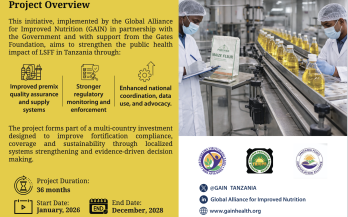
Tanzania has established a strong policy and regulatory framework mandating the fortification of staple foods, including wheat flour, maize flour, edible oils, and salt. Despite this progress, implementation and compliance gaps persist, limiting the public health impact that fortification programmes can achieve Market evidence and engagement with Millers for Nutrition (M4N) highlight that inconsistent compliance and coverage stems from structural barriers within Tanzania’s fortification ecosystem.
- 25/03/2026
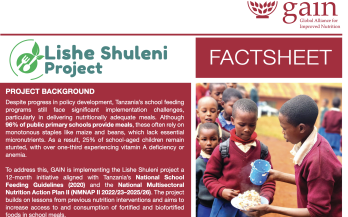
Despite progress in policy development, Tanzania’s school feeding
programs still face significant implementation challenges, particularly in delivering nutritionally adequate meals. Although
96% of public primary schools provide meals, these often rely onmonotonous staples like maize and beans, which lack essential micronutrients. As a result, 25% of school-aged children remain stunted, with over one-third experiencing vitamin A deficiency or anemia.
- 18/03/2026
This white paper was commissioned by Partners in Food Solutions, SNV*, and GAIN and prepared with research,
technical, and drafting support from Earth Partners Ltd. The authoring organisations extend their sincere gratitude to the funders, partners, and food processors for their generous contribution in making this research possible.
The analysis reflects an independent synthesis of evidence and stakeholder perspectives and should not be interpreted as representing the official views, policies, or positions of the authoring organisations, their governing bodies, partners, or funders.
- 06/02/2026
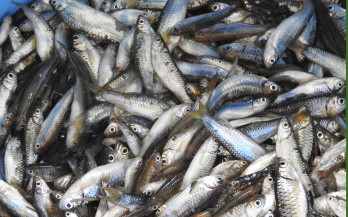
Fish offer a potentially sustainable solution to food security and nutrition challenges in Indonesia. Despite abundant aquatic resources, per capita fish consumption remains lower than in neighbouring countries. Factors such as overfishing, pollution, and unsustainable aquaculture practices limit growth, while climate change poses additional threats to fish stocks.
- 02/02/2026
Pakistan faces intertwined climate and malnutrition challenges, with floods, droughts, and rising temperatures threatening food security amid high child stunting (40.2%) and wasting (17.7%). Climate change is worsening nutrition outcomes, especially for women, children, and smallholder farmers, while climate and nutrition policies remain fragmented. GAIN’s I-CAN initiative aims to assess and strengthen the integration of climate and nutrition across Pakistan’s policies and strategies.
- 02/02/2026
Nigeria faces a dual crisis of rising food insecurity and worsening climate impacts. By 2025, an estimated 33.1 million Nigerians are expected to be food insecure, with around 35% of children under five stunted, especially in the north. Ranked 110th of 127 countries on the 2024 Global Hunger Index, Nigeria’s challenges are driven by economic, environmental, and nutritional factors. GAIN engaged Sawubon Advisory Services to generate insights on the climate–nutrition nexus, supporting the integration of climate and nutrition into policies and programs. Climate change—rising temperatures, erratic rainfall, and extreme weather—has already reduced agricultural productivity, and by 2080, yields of millet and sorghum in northern Nigeria could fall 13–20%. With over 80% of agriculture rain-dependent, these trends threaten sustainable food production and nutrition outcomes.
- 15/12/2025
Global food systems generate significant socio-economic impacts (or externalities) – both positive and negative – which greatly vary across geographic regions, supply chains, and production systems.
- 28/11/2025
Global food systems face complex, multi-faceted challenges that greatly vary by context, and their environmental, health, and socio-economic impacts are equally diverse. A comprehensive understanding that integrates these disparate factors into unified, clear guidance is essential for decision-making, including policy measures and industry practices.
- 21/11/2025
This White Paper makes the case for a territorial governance approach that reinforces urban–rural linkages by empowering local actors and enabling their collective agency. Local, traditional, and farmers markets serve as strategic hubs that offer multiple levers and diverse forms of capital for transforming food systems within cities, across urban–rural interfaces, and throughout wider territorial landscapes. Investing in both hard (physical) and soft (capacity-building) market infrastructure, supporting diverse knowledge systems, and advancing inclusive “whole-of-society” governance are essential steps toward unlocking resilient and sustainable food systems now and in the future. With these foundations in place, communities, governments, and sectors can routinely apply best practices and participate meaningfully in decision-making processes that foster a wide range of regenerative, biodiverse food value chains. Such systems create market and food environments characterized by vibrant public spaces; access to affordable, safe, culturally preferred, healthy diets; reduced and valorized food waste; and opportunities for dignified, prosperous livelihoods.
- 18/11/2025
Much of today’s headline news paint a grim picture — numerous crises unfolding alongside a sharp decline in global solidarity and the withdrawal of the private sector from net-zero commitments. The unity that inspired the 2030 Agenda for Sustainable Development a decade ago now feels increasingly distant.
Yet, the embers of that spirit, which imbued the launch of the Zero Hunger Private Sector Pledge in 2021, remain.