- 23/03/2026
Ending hunger and malnutrition in all its forms is about more than securing enough food to survive – what people eat must also be nutritious. However, nutritious foods and, by extension, healthy diets are unaffordable and unattainable for vast numbers of families. Approximately 2.8 billion people worldwide – a third of the global population – cannot afford a diet with the minimum variety of food necessary to meet essential nutrition standards. This affordability gap is most acute in low-income countries, where up to 3 in 4 people lack the means for a nutritionally adequate diet.
- 18/03/2026
This white paper was commissioned by Partners in Food Solutions, SNV*, and GAIN and prepared with research,
technical, and drafting support from Earth Partners Ltd. The authoring organisations extend their sincere gratitude to the funders, partners, and food processors for their generous contribution in making this research possible.
The analysis reflects an independent synthesis of evidence and stakeholder perspectives and should not be interpreted as representing the official views, policies, or positions of the authoring organisations, their governing bodies, partners, or funders.
- 09/03/2026
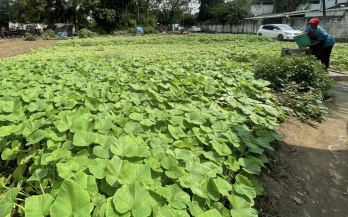
Transformation towards just and sustainable food systems is needed to ensure the health of people and the planet. Current large-scale industrial agri-food systems practices across an increasingly urbanised system are increasing soil degradation. These practices, alongside intersecting environmental challenges and widening socio-economic inequalities, are negatively impacting food security and access to healthy diets and increasing interest in climate-smart, agroecological, and regenerative food production. Cities are dynamic places of human settlement where food systems innovation can be catalysed. This makes them key to food policy and delivering nourishing, just and sustainable food systems. In 2024-5, the Transforming Urban Rural Food Systems (TURFS) Consortium conducted a mixed-methods exploratory inquiry in Dar es Salaam, Tanzania to explore how cities can incentivise regenerative agricultural transitions.
- 02/03/2026
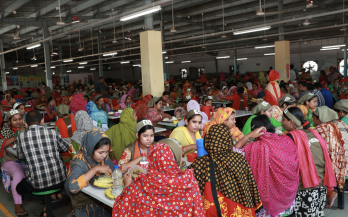
Many adults spend most of their waking hours in the workplace, making it an important—yet underappreciated—leverage point for change. In the context of food systems, workplaces can contribute to significantly improved nutrition through employer-provided nutrition programmes (also known as ‘workforce nutrition programmes’ (WFN)). However, the process of gaining support for these initiatives and the potential for institutionalising them within policy remain underexamined. This case study aims to address this by examining the development of WFN in Bangladesh, including at the factory level and through the government-led National Workforce Nutrition Alliance (NWNA). It also considers opportunities for integrating nutrition considerations into occupational safety and health (OSH) policies, regulations, and practices in Bangladesh.
- 26/02/2026
Many adults spend most of their waking hours at the workplace, making the latter a strategic, yet underappreciated, environment for health and well-being interventions. Evidence shows that workforce nutrition initiatives can improve workers’ health and well-being as well as business outcomes, yet their full potential as occupational and public health interventions remain underexplored. This paper examines the extent to which collective bargaining agreements globally include clauses on workforce nutrition, operationalised as healthy food at work, breastfeeding support, nutrition-focused health checks and follow-up, and nutrition education. Using web-based and bibliographic searches, the study identified open-access global, national, and sector-specific collective bargaining agreement (CBA) repositories. It analysed 26,015 agreements from the WageIndicator CBA database (global coverage), Légifrance (France), and the Office of Personnel Management (US) databases. Explicit references to workforce nutrition were rare.
- 20/02/2026
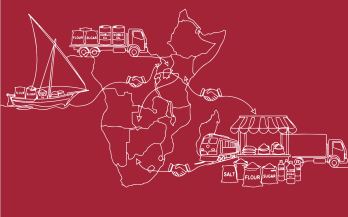
ESA countries began implementing food fortification in the 1990s, starting with salt iodization and gradually expanding to include additional food vehicles. Today, of the 26 countries covered, 21 countries have mandatory fortification of salt, 13 of wheat flour, 10 of edible oil and maize flour, and 5 of sugar.Despite this progress, micronutrient deficiencies remain widespread across Eastern and Southern Africa, with persistently high levels of iron, vitamin A, zinc, folate, and iodine deficiencies.
- 13/02/2026
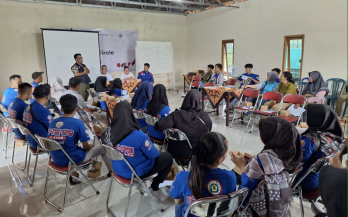
To strengthen evidence and practice about local fresh food markets and food systems governance, in 2025, ICLEI CityFood, the Global Alliance for Improved Nutrition (GAIN), and World Farmers Markets Coalition published two editions of a handbook about markets and resilient cities. The second edition comprises 31 city-market case studies and is structured around the CityFood Market Action Framework. Between May and December 2025, following the launch of the first edition, ICLEI CityFood and GAIN co-convened eight online sessions of a Community of Interest focused on markets and cities. The sessions were structured around four thematic areas: an introduction to how cities shape food markets; gender and social intersectionality; managing food waste; and access to nutrition. Across all eight sessions, a total of 327 participants from 27 cities and 56 organisations took part. This paper shares a summary of those prior sessions and signposts upcoming sessions
- 15/12/2025
Global food systems generate significant socio-economic impacts (or externalities) – both positive and negative – which greatly vary across geographic regions, supply chains, and production systems.
- 04/12/2025
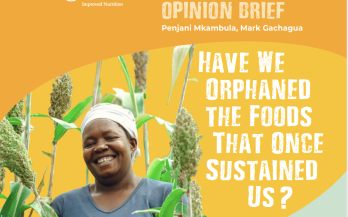
Orphaned crops refer to a diverse group of foods, including cereals, legumes, vegetables, and fruits, that have been largely overlooked by mainstream agricultural research, breeding programs, and markets.
Many orphan crops contain higher concentrations of vitamins, minerals, and protein than major cereals. In soci eties facing a double burden of undernutrition and rising diet-related diseases, orphaned crops provide a crucial bridge. They nourish without harming.
Nutrition education in schools and public health programs can normalize the consumption of traditional foods, while media and culinary initiatives can make them fashionable. Changing perception is just as critical as changing production.
- 28/11/2025
Global food systems face complex, multi-faceted challenges that greatly vary by context, and their environmental, health, and socio-economic impacts are equally diverse. A comprehensive understanding that integrates these disparate factors into unified, clear guidance is essential for decision-making, including policy measures and industry practices.