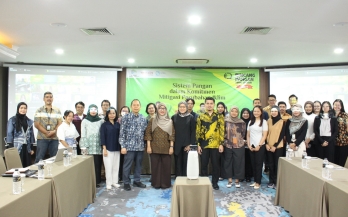
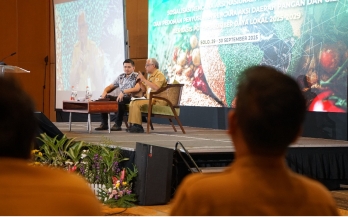
Amidst the rising urgency of climate mitigation, strategies remain heavily dominated by the energy, forestry, and transport sectors as the primary sources of greenhouse gas (GHG) emissions. However, food systems—which account for more than a quarter of Indonesia's emissions—remain on the periphery of climate policy. This critical gap was the focus of the 6th Bincang Pangan Sehat Lestari (BPSL) series held on 11 December 2025. The event brought together experts, policymakers, and practitioners from both government and NGOs to bridge this divide.
Why Climate and Nutrition Integration Matters?
Climate change is not just an environmental issue; it intersects with systemic multiple aspects of human life. It interlinks the Sustainable Development Goals (SDGs) which aim to end hunger and poverty, preserve the environment, and ensure prosperity. In practice, climate change worsens hunger and hidden hunger as its increasing disasters, declining agricultural harvest and productivity, and threatening crop nutrition.
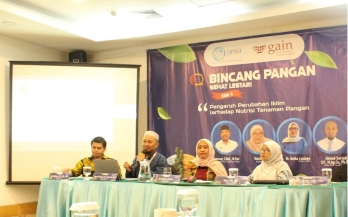
On October 14, 2025, the 5th series of Bincang Pangan Sehat Lestari brought together experts, policymakers, and practitioners from government agencies and NGOs. The discussions focused on the impact of climate change on food crop nutrition.
Food packaging is ubiquitous in the modern world but also easily forgettable: once we’ve dumped the crackers out of their bag and into our hand, or scraped the last of the yoghurt out of the bottom of its plastic pot, we usually toss the packaging into the bin without a second thought.
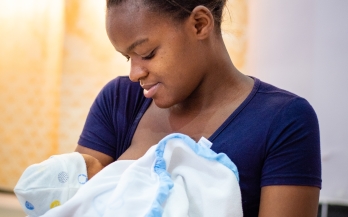
Breastfeeding not only contributes to positive nutrition and health outcomes, but also to environmental sustainability by significantly reducing the environmental footprint associated with the production, packaging, distribution and consumption of infant formula. The environmental benefits of breastfeeding are multi-faceted.
GAIN Indonesia was at the forefront of Green Economy Expo held by The National Development Planning Agency (BAPPENAS) on July 3-5 in Jakarta. This year’s theme was “Advancing Technology, Innovation, and Circularity”. The event brought to the forefront discussions on sustainable development and the implementation of circular economy principles throughout Indonesia.
[We, the African Heads of State and Government, commit to] redoubling our efforts to boost agricultural yields through sustainable agricultural practices, to enhance food security while minimizing negative environmental impacts. But perhaps there's more cause for optimism here than first meets the eye.
Until recently, action taken to address climate change and malnutrition were two entirely separate conversations, with two eco-systems that did not interact. That is no longer sustainable. We cannot properly address climate change without addressing nutrition and vice versa.
For the first time in the history of COP, food systems were put centre stage in the climate negotiations. Different pavilions and events focused on crucial aspects of the complex food systems and climate interactions.
Read our fourth story in the series on The Food Crisis: What's Happening, a collection of work on the current events and the impact communities are seeing on a global scale. The Food Crisis is affecting everyone socially, economically and nutritionally. Stella Nordhagen, our Senior Technical Specialist discusses the wide reaching ripple effect climate change will cause on our food systems and what actions need immediate attention.