Despite the significant progress made by Tanzania in addressing all forms of malnutrition among children under five over the last decade, the prevalence of chronic malnutrition in the country is still high, with stunting at 30% (Ministry of Health and National Bureau of Statistics, 2022). The country has a population of 64 million people (Tanzania National Population Census, 2022), and suffers from high rates of micronutrient deficiencies, with one-third of children deficient in iron and vitamin A (Tanzania Demographic Health Survey, 2016).
The health consequences due to a lack of essential micronutrients such as vitamin A, iron, zinc, folic acid, and iodine can range from severe physical disabilities to life-threatening disorders. Also, a triple burden of malnutrition is emerging where undernutrition co-exists with the rapidly increasing problem of overweight/obesity, hidden hunger, and related conditions such as hypertension, and type 2 diabetes. 28 percent of women of reproductive age (15 to 49) are overweight or obese, a 7 percent increase from 2010 (World Food Program, 2017).
In this video, our Country Director reflects on key nutrition challenges and progress, highlighting the urgent need to strengthen food systems and improve access to safe, nutritious, and affordable diets for all.
Nutritious diets remain expensive, and out of reach for many. In Tanzania, a substantial proportion of household expenditure is on food, approximately 56 percent, increasing to as much as 70 percent for the poorest households (Ministry of Health and National Bureau of Statistics, World Bank, 2020). Consumption of unhealthy foods by children is on the rise as these are often conveniently placed and affordably priced. Rethinking food systems to ensure that nutritious foods are both accessible and desirable is essential in the fight against overweight and obesity. Enforcement of legislation and the general regulatory monitoring frameworks are still weak, but nutrition remains a priority on the Tanzanian government’s agenda.
The Global Alliance for Improved Nutrition (GAIN) is a Swiss-based foundation launched at the United Nations in 2002 to tackle the human suffering caused by malnutrition. Due to COVID19, conflict in Ukraine, and climate change, malnutrition and hunger have worsened significantly since 2019, reversing a decade of progress. There is growing recognition that our food systems need to change if we are to reverse these trends. Tanzania is one of the countries impacted by malnutrition.
GAIN’s Strategy aims to transform food systems to make healthier diets from sustainable food systems accessible to all people and especially those who are most vulnerable to shocks. By 2027, we aim to improve the access of 1.5 billion people to nutritionally enhanced staple foods, improve the access of 25 million people to healthier diets, and support positive food system change in 10 countries.
This is bold and complex, and the only way to achieve this is to work together with partners including governments, businesses, and civil society at the country and global level. These goals, and the ways of achieving them, build on our twenty-year legacy of transforming people’s lives with improved nutrition through concerted action and effective policy change.
Since 2010, working through alliances and with multi-sectoral partners, GAIN continues to provide targeted technical, financial, and policy support to key participants in the food system to contribute to nutritional outcomes in Tanzania. These include the government at the national and sub-national levels, the private sector, civil society, local and international development partners, and consumer groups.
Building on our earliest efforts that supported national large-scale food fortification regulations, policies, and programmes, our programmatic work has diversified over the years and taken on board a more holistic food system perspective and approach. This has included bringing nutritious foods at affordable prices to markets where small and medium-sized businesses play a central role.
Marketplace for Nutritious Foods
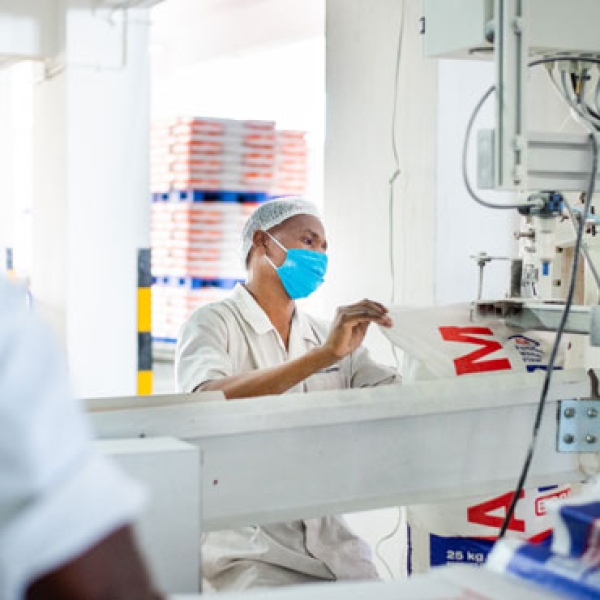
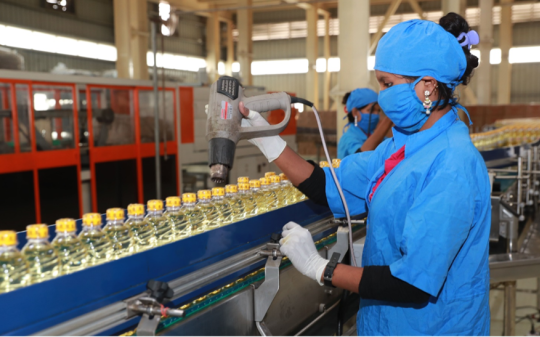
In 2011, alongside other implementing partners, GAIN was at the forefront of supporting Large Scale Food Fortification (LSFF) efforts in Tanzania which resulted in the development and launch of the country’s National Food Fortification mandatory regulation across four food vehicles: salt, wheat flour, maize flour, and edible oils.
Since then, GAIN has and continues to provide monitoring and training support to food fortification policymakers and regulators, to improve regulatory compliance. Additionally, through the provision of i-Check toolkits as seed capital we support the Government of Tanzania to strengthen fortification laboratory and analytical capacities at multiple levels, and the generation of robust data on programme compliance and quality.
With funding from the Bill and Melinda Gates Foundation, under the Large-Scale Food Fortification Quality Assurance (LSFFQA) project, GAIN has continued to;
Work with national stakeholders to measure the coverage and compliance standards of ongoing fortification efforts, across the country. In 2022 this included, supporting the Government of Tanzania to conduct a market-level food fortification compliance assessment survey across 20 mainland regions and a factory-level food fortification compliance assessment survey across 63 factories.
Support training to Food industries on Food Safety Management Systems (FSMS)
Support the Prime Minister’s Office (PMO) to conduct working sessions to review and update Institutional regulations on Food and Nutrition
Conduct joint supportive supervision visits with the Minister of State office to examine fortified maize flour stock availability and levels at the wholesale and retail level including fortification compliance practices.
Small and Medium Enterprises (SMEs) Food Fortification
More than 80% of households in Tanzania access maize flour from SME millers.
In 2022, GAIN working through a multi-sector consortium of partners, trained 145 SMEs across 47 districts in 8 regions in fortification, facilitated their access to fortificants/premixes, and improved their capacity to produce fortified maize flour that is compliant with the national standards
The consortium was led by the President’s Office, Regional Administration, and Local Government and consisted of the Tanzania Food and Nutrition Centre (TFNC), Child Help Tanzania and Association for Spina Bifida and Hydrocephalus Tanzania (ASBHAT).
Collectively, these efforts have increased the availability, and accessibility of nutrient dense maize flour across supported regions of Kagera, Mara, Simiyu, Mwanza, Shinyanga, Iringa, Manyara and Kilimanjaro) reaching approximately 192,000 beneficiaries, in particular school children.
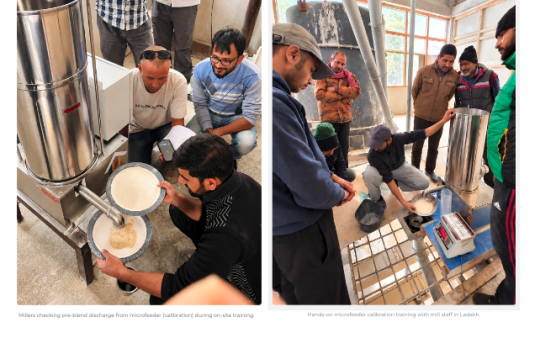
In collaboration with the Prime Minister’s Office, efforts are also currently underway to support the design and fabrication of micronutrient dossifiers locally via two institutes, the Dar es Salaam Institute of Technology (DIT) and Small Industries Development Organization (SIDO).
Once pilot-tested and approved for sales these locally fabricated dossifiers will address affordability barriers that are preventing more small millers from fortifying maize flour at profitable price points, as active private-sector contributors to national nutrition priorities.
Commercialization of Biofortified Foods
Several national strategies and policies in Tanzania (National Multisectoral Nutrition Action Plan (NMNAP) II and Agricultural Sector Development Plan (ASDP)) have identified biofortification as a key intervention in fighting micronutrient deficiencies, including the school feeding program guidelines. Given this enabling environment, since 2020, GAIN Tanzania continues to support biofortification efforts, under two Dutch-funded implementation phases.
Working in close collaboration with Tanzania Agricultural Research Institution (TARI), HarvestPlus, and small scale farmers, the first implementation phase (2020 - 2022) supported the implementation of proven route-to-market business models to accelerate the production and accessibility of nutrient enriched staple crops, namely High Iron beans (HIB) and Pro Vitamin A maize flour through two important pathways, institutions and traditional markets.
Implemented across nine regions, key biofortification accomplishments secured at the end of December 2020 included:
Oriented and trained 121 heads of schools and 16 education officers on the importance and benefits of providing biofortified foods as part of school meal programs, where the products are available.
Enabled and engaged 1,300 framers in High Iron Beans production.
Conducted HIB awareness and demand creation market activation campaigns to promote product uptake in localities where biofortified foods where available.
Established linkages between 86 processors and suppliers of biofortified foods with 71 schools. These schools now offer biofortified foods as part of their school meals, reaching approximately 52,880 students.
Keeping Food Markets Working (KFMW)
In mid-2020, GAIN launched a portfolio of interventions aimed at responding to the COVID crisis, referred to as the Keeping Food Markets Working (KFMW) initiative. KFMW was an emergence response and resilience programme designed to address the challenges facing the food system due to food and health safety concerns. Its overarching objective was to mitigate the risk of the economic collapse of food systems to sustain the availability and affordability of nutritious and safe foods and contribute to lowering the burden of ill health, particularly for the most vulnerable.
In Tanzania the KFMW programme successfully provided financial grants to more than 28 businesses with a net value of $360,000 to support nutrition-sensitive SMEs to maintain their businesses and sustain the role they play in nutrition endeavors.
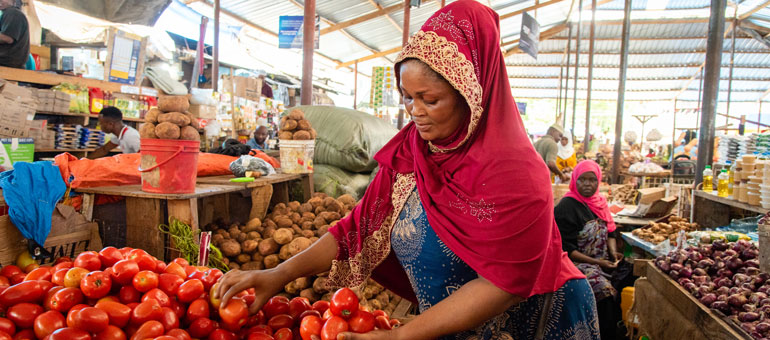
The programme also enabled the reconstruction of a traditional market (Buguruni market) to showcase how through good local governance leadership and structural plans, trading environments in physical food markets when well organised can help reduce the risk of disease transmissions such as COVID-19 and Cholera.
SUN Business Network (SBN)
As a co-convenor of the Scaling Up Nutrition Business Network (SBN), GAIN through the Prime Minister's Office continues to support the government of Tanzania to convene, capacitate, and advocate for businesses to strengthen the role of the private sector in improving the availability, accessibility, and consumption of safe and nutritious food.
Since the network’s launch in 2014, the support provided by GAIN has included:
Growing the network’s membership, which to date has 167 businesses that have joined the network
Supporting annual capacity building trainings which have reached approximately 300 SMEs with business development, financial management, sales and marketing technical know-how, and tool kits
Deployment of direct cash investments via grants and catalytic funds to nutrition-sensitive SMEs (producers and processors) to 28 SMEs.
Establishment and incorporation of private sector contribution indicators in the 2nd National Multi-sectoral Nutrition Action Plan (NMNAP II, 2012-2026)
Development and launch of the SUN Business Network 2022-2027 country strategy.
Policy Advisory Support to the Government of Tanzania
Through multi-sectoral interventions, multi-partnership, and multi-stakeholder collaborations, GAIN Tanzania supports the formulation and implementation of policy frameworks that advance food system transformation. Support over the past 3 years has delivered tangible results on several fronts. A second national multi-sectoral Nutrition plan 2021/22-2025 was developed and disseminated by the government in order to sustain and elevate its multi-sectoral engagement strategic approach in addressing the country's malnutrition challenges.
Post the United Nations food summit, GAIN facilitated a total of 8 out of the 12 pre-UN summit dialogues across mainland Tanzania and Zanzibar at the national and sub-national level. As a result of the dialogues, national food system pathways were defined to advance the attainment of the country’s 2030 sustainable development targets.
Drawing on a sustainable production and consumption food system assessment conducted in 2021, policy areas that need to be strengthened for food system transformation have been defined. These include food safety legal frameworks, decentralisation of national food system-related policy frameworks to sub-national levels; and the creation of coordinated mechanisms for the food system in Tanzania.
Going forward, policy advisory technical assistance support to the Government of Tanzania will be prioritised and focused on these areas.
GAIN Access to Better Dairy "Greening Project"
The GAIN Access to Better Dairy – Greening and Scaling is a project that takes a market-based approach to generate economic growth and improve the food and nutritional security of children and women through the development of a sustainable dairy value chain from business, environmental, and social perspectives. The milk-based solution types are designed to be affordable, tasty, and safe to eat, and at the same time reduce loss and waste.
In Tanzania, the programme focuses on reducing milk waste, primarily by adding and/or optimising fermentation processes to yogurt-type products, thereby increasing the shelf life.
With work already underway through the technical leadership and guidance from the Tanzania Diary board, two diary commercial businesses; Kilimanjaro Fresh (Galaxy Foods) and Shambani Milk, will receive technical assistance to expand their nutrient-enriched product portfolio offerings cost-effectively. This will cover:
Post-harvest loss reduction management through increased focus on hygiene practices, shelf-life extensions, and value addition by fermentation using best-in-class cultures to produce yogurt.
Scalability and positive impact good practice approaches, covering waste reduction, optimising productivity, and generating new revenue streams.
Provision of tools and case studies to quantify and disseminate the benefits of reducing loss in the dairy value chain.
Fortifying School Meals in Tanzania
In November 2020, the Government of Tanzania issued the National School Feeding Guideline (NSFG). The NSFG provides standardised guidance for schools, communities, and the local government to develop, coordinate and oversee school feeding programmes. Central to the guidance provided in the NSFG is the need for schools to provide nutrient-enriched meals where fortified products are available.
Supporting the implementation of this government mandate the Fortifying School Meals in Tanzania is a Waterloo Foundation funded project currently in its second implementation phase (2023 to 2025).
Building on the programmatic milestones and lessons learned under the project’s phase one activities (2020-2022), the project now aims to give 120,000 children in 240 schools sustainable access to nutritious foods. The project seeks to achieve this by; (i) empowering small-scale maize millers to fortify maize flour effectively and (ii) enabling them to become certified suppliers of fortified foods to schools under the Government of Tanzania’s School Feeding Initiative.
Implemented in partnership with SANKU, the project’s implementation is prioritised across six lake zone regions with high malnutrition prevalence levels (Kagera, Geita, Mwanza, Simiyu, Mara, and Shinyanga)
Nourishing Food System Pathways Project
Currently, in its inception phase, the goal of the Nourishing Food Pathway project is to strengthen and support the implementation of 10 country food system pathways so they can accelerate improvements in the consumption of safe nutritious food for all, especially the most vulnerable, and produced in a sustainable way.
The refinement and implementation of supported pathways will also serve as exemplars to provide guidance and support for the implementation of pathways in other countries.
In Tanzania, project activities will be implemented across four workstream areas that will focus on:
Supporting the government to strengthen the alignment of policy (coherence), both in development and implementation, across sectors towards food system goals
Including unheard voices of youth and local government to improve food system decision making
Generating evidence to inform and guide prioritisation of private and public sector investment for food system transformation.
Answering fundamental questions about what works in food system transformation, how we know if food system transformation is occurring, to promote accountability in food system, and to share the knowledge and learnings obtained.