India has made impressive progress in some dimensions of nutrition such as, stunting is reducing, and exclusive breastfeeding is on course of progress towards the global nutrition targets. However, progress in wasting and anaemia indicators is not as expected.
Despite performing strongly on agricultural productivity and improved coverage of safety net programs like Public Distribution System, Take Home Rations, Hot Cooked Meals, and Mid-Day meals, India faces a triple burden of malnutrition - undernutrition co-existing with overnutrition and micronutrient deficiencies. Malnutrition in India is a complicated problem: 35.5% of Indian children under five are stunted and over 57% of women of reproductive age are anaemic. Besides the challenge of under nutrition, the cases of overweight adults are now almost equal to the number of underweight adults. The biggest driver of this double burden is the poor quality of diets. There is a pressing need to revamp India's nutrition strategy focussing on creating sustainable, resilient food systems for healthy diets.
India’s nutrition landscape is changing rapidly, with progress in some areas but persistent and evolving challenges across the board. In this video, our Country Director reflects on the country’s triple burden of malnutrition and the urgent need to strengthen food systems that make healthy diets more accessible, affordable, and sustainable for all.
The Indian population, both in rural and urban areas, experiences low consumption of fruits and vegetables, whilst there are increasing trends in the consumption of sugar-sweetened beverages and diets which elevate cholesterol (essentially unhealthy fats) and sodium (too much salt). This is reflected in an increase in overweight and obesity rates among the adult population, from around 20% in 2015 to 24% in 2019. Through published scientific literature, similar trends are observed for children and adolescents.
Actions are needed to reinforce and protect current positive dietary patterns and to curb and reverse those associated with increased risk of various forms of malnutrition. Changing these trends will require a multi-pronged strategy, involving relevant stakeholders to transform food systems so that they deliver better and more sustainable diets for everyone.
GAIN’s contribution
The Global Alliance for Improved Nutrition (GAIN) is a Swiss-based foundation launched at the United Nations in 2002 to tackle the human suffering caused by malnutrition. Due to COVID19, conflict in Ukraine, and climate change, malnutrition and hunger have worsened significantly since 2019, reversing a decade of progress. There is growing recognition that our food systems need to change if we are to reverse these trends.
India is one of the countries impacted by malnutrition. GAIN’s Strategy aims to transform food systems to make healthier diets from sustainable food systems accessible to all people and especially those whose are most vulnerable to shocks. By 2027, we aim to improve the access of 1.5 billion people to nutritionally enhanced staple foods, improve the access of 25 million people to healthier diets, and support positive food system change in 10 countries. This is bold and complex, and the only way to achieve this is to work together with partners including governments, businesses, and civil society at the country and global level.
These goals, and the ways of achieving them, build on our twenty-year legacy of transforming people’s lives with improved nutrition through concerted action and effective policy change.
GAIN has been working in India since 2003. For over 15 years, we have been working with governments, policymakers, and the industry to make nutritious food more accessible, available, and affordable via implementing programmes across the country at scale.
India has separate policies on agriculture, food security, and nutrition, moving forward, we wish to create synergies and trade-offs across sectors such as gender, livelihoods, environment, and health to achieve more resilient and improved food systems that can contribute to tackling the rising nutrition insecurity In India and help in promoting healthier diets for all.
Large-Scale Food Fortification
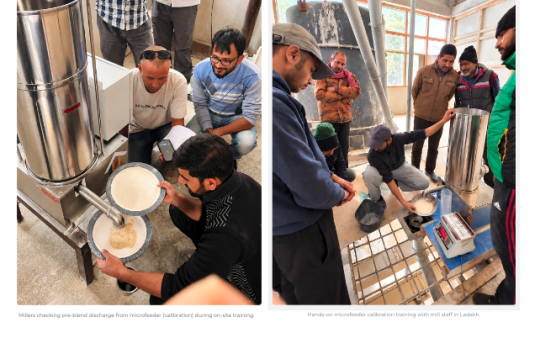
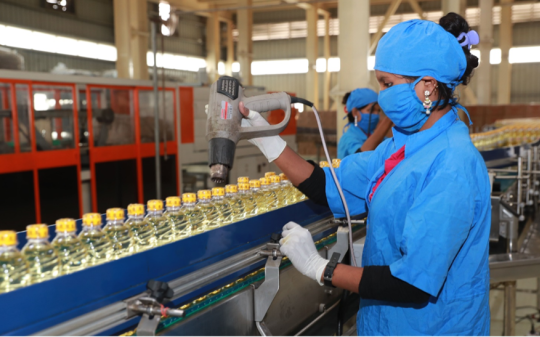
In India, GAIN initiated its work on large-scale food fortification project in the year 2011. Presently, we work to ensure the availability of quality-assured fortified staples (edible oil, wheat flour, and milk) across 19 states and union territories in the country. We support the fortification program scale up through both commercial channels and safety net programmes.
As of December 2022, GAIN has provided technical support to about 300 edible oil industries, 100 milk dairies, and 85 wheat flour mills to scale up the fortification in the country.
Commercialisation of Biofortified Crops (CBC)
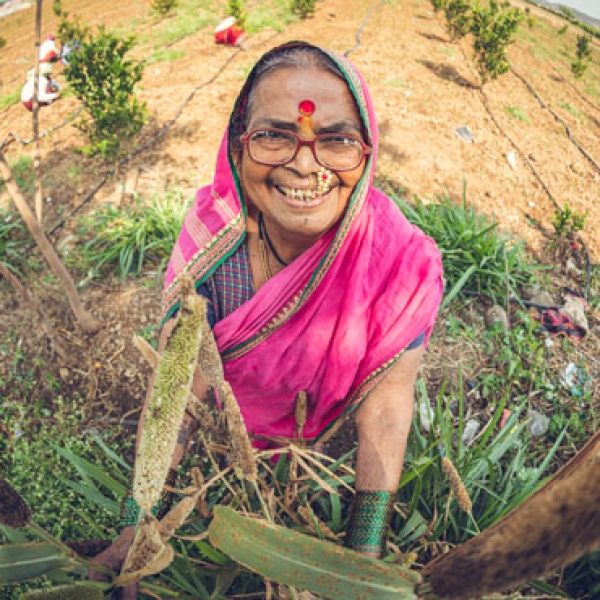
The Commercialisation of Biofortified Crops (CBC) Programme addresses widespread hidden hunger by expanding the reach of foods and food products made with biofortified staple crops.
The CBC India project commercialises biofortified iron pearl millet in Rajasthan, Maharashtra, and Karnataka, and zinc wheat in Uttar Pradesh, Bihar, and Punjab. The project works with commercial value chain actors – including seed producers, farmers, aggregators, and processors, and is focused on developing new and innovative products that are accessible and appealing to consumers, especially the most vulnerable. Simultaneously, we engage with state and national governments to explore the distribution of biofortified varieties within social protection schemes.
Workforce Nutrition
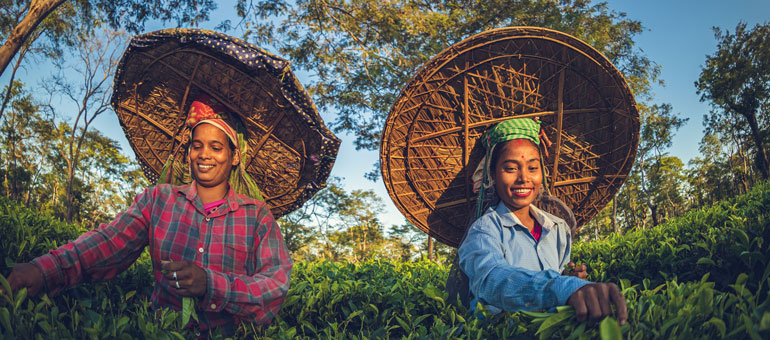
The Workforce Nutrition programme in India aims to improve demand, access, and consumption of nutritious and safe foods by tea workers and their families in the tea supply chain. Implemented in partnership with tea associations, NGO partners, and tea estates, the programme reached over 50,000 workers and smallholders in Assam and Tamil Nadu until 2019.
Currently, the scale-up phase- of the programme is being implemented in 114 tea estates in Assam to reach 160,000 tea estate workers.
.jpg)