Breaking Barriers in the Field: How Good Nature Agro (GNA) is Boosting Women’s Leadership in Agricultural Extension
8th/March/2026
Authors: Polly Mwongera, Roberta Bove, Kellan Hays, Sophia Davis Vijayan, Asya Troychansky
8th/March/2026
Authors: Polly Mwongera, Roberta Bove, Kellan Hays, Sophia Davis Vijayan, Asya Troychansky
Good Nature Agro (GNA), a Zambia-based enterprise with presence in Malawi and South Africa, produces high-quality groundnut and bean seeds and commodities, distributed across Southern and Central Africa, including Zambia, Malawi, Zimbabwe, South Africa, and Namibia. Founded in 2014, GNA has supported over 20,000 smallholder farmers this season with seeds, training and market access to improve incomes and livelihoods.
From its early years, GNA set a target of 40% female farmer representation and invested in key programs to improve female farmers’ experience. Initiatives included co-farmer registration for digital payments, family financial literacy training, pre-harvest payments and loans, asset financing, and gender training for all field staff. These efforts created measurable impacts on productivity and strengthened women’s engagement in high-value markets. Recent surveys confirmed that female farmers continue to experience increased production efficiency and have a positive experience with GNA, reflected in a 60 Decibels net promoter score of 57 (the likelihood of farmers recommending GNA to others, on a scale from -100 to +100).
Despite these gains, women were underrepresented in leadership roles in the field. As of August 2025, women made up only 22% of GNA’s Private Extension Agents (PEAs) and 25% of Field Supervisors (FSs), critical roles connecting farmers to training, information, and market linkages. Therefore, addressing this gap was not only a question of fairness or equality, but also a strategic priority for strengthening extension services.
Through the Nutritious Foods Financing Facility (N3F)'s Technical Assistance, GNA collaborated with Value for Women (VfW) to assess barriers to women’s entry into FS and PEA roles, develop a focused 2025-2026 Gender Action Plan (GAP), and support early implementation of the GAP with the goal of improving the roles for everyone, while disproportionately benefiting women to help close the gender gap. VfW combined virtual diagnostics with field research in Kasama and Kabwe through focus group discussions with farmers, PEAs, and FSs. The research highlighted both enablers to women’s active participation in field roles (such as mentorship, strong performance-driven culture, flexible schedules, and community recognition of GNA’s brand) and barriers, including cultural norms, caregiving responsibilities, and physically demanding fieldwork.
Guided by these insights, GNA and VfW co-developed a targeted and practical set of priority actions. For the first time, formal gender targets were set for 30% women FSs and 25% women PEAs, and these targets were integrated into seasonal workforce planning. Recruitment processes were updated to be gender-inclusive, and contracts were revised for clarity on performance expectations and bonuses. Managers began actively shortlisting women and including them on interview panels. Flexible arrangements were piloted to support maternity coverage, with shadowing and temporary support helping to maintain continuity in the field.
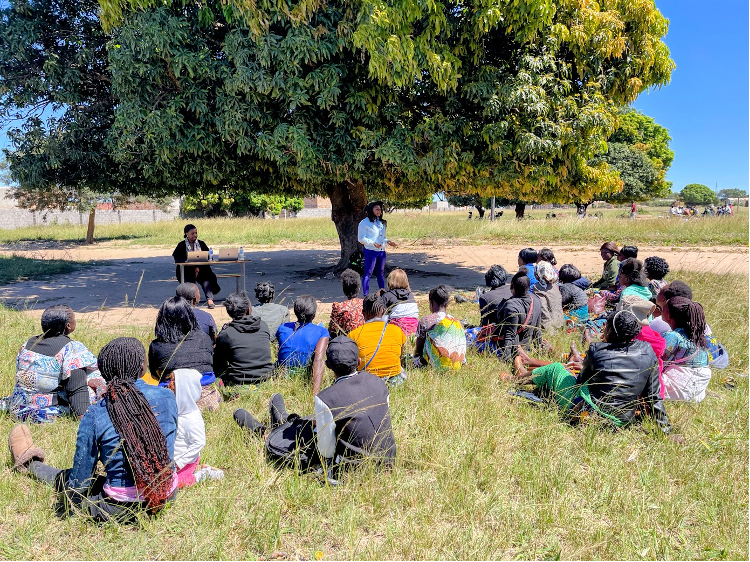
Pic 1: VfW research consultant and GNA Field Supervisor leading a focus group discussion with GNA women farmers
By the end of the initial implementation phase, these early actions had tangible results. Women’s representation among FSs increased to 35%, exceeding the set target, while PEAs remained broadly stable at 20% amid organizational restructuring. At the same time, GNA began embedding gender inclusion into its core operations. The rollout of GNA’s hub model further improved feasibility of field roles for women, reducing travel distances, strengthening coordination, and enhancing safety. Demonstration plots and improved supervision supported more consistent agronomic guidance, while one-to-one coaching and feedback created a space for learning and support during a period of organizational change. GNA's leadership also reported early shifts in mindset with gender-inclusive recruitment and proactive planning for maternity coverage becoming part of routine management discussions. Together, these changes signal the foundations of longer-term institutional change.
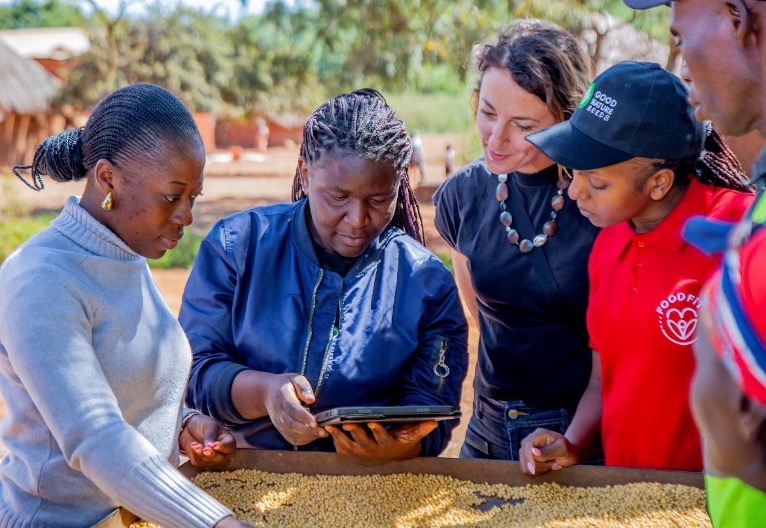
Pic 2: GNA FS demonstrating use of the farmer management tool to N3F team at a collection hub in Chipata, Zambia
Looking ahead, the GNA GAP provides a live roadmap of actions to be piloted, tested, and refined with ongoing coaching and follow-ups to track progress and adapt as needed. The aim is to develop a culture and strengthen the system that recruits, trains, and retains people with an aim to portray these field leadership roles as accessible and rewarding, especially for women. The potential ripple effects are enormous – more women in the field can mean more diverse perspectives in problem-solving, stronger relationships with women farmers, and a shift in community perceptions about women in leadership. The recorded early wins, exceeding FS gender targets, improved role clarity, operational gains from the hub model, and more inclusive recruitment practices, demonstrate that targeted, evidence-based action on gender inclusion is both socially impactful and strategically smart for business.
As Miyoba Sansala, Smallholder Production Manager at GNA, states:
“The action items we designed with Value for Women will improve the capabilities and outcomes across all our field team members, while highlighting and responding to the unique experience of female agricultural leaders.”
Thanks to GNA’s commitment to and prioritisation of gender inclusion, supported by N3F and Value for Women, the company is demonstrating that advancing women’s leadership in agriculture is not only possible but essential for sustainable growth and stronger farmer engagement.

Manager, Nutritious Foods Financing (N3F) Technical Assistance and Innovative Finance

Senior Lead, Innovative Finance for Nutrition

Co-Founder, Chairperson of the Board of Directors for Good Nature Agro

Engagement Manager Nigeria, Value for Women

Associate Director of Advisory Services, Value for Women’s