Asian Venture Philanthropy Network (AVPN) Global Conference 2026

A Blueprint for Action in Asia

25 - 27 August, Bharat Mandapam, New Delhi, India

  • 📅 25 - 27 August
  • 📍 Bharat Mandapam
  • 🌏 New Delhi, India

Overview

Asia feeds the world — and yet cannot feed itself well. The region grows roughly 92% of the world's rice, and India, the world's third-largest wheat producer, is expected to drive the largest share of new global wheat output over the next decade (though most of this stays within the region to meet domestic demand). By sheer output, Asia is the engine of global food production.

Yet this abundance has not translated into nourishment. More than 1 billion people in South Asia cannot afford a healthy diet, and an estimated 323 million people across Asia remain undernourished. Childhood stunting (24.4%) and wasting (8.9%) in Asia-Pacific both exceed global averages (23.2% and 6.6%). At the same time, adult obesity has been climbing steadily since 2000. Asia is now caught in a nutrition transition — undernutrition and rising obesity overlapping within the same populations, often the same households — making the question of what is grown and eaten as urgent as how much.

Why growing more hasn't meant eating better

Asia's agricultural systems were built to win a different war. The Green Revolution of the 1960s–80s successfully averted famine by scaling calorie production — but it did so by concentrating investment in a handful of staple cereals. Rice, in particular, became dominant despite being less nutritionally dense than alternatives like pulses. Decades of food policy optimized for yield and productivity, not dietary quality — and that structural choice, not individual behavior, is a key driver of malnutrition rates that remain stubbornly high even as production has soared. Non-communicable diseases are now rising in parallel.

Reframing the problem: a food systems approach

"Biggest producer" and "best nourished" were never the same goal — because the system was never designed to pursue both. A food systems lens shifts the focus from tonnage to outcomes, looking at the full chain from farm to plate: production, storage and processing, markets, consumer behaviour, and governance. Five shifts define this approach:

  • Diversify what's grown — shift incentives toward nutrient-rich, traditional crops alongside cereals, not instead of investment in staples.
  • Strengthen the missing middle — extend investment beyond the farm gate into storage, transport, and processing infrastructure that gets diverse foods to market intact and affordable.
  • Make healthy food the easy choice — address the cost and convenience trade-offs that currently favour calorie-dense, nutrient-poor options, and build consumer demand for nutritious diets.
  • Connect agriculture and health policy — break down the siloed governance that treats food production and public health as separate mandates.
  • Build resilience through social protection — safeguard vulnerable populations against shocks like climate events and seasonal food insecurity.

Nutrition: The Thread That Runs Through Every Development Outcome

Nutrition is not a sector in isolation - it is embedded across health, education, workforce productivity, climate resilience, and economic growth. A well-nourished child learns better; a well-nourished worker produces more; a food-secure community withstands shocks more effectively. This is why nutrition cuts across virtually every SDG and every investment thesis in development and philanthropic capital. At AVPN Global Conference, GAIN will be exploring how funders, investors, and philanthropic capital across Asia can embed nutrition as a cross-cutting lens - not a standalone - in strategies spanning health systems, agriculture, climate adaptation, and inclusive economic growth.

What We're Here to Do

01

Show you the nutrition that is already hiding in your portfolio. Health, climate, gender, livelihoods - nutrition is quietly at work across all of it. We're here to make that visible.

02

Find the people ready to build on it. If that sparks something - a partnership, a collaboration, a commitment - let's talk! That's what we're here for.

Where GAIN Focuses

Investing in Nutrition

Malnutrition is one of development's highest-return problems — and one of its most underfunded. Malnourished children learn less. Malnourished adults earn less. The costs ripple across health, education, and economic growth, all at once. That's why nutrition isn't just a health issue anymore — it's an asset class.

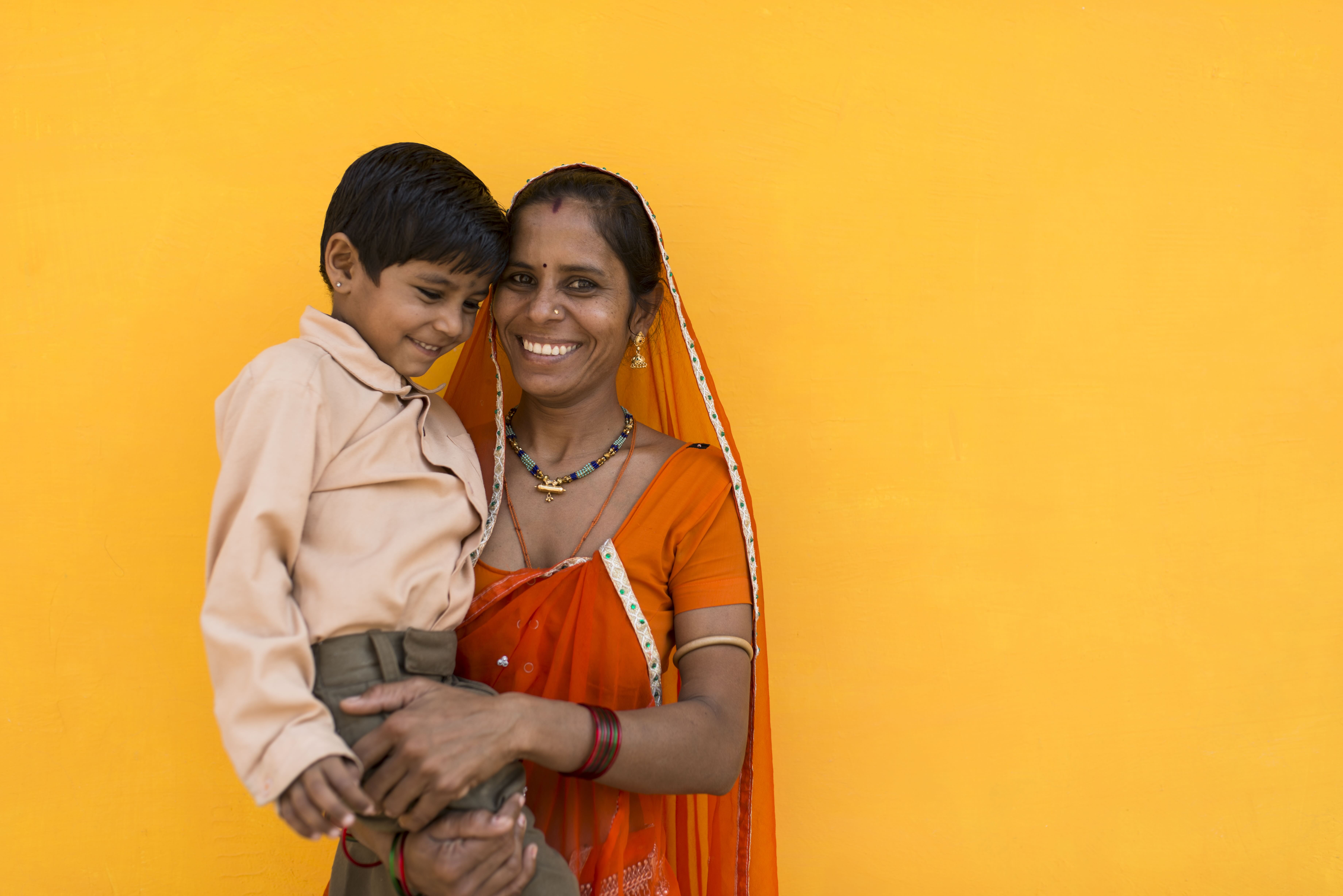
mom carrying her young son

20+ Years. One Billion Lives. Proof, Not Promises.

Since 2002, GAIN has reached over 1 billion people — and our evidence has been cited 30,000+ times by researchers and institutions worldwide.

  • 🌾 0 reached through large-scale food fortification
  • 🤝 $0 mobilized via the Zero Hunger Private Sector Pledge
  • 🥗 0 people with improved access to safe, nutritious foods
  • 🏪 0 SMEs financed to supply nutritious foods
  • 🌱 0 reached with biofortified crops

We started with fortified staples — flour, oil, salt. Today, we transform entire food systems: uniting governments, farmers, businesses, and consumers to make nutritious food available, accessible, and affordable — for those who need it most.

The ask: back an organisation that already turns capital into measurable nutrition outcomes at scale — transparently, and at speed.

💰

Blended & Innovative Finance

Great nutrition businesses die in the gap between "too risky for a bank" and "too commercial for a grant." Nutritious Foods Financing Facility (N3F) closes that gap.

We don't just write cheques to SMEs - we work through the banks already on the ground, financing food businesses upstream and downstream, and rewarding the ones delivering real impact with better terms: lower rates for stronger gender and climate outcomes.

The real win isn't one deal. It's proving nutrition is investable - so every bank we work with keeps investing in it, long after N3F moves on.

🏪

Market-Based Solutions at Scale

Aid ends when the funding does. Markets don't. That's why GAIN works through MSMEs - the businesses already reaching people, every day, at scale.

Across Asia, that means over 1,062 MSMEs that GAIN engages through India’s Sampurna Grand Challenge to tackle food loss, 182 retail shops providing nutritious foods to tea estate communities through the Healthy Line Shops initiative, 330 agrifood businesses connected through the SUN Business Network across Pakistan and Bangladesh, and domestic jack bean producers connected to tempeh production in Indonesia. From youth-led agri-startups to fortification processors to workforce nutrition programs inside factories — we're not running parallel systems. We're building nutrition into the businesses people already buy from, work for, and trust.

That's the compounding part: every business that adopts this isn't a program that ends — it's a market that keeps going.

🌱

Resilient Food Systems

Shocks hit food first. Resilience is how you get ahead of that:

  • Grow smarter Diversify beyond a handful of vulnerable staples into nutritious, climate-resilient crops.
  • Lose less Reduce the proportion of food that never makes it from farm to plate.
  • Protect proactively Build nutrition into safety nets, so a crisis doesn't mean a collapse in diets.

Three moves. One resilient system.

Tools That Make Nutrition Investable

You can't invest in what you can't see - these tools make nutrition visible.

  • 01 Food Systems Dashboards give funders a real-time, country-by-country read on where the gaps and opportunities lie.
  • 02 Countdown to 2030 tracks whether action is actually moving the needle.
  • 03 Policy Coherence Diagnostic flags when government policies are working against each other instead of together.
  • 04 Climate and Nutrition Initiative identifies where a single dollar can drive impact on both fronts at once.
  • 05 3FS shows exactly where food systems financing gaps lie, and where country and ODA budgets are actually being invested.
  • 06 Nutrition-Lens Investing Tool helps development finance institutions, impact investors, and fund managers screen any investment through a simple nutrition-lens framework — making it easier to identify opportunities that deliver better nutrition outcomes.
  • 07 Global Diet Quality Assessment delivers a fast, trustworthy answer to the question at the heart of it all: what are people actually eating?

Seven tools. One goal: turning nutrition from a hard-to-measure ambition into something you can track, trust, and invest in.

Where This Fits at AVPN

Philanthropy · Impact Investing . Blended Finance · Cross Sector Partnerships . Impact Measurement & Management. Health Impact · Gender Equality· Climate Action

  • Philanthropy
  • Impact Investing
  • Blended Finance
  • Cross Sector Partnerships
  • Impact Measurement & Management
  • Health Impact
  • Gender Equality
  • Climate Action

Participants

Meet the GAIN team participating in the AVPN Global Conference 2026. Our representatives will be available to connect with partners, funders and investors interested in embedding nutrition across food systems, health, climate, gender, livelihoods and inclusive growth.

Resources

Relevant resources

  • APN3F (Nutritious Foods Financing Facility) - Roberta PPT Nutritious Foods Financing Facility resource
  • The Agrifood Systems Accelerator (Jamie PPT) Agrifood Systems Accelerator overview
  • Diagnostic Tools for Supporting Food Systems Transformation (Jamie PPT) Food systems tools resource
  • Investment Booklets Main investment booklet
  • Thematic Booklet: Food Systems Market Resilience Investment booklet
  • Thematic Booklet: Healthy Diets for Children & Families Investment booklet
  • Thematic Booklet: Sustainability, Data & Innovation Investment booklet

Where to Find Us

Lawrence Hadad
Lawrence Hadad AVPN Global Conference 2026

I’m looking forward to speaking at the AVPN Global Conference 2026 in New Delhi.

On 26 August, I'll be joining the session “The Architecture of Collective Impact in Asia.” The session will focus on a question central to much of my work: how do we bring government, philanthropy, business and communities together around a common purpose, and sustain that collaboration over time?

At GAIN, we see every day that improving nutrition requires collective action. No single organisation can deliver the change needed on its own.

I look forward to the conversation.”

The Architecture of Collective Impact in Asia