Global Alliance for Improved Nutrition (GAIN)
  • About

    About

    About

    The Global Alliance for Improved Nutrition (GAIN) is a Swiss-based foundation launched at the United Nations in 2002 to tackle the human suffering caused by malnutrition.

    Learn more about GAIN

    • Who we are
      • Vision and mission
      • Strategy
      • Core values
      • Policies
    • Malnutrition
      • Definition
      • Quick facts
    • Partnerships
      • All Partners
      • GAIN Nordic Partnership
      • Global Fortification Data Exchange (GFDx)
      • Act4Food Act4Change
      • Zero Hunger Private Sector Pledge
    • Leadership
      • Strategic Management Team and Country Directors
      • Board of Directors
      • Partnership Council
      • Get to know our Executive Director
    • Sustainable Development Goals
    • Donors
      • See current donors
  • Programmes

    Programmes

    • All programmes

      All programmes

      Our programmatic work directly impacts over a billion people worldwide and drives the policy changes we advocate with partners. These programmes aim to transform food systems, ensuring sustainable, healthier diets for everyone especially those most at risk of malnutrition and vulnerability.

      All programmes

      • Food Fortification
        • Nutrient Enriched Crops
      • Thriving Nutrition Enterprise
        • Nutrition Investing
        • Nutrition Impact at Scale
        • Nutrition Enterprise Development
        • SUN Business Network
      • Empowering Food Systems Actors
        • Food Systems Governance
        • Children and Young People
      • Social Protection
      • Workforce Nutrition
      • Enhancing Value Chains for Underconsumed Foods
        • Explore Enhancing Value Chains for Underconsumed Foods
      • Shifting Demand
        • EatSafe
        • Consumer demand generation
        • Food Culture Alliance
        • Multiple Micronutrient Supplementation (MMS) Project
      • Enhancing Nutrition with Data & Evidence
        • Food Systems Countdown Initiative
        • Mainstreaming Nutrition: Improving the Impact of IFAD Investments on Diet Quality
        • Global Diet Quality Project
        • Food Systems Dashboard
        • Initiative on Climate Action and Nutrition (I-CAN)
        • Exemplars of Food Systems Transformation
    • Cross Cutting Themes

      Cross Cutting Themes

      Cross-cutting themes are co-benefits of work that we do with the primary aim of healthier diets for all.

      All Cross Cutting Themes

      • Environment
      • Food Safety
      • Gender
      • Youth
      • Food System Resilience
      • Reaching the Very Poor
    • Key Projects

      Key Projects

      Driving innovative solutions to improve nutrition and build healthier, more resilient food systems.

      Key Projects

      • A1: Transforming Food Systems To Improve Diet Quality and Resilience For The Most Vulnerable
      • Nourishing Food Pathways
      • CASCADE (CAtalyzing Strengthened policy aCtion for heAlthy Diets and resiliencE)
      • Large-Scale Food Fortification
      • DELIVER Nigeria
  • Impact

    Impact

    Impact

    Explore how GAIN has reached over one billion people since 2001, transforming their lives with improved nutrition through concerted action and effective policy change.

    Read our Stories of Impact

    • Stories of Impact
    • Nourishing Food Pathways
    • Our response to COVID-19
    • Outcomes
  • Resources

    Resources

    • Publications

      Publications

      Explore a full range of publications and documents related to our work.

      Explore our Publications

      • Reports and Publications
      • Datasets
      • Annual reports
      • Nutrition Connect
    • Multimedia

      Multimedia

      Have a look at our photos, listen to our latest podcast and watch our videos.

      Explore our Multimedia

      • Videos
      • GAIN Interview Cruncher Series
      • Bite the Talk - GAIN Podcast Series
      • Glossary
      • Brand identity
    • Newsroom

      Newsroom

      Our dedicated newsroom that includes our latest news releases and statements, as well as curated blogs and interviews

      Explore our Newsroom

      • News releases
      • Blogs
      • Statements
      • Speeches
      • Programme and project updates
      • Interviews
      • GAIN in the news
      • Stories
  • Countries

    Countries

    Countries

    Headquartered in Geneva, Switzerland, GAIN has offices in countries with high levels of malnutrition: Bangladesh, Benin, Ethiopia, India, Indonesia, Kenya, Mozambique, Nigeria, Pakistan, Rwanda, Tanzania and Uganda. To support work in those countries, we have representative offices in the Netherlands, the United Kingdom, and the United States.

    Countries

    • Country Offices
      • Bangladesh
      • Benin
      • Ethiopia
      • India
      • Indonesia
      • Kenya
      • Mozambique
      • Nigeria
      • Pakistan
      • Tanzania
      • Uganda
    • Representative Offices
      • The Netherlands
      • United Kingdom
      • United States of America
    • Headquarter
      • Switzerland
  • Careers
    • Careers at GAIN
    • Open Vacancies
    • FAQ
  • Request for proposal
  • Financials
  • Events
    • All events
    • Campaigns
  • Contact us
  • Donate
Is there a "complementary feeding cultural core" in rural Kenya? Results from ethnographic research in five counties

Is there a "complementary feeding cultural core" in rural Kenya?

- 14/09/2018

This investigation used data from focused ethnographic studies in five rural counties in Kenya to determine whether the concept of “special foods for infants and young children” exists in the different ethnic groups in these areas as an identifiable component of cultural beliefs and knowledge.
4th African SANKALP meeting

4th African SANKALP meeting

23 February 2017- 24 February 2017Nairobi, Kenya

A GAIN-led multi sectoral delegation took part in the 4th SANKALP African Summit in Nairobi, Kenya, in February. The event was attended by more than 900 delegates and over 60 speakers from the areas of investment, innovation and entrepreneurship.
Nutrition Africa Investor Forum (NAIF)

Nutrition Africa Investor Forum (NAIF)

16 October 2018- 17 October 2018Nairobi, Kenya

The Nutrition Africa Investor Forum, to be held in Nairobi (Kenya) during World Food Day on the 16-17 October 2018, is a platform for bold, fresh, holistic ideas to develop the food value chain and the role that the private sector can play in enhancing nutrition in Africa.
Design and implementation of a health systems strengthening approach to improve health and nutrition of pregnant women and newborns in Ethiopia, Kenya, Niger, and Senegal

Design and implementation of a health system to improve health and nutrition of pregnant women and newborns in Ethiopia, Kenya, Niger, and Senegal

- 01/02/2018

This paper describes the rationale and methods used in setting up a multi‐country study that aimed at designing the key maternal and neonatal health interventions and identifying indicators related to inputs, outcomes, and impact.
Coverage and consumption of micronutrient powders, fortified staples, and iodized salt among children aged 6 to 23 months in selected neighborhoods of Nairobi County, Kenya

Coverage and consumption of micronutrient powders, fortified staples, and iodized salt among children aged 6 to 23 months in selected neighborhoods Kenya

- 01/03/2018

The purpose of this study aimed to assess existing coverage and utilization of micronutrient powders (MNPs), fortified staples, and iodized salt among children aged 6 to 23 months prior to implementation of an MNP program.
Context-specific complementary feeding recommendations developed using Optifood could improve the diets of breast-fed infants and young children from diverse livelihood groups in northern Kenya

Complementary feeding recommendations could improve the diets of children in Kenya

- 05/12/2016

The objective of this study was to formulate age- and context-specific complementary feeding recommendations (CFR) for infants and young children and to compare the potential of filling population-level nutrient gaps using common sets of CFR across age groups.
Constraints and opportunities for implementing nutrition‐specific, agricultural and market‐based approaches to improve nutrient intake adequacy among infants and young children in two regions of rural Kenya

Improving nutrient intake adequacy in Kenya

- 01/12/2015

Several types of interventions can be used to improve nutrient intake adequacy in infant and young child diets, including fortified foods, home fortification, nutrition education and behaviour change communication in addition to agricultural and market‐based strategies. The purpose of this study was to initiate a collaborative project in Kenya to improve the nutritional adequacy of foods consumed by infants and young children.
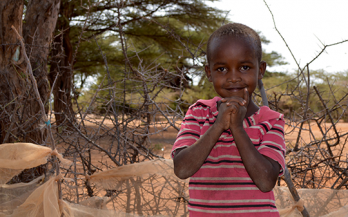
How important are businesses to addressing malnutrition in the “many Kenyas”?

How important are businesses to addressing malnutrition in the “many Kenyas”?

Kenya was one of the Global Nutrition Report’s (GNR) star performers in 2017 in terms of stunting reduction – with levels nationally of 26%. Yet, the country is in full “double burden” mode with undernutrition and other manifestations of malnutrition such as obesity and diabetes running in parallel, often in the same communities or families.
Spotting zebras from Dar es Salaam to Nairobi: improving nutrition through investing in agri-food SMEs in East Africa

Spotting zebras from Dar es Salaam to Nairobi: improving nutrition through investing in agri-food SMEs

At GAIN, over the last six months we’ve been building a new Nutritious Foods Financing programme starting in East Africa. The potential of the programme is becoming increasingly exciting as data becomes available showing the scope and viability of SMEs to deliver more nutritious foods, if appropriate private investments are unlocked.
Food control systems in Kenya; the journey of compliance for food businesses

Food control systems in Kenya; the journey of compliance for food businesses

Food businesses are governed by many food laws and sometimes this doesn’t stand out as an enabling environment for trading in Kenya. Businesses are required to work with a multiple of regulators to ensure that they are compliant to food standards. The number of licences required to run a food business are many and all of them cost a fortune.

Pagination

  • Previous page ‹‹
  • Page 10
  • Next page ››

© GAIN 2026

  • Sitemap
  • Terms and conditions
  • Privacy policy
  • Accessibility
  • Subscribe
  • RSS
  • Ethical Supply Chain Statement
  • Follow us

  • Twitter X
  • Facebook
  • Instagram
  • Linkedin
  • Youtube